
TODAY’S DAILY BIBLE VERSE: Choose Life

Today is Wednesday September 24, 2025

Verse 
Deuteronomy 30:19- “I call heaven and earth to record this day against you, that I have set before you life and death, blessing and cursing: therefore choose life, that both thou and thy seed may live.”

Verse Context

At the heart of this verse is Moses’ solemn appeal to Israel. The language is covenantal, legal, and deeply pastoral. The first phrase, “I call heaven and earth to record this day against you,” frames the statement as a covenant oath. In ancient times, covenants were sealed with witnesses. Since no greater witnesses could be summoned than the whole created order, Moses invokes heaven and earth. John Gill (1697–1771, Baptist pastor and commentator) explains that this language makes the covenant binding: the heavens above and the earth beneath, which stand unshaken, are witnesses that the people were clearly warned and instructed. Matthew Henry (1662–1714, Presbyterian minister) adds that the call to heaven and earth signifies permanence, the witnesses cannot fade, so neither can Israel claim ignorance.

The next clause, “I have set before you life and death, blessing and cursing,” is the heart of the verse. Moses places two clear paths before the people. The Hebrew verb translated “set before” carries the sense of laying out plainly, as a choice placed in front of someone at a table. There is no ambiguity: the way of obedience leads to life, prosperity, and blessing; the way of rebellion leads to death and destruction. Albert Barnes (1798–1870, Presbyterian theologian) notes that this is not mere rhetoric but covenant reality: the consequences are real, tangible, and will follow Israel’s decisions in the land.

The command then rises to an impassioned plea: “Therefore choose life.” This is the only imperative in the verse, the one action required of the people. Life is not automatic; it must be chosen through fidelity to God. The Hebrew root here suggests a deliberate decision, an intentional grasping of one path over another. This aligns with earlier verses in the chapter, particularly verse 14: “But the word is very nigh unto thee, in thy mouth, and in thy heart, that thou mayest do it.” In other words, choosing life is possible; it is not beyond their reach. Commentator Keil and Delitzsch (19th-century Lutheran scholars) emphasize that this command shows the law was never meant to be burdensome, it could be kept by faith and love, and Israel was fully capable of obeying if they would humble themselves before God.

Finally, the verse ends with purpose: “that both thou and thy seed may live.” This reveals God’s covenantal vision, where choices today shape generations tomorrow. The blessing of obedience was not limited to the immediate audience but extended to their descendants. Charles Spurgeon (1834–1892, Baptist preacher) reflects here that God’s concern is not only for the present soul but for the unborn generations, showing His desire to see families and nations thrive under His care. The verse makes clear that life with God is never purely individual; it radiates outward, affecting children, grandchildren, and society at large.

In summary, Deuteronomy 30:19 is not vague moral encouragement. It is a binding covenant declaration, witnessed by heaven and earth, laying before Israel the only two paths available, life and blessing through obedience, or death and cursing through rebellion. It commands the people to choose life deliberately, not as a vague spiritual attitude but as covenant faithfulness lived out daily. And it shows God’s heart: that life chosen today would bless not only the hearers but their seed after them.

Broader Context

Deuteronomy is Moses’ final, Spirit-led teaching that renews the covenant for a new generation standing on the threshold of the land. Its purpose is pastoral and covenantal: to rehearse God’s mighty acts, restate His law, warn against idolatry, and press Israel to wholehearted love and obedience so they may live and flourish under God’s rule. Deuteronomy 30:19 sits at the climax of that purpose. After spelling out blessings for obedience and curses for rebellion, Moses gathers the entire message into a single, urgent appeal: choose the path that leads to life with God, not the path of death apart from Him.

This is why Moses pleads. He knows the people’s history of stubbornness, yet he also knows God’s faithfulness. Deuteronomy has already called Israel to love the Lord without rivals: “Hear, O Israel: The LORD our God is one LORD: And thou shalt love the LORD thy God with all thine heart, and with all thy soul, and with all thy might.” (Deuteronomy 6:4–5). It has warned against forgetfulness in prosperity and pride in self-sufficiency: “man doth not live by bread only, but by every word that proceedeth out of the mouth of the LORD doth man live.” (Deuteronomy 8:3). Against that backdrop, Deuteronomy 30:19 is the summary call: life with God by listening to His voice, or death by turning away. Moses even summons creation as witness so that Israel can never say the choices were unclear (compare Deuteronomy 31:28).

Historically, the verse is the covenant hinge between wilderness wandering and life in the land. But Moses also looks beyond his own day. He has just spoken of exile and return, Israel would fail, be scattered, and yet God would gather them again when they turned back (Deuteronomy 30:1–3). Thus the plea to “choose life” carried future value: it would ring in the ears of later generations facing judgment or restoration, reminding them that life is always found by returning to the Lord.

Scripture repeatedly echoes this two-paths theme. Joshua takes up the same charge when the nation settles in the land: “choose you this day whom ye will serve… but as for me and my house, we will serve the LORD.” (Joshua 24:15). The wisdom writings open with the very contrast Moses drew: “Blessed is the man that walketh not in the counsel of the ungodly… And he shall be like a tree planted by the rivers of water…” (Psalm 1:1–3). Likewise, “There is a way which seemeth right unto a man, but the end thereof are the ways of death.” (Proverbs 14:12). Jesus presses the same decision with saving clarity: “Enter ye in at the strait gate… because strait is the gate, and narrow is the way, which leadeth unto life, and few there be that find it.” (Matthew 7:13–14). He identifies Himself as the very life Moses urged them to choose: “I am the way, the truth, and the life: no man cometh unto the Father, but by me.” (John 14:6). And He names the great alternative plainly: “The thief cometh not, but for to steal, and to kill, and to destroy: I am come that they might have life, and that they might have it more abundantly.” (John 10:10).

The New Testament also shows how Deuteronomy 30 speaks forward to the gospel. Paul explicitly draws from this chapter to explain saving faith. He quotes Moses’ language about the nearness of God’s word and applies it to the word of Christ: “But what saith it? The word is nigh thee, even in thy mouth, and in thy heart… That if thou shalt confess with thy mouth the Lord Jesus, and shalt believe in thine heart that God hath raised him from the dead, thou shalt be saved.” (Romans 10:8–9; see Deuteronomy 30:14). In other words, the covenant call to “choose life” reaches its fullest expression when a sinner turns to the crucified and risen Lord Jesus in repentant faith. Paul is not replacing Moses; he is showing the telos, where Moses’ appeal ultimately leads.

Placed within the whole book, then, Deuteronomy 30:19 perfectly conforms to Deuteronomy’s purpose. It gathers law, memory, warning, promise, and hope into a single, urgent summons. Historically, it sealed a generation’s responsibility before entering the land. Prophetically, it anticipated exile and the hope of return. Theologically, it set the enduring pattern of two ways, life with God or death apart from Him. Pastorally, it still speaks to us today: not as vague moralism, but as a concrete call to cling to the Lord who alone gives life. And in the fullness of time, that life is revealed in Christ, so that Moses’ “choose life” becomes a gospel invitation lived out each day by listening to God’s Word, loving Him wholly, and walking in His ways.

Final Encouragement

The charge that Moses gave is as urgent now as it was then: “Therefore choose life.” The choice set before Israel is still set before us today, not only in the grand matter of salvation, but in our daily walk. Each decision either leans toward life with God or toward the death that comes from sin. Be encouraged: God has not hidden His will from us. His Word is near, His Spirit abides with believers, and His promises are certain. While the world trembles under violence, uncertainty, and grief, we hold fast to the One who is life itself. The command to choose life is not a heavy burden but a gracious invitation to walk in blessing with the Lord.

For the Believer
If you are in Christ, this verse is a call to renewed commitment. Choosing life means not only trusting Christ for salvation but also shaping daily choices around His truth. It means loving God with heart, soul, and strength, treasuring His Word, and resisting the subtle idols of our age. When faced with fear, bitterness, or despair, remember that God has already secured life in His Son. Choosing life today may look like forgiving an enemy, comforting a mourner, or boldly standing for the sanctity of life in a culture that cheapens it.

Call to Action
Let your life bear witness that you belong to the God of life. Pray for wisdom to choose obedience where compromise tempts you. Speak truth with compassion in a world confused about morality. Show by your actions that life is precious: defend the vulnerable, comfort the grieving, support the weak. Moses’ plea, fulfilled in Christ, is God’s word to you still: therefore, choose life, so that you and those who follow after you may live in the richness of His blessing.

For the Unbeliever
If you are outside of Christ, hear this verse as God’s gracious call to you. You stand before the same choice Moses gave to Israel: life or death, blessing or cursing. To walk apart from God is to choose death, no matter how attractive the path looks at first. To come to Christ is to choose life—life now, and life everlasting. Do not mock, delay, or look for answers in empty places. Jesus Christ is the life you seek. He Himself declares, “I am the resurrection, and the life: he that believeth in me, though he were dead, yet shall he live” (John 11:25). Today the choice is set before you. God Himself calls you: therefore, choose life.

Our Prayer for You

Gracious Father, we thank You that You are the God of life, the One who sets before us blessing and truth, and who calls us to walk in Your ways. We pray today for every reader who feels weary, uncertain, or pulled by the noise of this world. Holy Spirit, draw them back to the simple, unshakable truth: You have placed life before us in Christ. Comfort those who mourn, strengthen those who struggle, and ignite within us courage to stand for life in a culture that cheapens it. Give us boldness to live as witnesses of Your glory, compassion to love even the unlovely, and endurance to choose life in every moment. May we cling to Jesus, who is Himself our life, and may our choices today plant seeds of faith for generations to come. In His holy name we pray, Amen.

Closing

If you’ve found these daily verses encouraging, enlightening, or fruitful, please consider helping us spread the truth and light of God’s Word by subscribing to the blog and YouTube channels and liking and following the Facebook page. Most of all, share Believers of Biblical Truth and our links with others who may need the sermons and daily teachings just as much as we do.

You are loved, so much in fact, that we want you to know and be Believers of Biblical Truth.

Shalom Shalom.
Today’s Daily Bible Verse: What Can Quench Your Love?

August 15, 2025

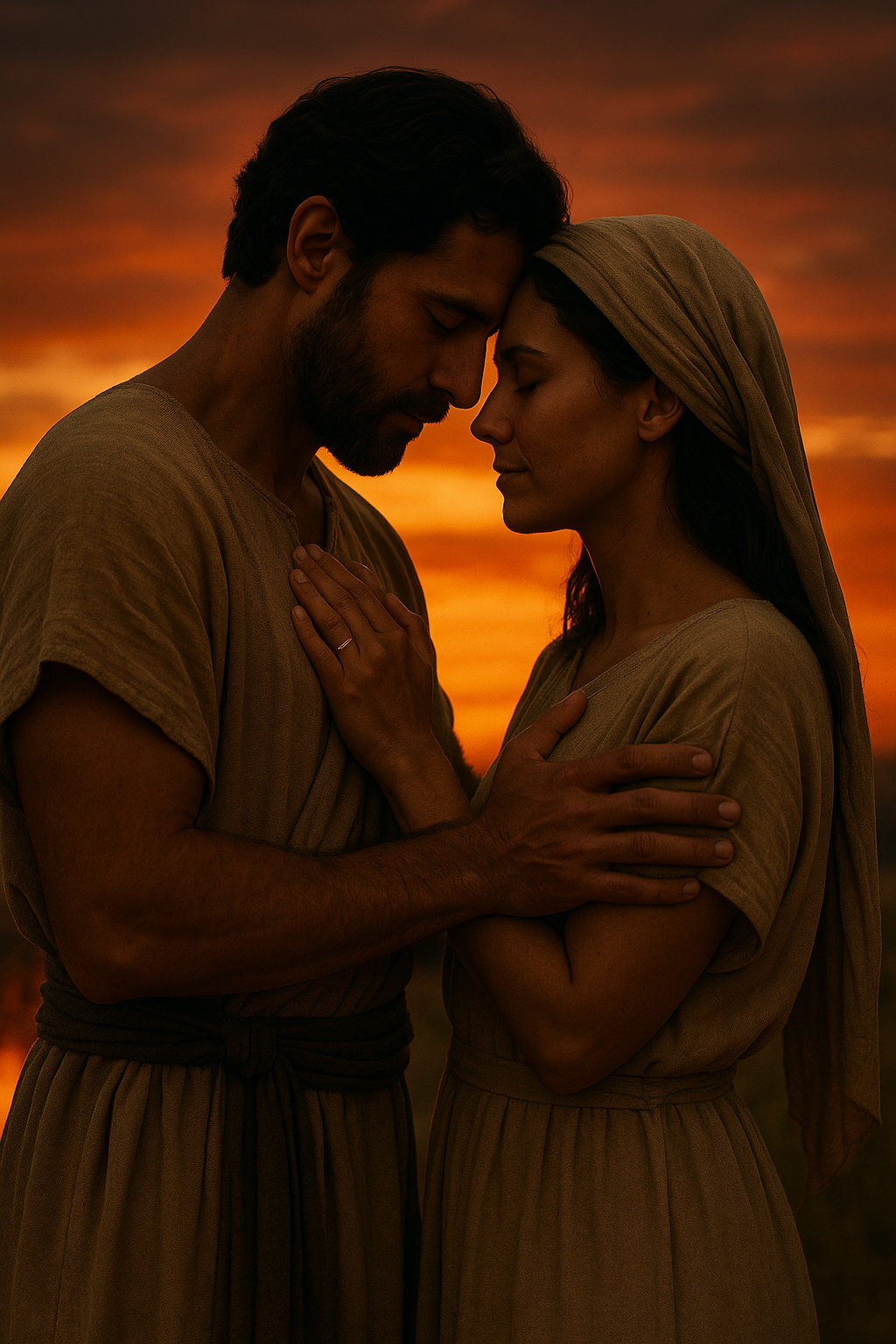
Song of Solomon 8:6–7- 6 Set me as a seal upon thine heart, as a seal upon thine arm: for love is strong as death; jealousy is cruel as the grave: the coals thereof are coals of fire, which hath a most vehement flame. 7 Many waters cannot quench love, neither can the floods drown it: if a man would give all the substance of his house for love, it would utterly be contemned.

Verse Context

These verses form one of the most passionate and memorable declarations in the Song of Solomon. The imagery of the seal reflects ownership, commitment, and protection. In the ancient Near East, seals were engraved marks used to show personal authority and unbreakable agreement. Placing a seal “upon the heart” and “upon the arm” speaks of love that is both deeply felt inwardly and visibly demonstrated outwardly.

The bride describes love as unyielding, “strong as death” in its permanence and inevitability. She also warns of the intensity of jealousy, which, in this context, refers to a protective zeal for the beloved, not petty envy. The description of love’s flames as a “most vehement flame” invokes a sense of divine fire, powerful and unquenchable.

Verse 7 expands this idea, declaring that no force, not even overwhelming waters, can extinguish true love. It is priceless, beyond purchase, and cannot be traded or bargained for. The statement that anyone who tried to buy love “would utterly be contemned” emphasizes that love is not for sale, it must be given freely and reciprocated willingly.

Broader Context

Chapter 8 of the Song of Solomon serves as the conclusion of the book, bringing together the themes of love’s beauty, strength, and permanence. Throughout the earlier chapters, the poem has moved from the excitement of new attraction to the security of mature commitment. Here at the end, the tone is both deeply personal and universally true. The bride’s words in verses 6 and 7 are not only directed to her beloved but also stand as a lasting statement about the nature of love itself.

In the world of ancient Israel, seals were an important part of daily life. They were used to mark ownership, secure legal agreements, and protect possessions. The request to be set as a seal upon the heart and arm reflects both intimacy and public declaration, showing that love is to be guarded internally and displayed outwardly.

The comparison of love to death and unquenchable fire is powerful in an agricultural and pastoral society that understood the finality of death and the destructive force of fire. Water was often a metaphor for overwhelming challenges, floods representing chaos or disaster. Declaring that such waters cannot drown love elevates it as one of life’s most indestructible forces.

In the broader flow of the book, these verses act as a final crescendo. After a journey of longing, joy, and shared experiences, the Song closes with the understanding that true love is not fragile or temporary but enduring, costly, and resistant to every trial. Spiritually, this passage has often been linked to God’s covenant love for His people, a love that no opposition, no trial, and no power in existence can extinguish.

Application

Appreciating God’s Greatness
These verses show that God’s design for love reflects His own nature, unbreakable, enduring, and priceless. Just as true marital love cannot be quenched by hardship or bought with wealth, God’s covenant love for His people is steadfast and beyond human purchase. He does not love temporarily or conditionally. His love is both deeply personal, like the seal upon the heart, and openly displayed, like the seal upon the arm.

For the Believer
For those who belong to Christ, this passage is a reminder that love in marriage and in faith is not a fleeting emotion but a permanent commitment. The “seal” imagery calls us to protect our marriages from threats both inside and outside, and to make our devotion visible through our actions. In our walk with Christ, it challenges us to hold Him close in our hearts and to live in a way that shows the world who we belong to.

Call to Action: Examine whether your love, for God, for your spouse, or for others, is easily shaken or steadfast. Strengthen it by investing time, prayer, and sacrifice into the relationships God has given you. Let your devotion be so deep that no trial can drown it, no temptation can weaken it, and no material offer could ever buy it away from you.

For the Unbeliever
If you do not know Christ, this passage offers a glimpse into the kind of love He has for those who are His. It is not a love that changes when circumstances change. It is strong, constant, and unable to be quenched by the storms of life. No amount of good works or religious effort can purchase it, it is given freely to all who will receive it through repentance and faith. Without Him, you are left to search for love that will ultimately disappoint, but with Him, you find the love your heart was made for.

Final Encouragement

Love that is rooted in God’s design is not fragile or shallow. It is sealed in the heart, shown in the actions, and unshaken by the pressures of life. The bride’s words in these verses remind us that real love does not fade when tested. Whether in marriage or in your relationship with Christ, this is the kind of love worth protecting and treasuring. Many things in this world can be bought, but true love, especially God’s love, is beyond price. Let this truth lead you to guard the love God has placed in your life and to trust that His love for you will never be quenched.

Our Prayer For You

Heavenly Father, we thank You for revealing the strength and beauty of love through this passage. We pray for every believer to hold tightly to the relationships You have entrusted to them, protecting and nurturing them with the same steadfastness You show to Your people. Let their love be a visible testimony of Your grace. For those who have not yet received Christ, we ask that You open their hearts to see that Your love cannot be bought or destroyed, and that You freely offer it to all who will come to You. May every reader walk away knowing that they are loved with an everlasting love. In Jesus’ name, Amen.

Closing

If you’ve found these daily verses encouraging, enlightening, or fruitful, please consider helping us spread the truth and light of God’s Word by subscribing to the blog and YouTube channels and liking and following the Facebook page. Most of all, share Believers of Biblical Truth and our links with others who may need the sermons and daily teachings just as much as we do.

You are loved, so much in fact, that we want you to know and be Believers of Biblical Truth.

Shalom Shalom.

Today’s Daily Bible Verse

May 21, 2025

Isaiah 41:10 (KJV)
“Fear thou not; for I am with thee: be not dismayed; for I am thy God: I will strengthen thee; yea, I will help thee; yea, I will uphold thee with the right hand of my righteousness.”

Verse Context

This verse comes from the prophet Isaiah’s message to the people of Israel during a time of immense political threat and personal uncertainty. Assyria had already ravaged much of the region, and Babylon loomed in the prophetic distance. Isaiah 41 is God’s direct word of reassurance to His covenant people, reminding them that they are not abandoned or alone.

The opening command, “Fear thou not,” is not a suggestion, it’s a divine directive, grounded in God’s presence: “for I am with thee.” The word “dismayed” carries the sense of gazing about in despair or being overwhelmed by what’s ahead. But God answers that dismay by identifying Himself: “for I am thy God.” He doesn’t just comfort, He declares possession, relationship, and commitment.

The verse contains three promises: I will strengthen thee, I will help thee, I will uphold thee. Each clause builds on the last, emphasizing God’s active role in sustaining His people. The image of being upheld by “the right hand of my righteousness” conveys both power and integrity. God is not only willing to help, He is morally bound to do so because of His character and His covenant.

Matthew Henry (1662–1714, Presbyterian) wrote, “This is a word in season to all that are fearful and faint-hearted.” He noted that these words are for those “in danger and doubt,” assuring them that God’s grace is sufficient. Albert Barnes (1798–1870, Presbyterian) observed that the threefold repetition of divine help was meant to overwhelm fear with reassurance, “as if every fear was to be met with a promise.”

Broader Context

Isaiah 41 sits within a larger section of prophetic comfort that begins in chapter 40, often referred to as the “Book of Consolation.” After long oracles of judgment in earlier chapters, God begins to speak tenderly to His people, offering hope of restoration, deliverance, and divine presence. He reassures Israel of their unique calling and His abiding faithfulness, even as they face the consequences of their rebellion.

God contrasts the impotence of idols (Isaiah 41:7, 24) with His sovereign power. While the nations tremble and turn to false gods, Israel is told to stand firm, not because of their strength, but because of God’s. This entire chapter declares that God alone rules history, chooses His people, and carries them through every trial.

This section would have been especially meaningful to later generations exiled in Babylon. To them, Isaiah’s words weren’t ancient poetry, they were a lifeline of hope pointing to a God who had not forgotten them.

Application

Appreciating God’s Greatness

This verse reveals a God who is deeply personal and infinitely powerful. He does not stand far off, indifferent to our fear, He steps into it. He speaks directly to it. He replaces it with strength, help, and divine support. His greatness is not just in what He can do, but in what He will do for those who belong to Him.

For the Believer

When fear threatens to unravel your peace, whether from uncertain finances, health battles, strained relationships, or spiritual warfare, Isaiah 41:10 is your anchor. God is not calling you to suppress fear through grit. He is calling you to replace it with faith in His presence and promises. You don’t have to hold yourself up; God will uphold you with His righteous right hand.

Call to Action

In moments of panic or pressure, speak this verse aloud. Let it rewire your reflexes from fear to faith. Meditate on the personal nature of God’s words, I am with thee… I am thy God… I will help thee. Write it on your mirror, your journal, your phone background. Let it become the truth that drowns out every lie fear tells you.

For the Unbeliever

If you don’t know God personally, this verse is an invitation. The promises here belong to those who belong to Him. But the door is open. You don’t have to face your fears alone. God offers His strength and help, not just for temporary relief, but for eternal rescue. Turn to Him, believe in His Son Jesus Christ, and receive the hope that fear can never shake.

Final Encouragement

Fear may come, but it doesn’t have to stay. God’s presence is not a theory, it’s a promise. His help is not symbolic, it’s real. And His strength doesn’t run out. Whatever you’re facing today, this verse is for you: Do not fear. God is with you.

Prayer

Lord God, thank You that You are not distant from our fear, but present in it. You are our strength when we feel weak, our help when we are overwhelmed, and our support when we feel like we’re falling. Remind us today that we don’t have to be dismayed because You are our God. Strengthen us. Help us. Uphold us. And let Your righteous right hand be our firm foundation. In Jesus’ name, Amen.

Closing

If you’ve found these daily verses encouraging, enlightening, or fruitful, please consider helping us spread the truth and light of God’s Word by subscribing to the blog and YouTube channels and liking and following the Facebook page. Most of all, share Believers of Biblical Truth and our links with others who may need the sermons and daily teachings just as much as we do.

You are loved—so much in fact, that we want you to know and be Believers of Biblical Truth. Shalom Shalom.