TODAY’S DAILY BIBLE VERSE

May 3, 2025

Romans chapter 8 verse 28: And we know that all things work together for good to them that love God, to them who are the called according to his purpose.

Verse Context

Paul, the author of the Book of Romans, writes this letter to the believers in Rome around A.D. 57. His audience is primarily Gentile Christians living under Roman rule, who are often facing persecution, hardship, or the isolation that comes from following Christ in a pagan culture. In Romans chapter 8, Paul shifts from describing the struggle with sin to the hope and assurance that comes through life in the Spirit. By the time he reaches verse 28, he is building a crescendo of comfort. He is not saying that everything is good—but rather that everything is used for good by a sovereign God.

The word “work together” in this verse comes from a Greek root meaning to cooperate or synergize. In plain English, it means God is orchestrating all things—including suffering, loss, bad weather, and even our mistakes—for a good end. But Paul adds a qualifier: this promise is only for those who love God and are called according to His purpose. The phrase “called according to His purpose” speaks to God’s divine choosing and plan—a plan that is active, intentional, and unstoppable.

This is not a motivational slogan. This is a spiritual certainty grounded in the unchangeable nature of God. As Matthew Henry (1662–1714, Nonconformist minister) writes: “Even afflictions are for the good of the saints; they are designed for, and shall issue in, their spiritual and eternal good.”

Broader Context

Romans chapter 8 is often called the “mountaintop” of Paul’s letters. It opens with “There is therefore now no condemnation to them which are in Christ Jesus” (verse 1), and closes with the thunderous declaration that nothing shall separate us from the love of God in Christ (verse 39). Verse 28 falls in the middle, acting like a sturdy pillar to hold up the weight of suffering discussed in verses 17 through 27. Paul acknowledges that creation is groaning, believers are groaning, and even the Spirit is groaning on our behalf with “groanings which cannot be uttered” (verse 26). These groanings are not signs of defeat—they are birth pangs of God’s redemptive purpose.

Romans 8:28 is the hinge between suffering and glory. It assures believers that God is not passively watching the storm—He is actively working within it. The promise is not that we will avoid pain, but that pain will not be wasted.

This chapter, and this verse in particular, have comforted martyrs, missionaries, widows, war victims, and wounded saints for two thousand years. God is not improvising with your life—He is composing a masterpiece.

Application

Appreciating God’s Greatness

Rainy days often tempt us to complain or fall into discouragement, but Romans 8:28 reminds us that even dreary moments are under the care of a masterful God. The fact that He makes all things work together—even when those things seem contradictory or painful—is proof of His wisdom and sovereignty. We see only threads; He sees the tapestry.

For the Believer

This verse should anchor us on hard days. When nothing is going right, when the forecast outside matches the gloom inside, we can still say with confidence: “God is working.” If you love Him and are called by Him, nothing is random. That closed door, that lonely moment, that delay, that rainy day—it’s all part of God’s work in your life. Let this promise steady your soul.

Call to Action: Take a moment today, even in the rain, to thank God—not just for the good days, but for the hard ones too. Pray for spiritual eyes to see His purpose unfolding, even if it is hidden from view.

For the Unbeliever

If you’re reading this and wondering whether this promise is for you, Paul is clear—it is for “them that love God” and are “called according to his purpose.” That calling begins with repentance and faith in Jesus Christ. Without Him, life’s storms are just storms. But in Christ, they become part of something redemptive. God is offering you more than temporary comfort—He is offering you eternal purpose. Don’t let the rain pass without responding to the invitation.

Final Encouragement

A rainy day may dampen your plans, but it cannot cancel God’s promises. All things—the joyful, the painful, the confusing, the silent—are working together for your good if you are in Christ. On a day when the sky is gray and the air is heavy, lift your eyes and your heart. God is working. God is near. And God is good.

Prayer

Heavenly Father, thank You for the assurance that nothing in my life is wasted—not the sunshine, not the rain, not even the tears. Thank You that You are working even when I don’t see it. Help me today to trust Your timing, rest in Your purpose, and rejoice in Your presence. On days like this, when the sky is dark and my spirit feels weak, remind me that You are my light. In Jesus’ name, Amen.

Closing

If you’ve found these daily verses encouraging, enlightening, or fruitful, please consider helping us spread the truth and light of God’s Word by subscribing to the blog and YouTube channels and liking and following the Facebook page. Most of all, share Believers of Biblical Truth and our links with others who may need the sermons and daily teachings just as much as we do.

You are loved—so much in fact, that we want you to know and be Believers of Biblical Truth.

Shalom Shalom
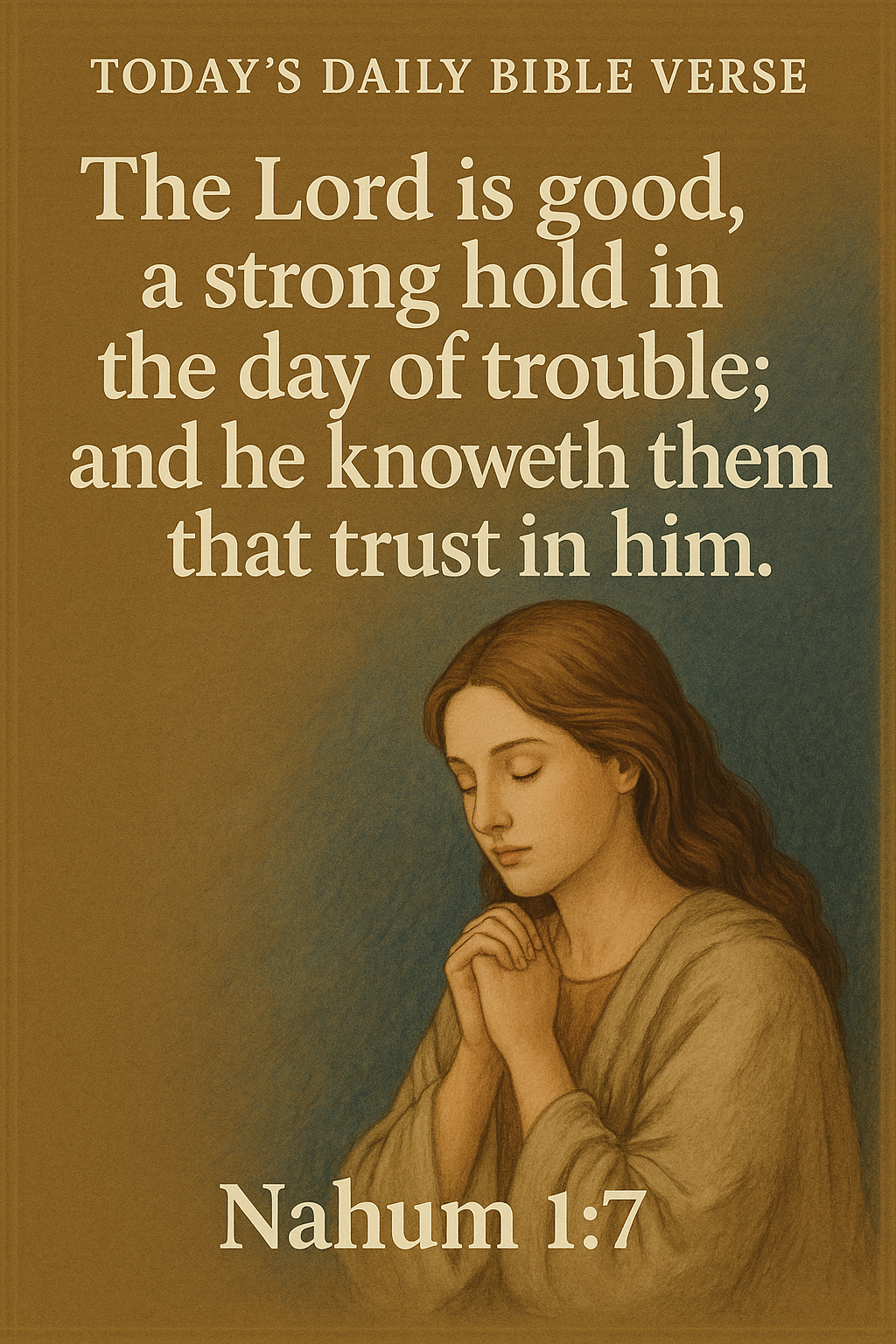
TODAY’S DAILY BIBLE VERSE

May 2, 2025

Nahum 1:7: The Lord is good, a strong hold in the day of trouble; and he knoweth them that trust in him.

Verse Context:

This verse appears right in the middle of a judgment oracle, and that contrast is powerful. Nahum, the prophet whose name means “comfort,” is declaring the downfall of the wicked city of Nineveh. Verses before and after this one thunder with divine wrath—God’s vengeance, fury, and power over His enemies. But here, in Nahum 1:7, there is a sudden and beautiful shift. It’s as if God pauses mid-sentence to comfort His faithful remnant, assuring them that while judgment comes for the wicked, safety remains for those who trust in Him.

The statement “The Lord is good” is not a general remark; it is a theological anchor. In a chapter filled with divine anger, this is a reminder that God’s justice is not cruelty—it is goodness expressed through holiness. The word “good” here implies moral perfection, kindness, and covenantal loyalty. It’s not a temporary or shifting trait—it is His eternal nature (see Psalm 100:5: “For the Lord is good; his mercy is everlasting; and his truth endureth to all generations.”).

Next, the LORD is described as “a strong hold in the day of trouble.” A strong hold, or fortress, was a place of refuge from siege or disaster. This phrase reveals God’s role as protector, not merely from physical enemies but from every form of distress. The day of trouble is not limited to one event—it refers to any moment of suffering, oppression, or calamity. God’s people were surrounded by violent empires, and yet He was their invisible fortress.

The last phrase—“he knoweth them that trust in him”—is deeply intimate. The word “knoweth” implies more than simple awareness. It’s a covenantal knowing—a recognition, a loving attentiveness. It’s the same kind of knowledge expressed in Second Timothy 2:19: “The Lord knoweth them that are his.” To trust in him means to find one’s security, loyalty, and hope in the LORD alone. It’s not a vague belief but a committed dependence, even when surrounded by threat.

This verse teaches that God’s wrath and God’s refuge are not contradictory—they are parallel truths. The same fire that devours the wicked warms the faithful. To those who oppose Him, He is a whirlwind. To those who trust Him, He is a wall.


Broader Context:

The book of Nahum was written sometime between 663 and 612 B.C., after the fall of Thebes (Nahum 3:8–10) but before the fall of Nineveh. This was a time of international tension, and the Assyrian Empire was the world’s most feared superpower. They had destroyed the northern kingdom of Israel and terrorized Judah. But God now declares that Assyria’s reign of terror would end. Nahum’s message is both a pronouncement of doom for Nineveh and a message of hope for God’s people.

Chapter 1 introduces this theme of judgment and refuge side-by-side. Verses 2–6 highlight God’s wrath, His power over the earth, and His intolerance for sin. Then, suddenly, verse 7 shifts the tone: to the faithful, God is good. This creates a powerful theological balance: God is not one-dimensional. He is both Judge and Savior, furious against evil and tender toward the humble.

This theme is consistent throughout Scripture. In Exodus chapter 34 verse 6, when God reveals His name to Moses, He says: “The Lord, The Lord God, merciful and gracious, longsuffering, and abundant in goodness and truth.” That goodness is on display in Nahum 1:7.

Application:

Appreciating God’s Greatness:

Nahum 1:7 showcases the multifaceted nature of God. He is not only a consuming fire (Hebrews 12:29) but also a place of safety. His justice is not detached from His goodness. In fact, it is because He is good that He must judge evil. But His greatness is seen most clearly in His personal care for those who trust Him. He doesn’t just see us—He knows us. His knowledge is relational, personal, and loving. This is not the distant deity of paganism, but the intimate God of covenant.

For the Believer:

When life collapses, when fear rises, when trials surround—the Lord is good. He is not just good in theory, but good to you. He is a strong hold. Not a crumbling wall, not a paper-thin shield, but a fortress built by the eternal God. If you trust Him, He knows your name, your pain, your prayers.


Call to Action:

Take time today to run into that strong hold. Don’t trust in yourself, your job, your family, or your strength. Trust in the One who knows you and has never once failed. Write this verse on your heart and speak it over your storm.

For the Unbeliever:

This verse offers hope, but it also implies a decision. It says God knows those who trust in Him—but what about those who do not? This verse is comfort for the believer, but it’s a challenge for the lost. If you are not trusting in the LORD, then you remain outside the strong hold. And when the day of trouble comes—whether it be national collapse, personal tragedy, or the final day of judgment—there will be no refuge unless you are found in Christ. But today you can turn to Him. Trust Him. He already knows your heart. Let Him redeem it.

Final Encouragement:

Nahum 1:7 is one of the greatest promises in a book full of judgment. It reminds us that in every generation, even when the world shakes and evil seems to rise, God is still good. He is still strong. And He still knows His people. Whatever trouble you face today—emotional, spiritual, physical—remember that God’s goodness is not shaken. His strong hold still stands.

Prayer:

Father God, You are good—always. Even when storms rage and the world groans, Your goodness does not change. Thank You for being our strong hold, our place of shelter in every trouble. Thank You for knowing us—really knowing us—and still loving us. Help us trust You more today. Remind us that we are not forgotten, not forsaken. And for those who do not yet know You, please let this be the day they run into Your arms. We praise You for being both mighty and merciful. In the name of Jesus, our Rock and our Redeemer, Amen.

Closing:

If you’ve found these daily verses encouraging, enlightening, or fruitful, please consider helping us spread the truth and light of God’s Word by subscribing to the blog and YouTube channels and liking and following the Facebook page. Most of all, share Believers of Biblical Truth and our links with others who may need the sermons and daily teachings just as much as we do.


You are loved—so much in fact, that we want you to know and be Believers of Biblical Truth.

Shalom Shalom.