
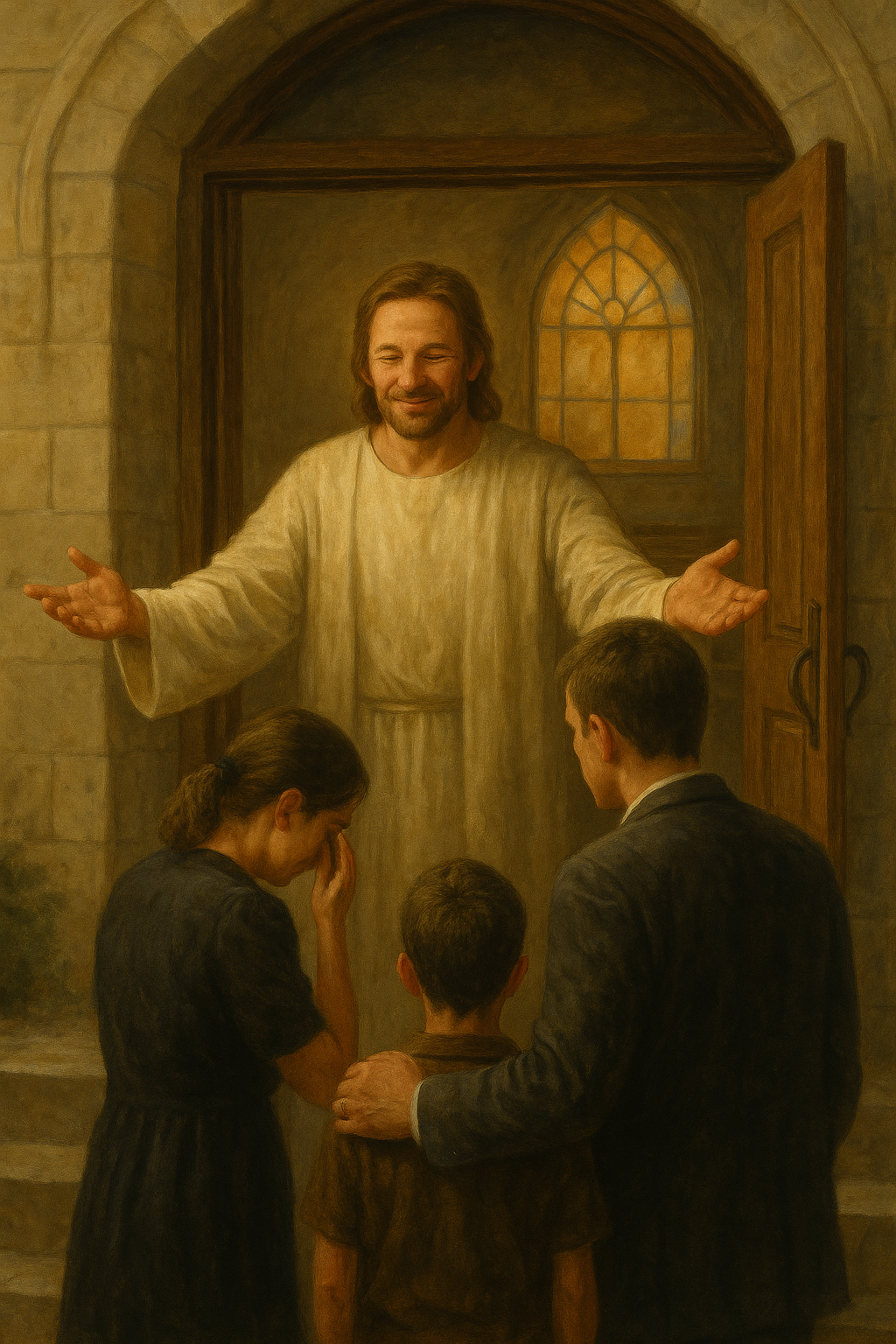
TODAY’S DAILY BIBLE VERSE- Come Unto Me

Matthew chapter 11 verses 28 through 30
"Come unto me, all ye that labour and are heavy laden, and I will give you rest. Take my yoke upon you, and learn of me; for I am meek and lowly in heart: and ye shall find rest unto your souls. For my yoke is easy, and my burden is light."

VERSE CONTEXT

Matthew chapter 11 verses 28 through 30 sits at the heart of a very personal moment in Jesus’ ministry. By the time we reach these verses, He has just finished publicly denouncing cities like Chorazin, Bethsaida, and Capernaum—places that had seen His miracles yet refused to repent. But rather than ending on a note of judgment, Jesus pivots to one of the most tender and hope-filled invitations in all of Scripture. He calls to those who are not merely rebellious, but weary—those crushed under the weight of life, whether by sin, sorrow, or the suffocating demands of religion.

Jesus begins by saying, “Come unto me, all ye that labour and are heavy laden, and I will give you rest.” This is not a soft offer or vague encouragement—it is a divine summons. The word “come” here is a present tense call, full of urgency and compassion. He is not calling the proud or the self-sufficient; He is calling those who “labour,” a word which means to be worn out from hard toil, and those who are “heavy laden,” describing the crushing weight placed on a person from the outside. In the immediate Jewish context, this would have reminded listeners of the unbearable burden placed upon them by the scribes and Pharisees who had bound them with hundreds of religious laws and expectations (see Matthew chapter 23 verse 4: “For they bind heavy burdens and grievous to be borne, and lay them on men’s shoulders…”). But the weight Jesus speaks of is more than legalism—it includes the soul-wearying weight of guilt, shame, grief, and hopelessness.

Then He says, “I will give you rest.” The word “rest” here is not just sleep or relief from physical labor—it is soul-level peace. It is the same deep relief promised in Jeremiah chapter 6 verse 16, where the old paths of the Lord were said to lead to “rest for your souls.” Jesus is revealing Himself here not only as the Teacher, but as the fulfillment of every promise ever made about peace, about restoration, and about rest in God. He doesn’t offer to lessen the burden; He offers to replace it.

But He doesn’t stop there. He adds, “Take my yoke upon you, and learn of me; for I am meek and lowly in heart.” In ancient times, a yoke was a wooden harness laid across the shoulders of oxen to keep them walking side by side and to guide their work. Spiritually speaking, to be yoked to someone was to be tied to their teaching and their way of life. The Pharisees offered the “yoke of the law,” which became a symbol of impossible religious effort. Jesus offers His own yoke—one that still calls for discipleship and obedience, but not one based on shame or fear. He is “meek and lowly in heart.” The word “meek” here does not mean weak—it means gentle, controlled, approachable. “Lowly in heart” means He is humble, not aloof or unapproachable. Christ is telling the weary soul that He will not break them further—He will bind them to Himself in love, not in law.

He concludes by saying, “Ye shall find rest unto your souls. For my yoke is easy, and my burden is light.” His “yoke” is easy—not because life becomes effortless, but because it fits. It is suited for us because He bears it with us. When Jesus says His burden is “light,” He doesn’t mean the path is painless. He means it is shared, and therefore, bearable. The burden is no longer ours to carry alone. It becomes the blessed burden of walking with the Son of God, whose strength becomes ours.

Historically, this passage has been a balm to countless believers. It became especially cherished in times of persecution, poverty, or despair—when no other source of comfort could be found. John Calvin (1509–1564, Reformed) noted that “nothing is more sweet than this voice of Christ, which invites us to Himself with fatherly kindness.” Matthew Henry (1662–1714, Presbyterian) called it “the greatest refreshment to a soul weary of sin.” But even without the commentaries, this passage speaks plainly. The voice of the Savior here is not thundering from Sinai—it is whispering in the wind to the weary soul, “Come.”

This verse is for the mother crying in silence for the loss of her child, for the mom and dad struggling to keep a family together while their teenager is experiencing heart failure and needs a heart transplant, for the mom and dad who pray for their son and his addictions that keep him going in and out of jail and prison, for the sister struggling in an abusive relationship, for the brother who feels forgotten, for the elder saint worn down by pain, for the young soul crushed by anxiety or shame, for the person struggling financially with debt or unemployment, and for all of who have lost loved ones that break our hearts. It reminds us that Christ does not offer escape—He offers Himself. And in Him is rest not just for today, but forever.

BROADER CONTEXT

The invitation in Matthew chapter 11 verses 28 through 30 cannot be fully grasped unless we understand the chapter as a whole—and, even more, the heart of the Gospel of Matthew. These verses come at the close of a deeply revealing chapter, one that contrasts the hardness of men’s hearts with the openness of Christ’s.

Matthew chapter 11 begins with a moment of doubt from a faithful man—John the Baptist, now imprisoned, sends messengers to Jesus asking, “Art thou he that should come, or do we look for another?” (Matthew chapter 11 verse 3). Some take this as a wavering of John’s faith, but it’s more likely an honest struggle to reconcile what he knew of Jesus with what he was suffering. Jesus doesn’t rebuke John. Instead, He sends back evidence—the blind see, the lame walk, the deaf hear, the dead are raised, and the poor have the gospel preached to them. In other words, “Yes, I am the One who was to come, and you have not hoped in vain.”

Then Jesus turns to the crowds and honors John, calling him more than a prophet. Yet in that same breath, He rebukes the people and cities who had seen His miracles and still refused to believe. In Matthew chapter 11 verses 20 through 24, He compares these towns unfavorably to Tyre, Sidon, and even Sodom—wicked cities of the Old Testament. The cities of Chorazin, Bethsaida, and Capernaum had witnessed the divine but clung to unbelief. Their downfall wasn’t ignorance—it was prideful resistance.

That is what sets the stage for verses 25 through 30. After lamenting the hardness of hearts, Jesus offers praise to the Father, saying, “I thank thee, O Father…because thou hast hid these things from the wise and prudent, and hast revealed them unto babes” (Matthew chapter 11 verse 25). This doesn’t mean intelligence is condemned; rather, it means that spiritual truth is withheld from the proud who rely on their own wisdom and instead revealed to the humble, the childlike, the needy. Jesus is rejoicing that the kingdom of heaven is not accessed through intellect or pedigree, but through dependence and surrender.

Then, in verses 27 through 30, Jesus shifts from speaking to the Father to speaking directly to the people. It’s as if the curtain is drawn back and the heart of Christ is laid bare. All things are given to Him by the Father, and no one truly knows the Father except through the Son. The next words—“Come unto me…”—are not abstract theology. They are the outpouring of divine compassion. This is Christ calling out to the humble remnant, the wounded believer, the outsider longing for peace.

Zooming out further, this chapter reveals one of Matthew’s most consistent themes: the clash between religious pride and divine mercy. Throughout his Gospel, Matthew—writing especially to a Jewish audience—emphasizes Jesus as the fulfillment of the Old Testament, the true King and Messiah, and the compassionate Shepherd. Where the Pharisees offered rules, Jesus offers relationship. Where the law showed the problem, Jesus presents Himself as the answer.

Matthew chapter 11 also connects thematically to the next chapter. In Matthew chapter 12, we see the conflict escalate. The Pharisees accuse Jesus’ disciples of breaking the Sabbath for plucking grain, and later they plot against Him for healing a man with a withered hand. But in the midst of all that, Matthew quotes Isaiah: “He shall not strive, nor cry…a bruised reed shall he not break, and smoking flax shall he not quench” (Matthew chapter 12 verses 19–20). That prophetic word echoes and amplifies what we see in today’s passage: Jesus is gentle. He is close. He does not discard the weary—He restores them.

So in the broader arc of the book, these three verses serve as a turning point. They are not just a comfort to the hurting—they are a rebuke to the proud and a declaration to the world that Christ’s kingdom is not built on power or performance, but on grace, humility, and faith. These verses remind us that Jesus is not merely offering to help bear burdens—He is offering Himself as rest.

APPLICATION

The invitation of Jesus in Matthew chapter 11 verses 28 through 30 is deeply personal, yet universal in scope. It is extended to all who labour and are heavy laden—and that includes many among us right now. For those surrounded by sorrow, burdened by sin, or simply worn thin from the weight of life, this call stands unchanged. It is not a suggestion. It is a call to rest in the arms of the Savior.

Appreciating God’s Greatness

These verses reveal something about Christ that no earthly king or religious leader has ever matched: He is powerful enough to carry our burdens and yet meek enough to stoop down and walk with us. “I am meek and lowly in heart,” He says. This is not weakness—it is greatness in its most divine form. It takes unimaginable strength to bear the griefs of the world, yet do so with gentleness, never breaking the bruised reed or snuffing out the faintly burning wick.

Christ is the Creator, and yet He offers Himself as rest. This is the heart of the Gospel—that the One who spoke the stars into being now opens His arms to the weary soul and says, “Come unto me.” He does not demand that we be strong before we come. He calls us as we are—tired, overwhelmed, grieving, and fragile. His greatness is not seen merely in His power to rule, but in His willingness to carry the weight we cannot.

For the Believer

If you are a believer struggling beneath a heavy load—perhaps heartache, illness, financial fear, betrayal, or just exhaustion—these verses are for you. You may have cried quietly where no one saw. You may have worn a strong face in public but collapsed in private. Hear the voice of Jesus: “Come unto me.”

This passage reminds the believer that the Christian life is not one of self-reliance. It is not spiritual independence. Christ did not die to make us strong on our own. He died and rose so we could walk in dependence on Him. The yoke we are called to take is His—not the world’s, not the law’s, not the expectations of others, but His. And His yoke is never cruel. His leadership is always laced with love.

Call to Action

So what should the believer do with this passage? You must come. Not to a church building. Not to a ritual. Not even to a feeling. But to Him. That means prayer, yes—but more than that, it means surrender. Stop trying to prove yourself. Stop pretending you’re okay. Take off the mask and hand Him the burden. Say, “Lord, I can’t carry this—but I believe You can.” And then take His yoke, trusting that obedience is no longer a heavy burden, but a shared walk with the Savior who loves you.

Christ doesn’t promise a life free of storms. But He does promise that you will never face them alone.

For the Unbeliever

If you are not a believer—if you’re not sure where you stand with Christ—this is more than an encouragement. It is a rescue rope. The burdens you carry may be your own sin, or maybe it’s just the crushing emptiness of a life without peace. Maybe you’ve been running from God, or maybe you’ve just never been sure He was real. But here, in this verse, He calls to you.

He sees your pain. He sees your brokenness. And He is not asking you to clean yourself up first. He says, “Come.” That’s it. Come to the one who bled for you. Come to the one who was acquainted with grief, who wept at death, who walked through sorrow so He could walk with you through yours.

If you will turn from your sin and come to Christ in faith—believing He died for you and rose again to offer life eternal—you will find what your soul has been searching for all along. You will find rest.

FINAL ENCOURAGEMENT

Jesus did not come for the self-sufficient. He came for the burdened, the weary, and the broken. He did not say, “Come to me once you’ve figured it out,” or “Come after you’ve fixed yourself.” He simply said, “Come unto me.” This passage is a refuge for every soul crushed by sorrow or sin, a shelter for those carrying silent grief, and a promise to those who feel unseen. The Savior of the world, the Man of Sorrows, who was Himself acquainted with grief, now opens His arms and says, “Come.”

For the believer, this is your reminder: you don’t walk alone. And for the unbeliever, this is your opportunity: you don’t have to stay where you are. Jesus offers Himself—not as a philosophy, not as a burden, but as rest. The door is open. The invitation is real. His burden is light. His grace is sufficient. And His heart is for you.

PRAYER

Heavenly Father,
We come before You weary from a world heavy with sorrow and uncertainty. We thank You that in the midst of our pain, Your Son Jesus stands with open arms, offering rest for our souls. Lord, for every person reading who is burdened—whether by grief, fear, sin, or exhaustion—remind them of the invitation You have given: that we can come to You just as we are.

Let Your Spirit draw the broken-hearted close today. Let the weary believer feel Your strength beneath their weakness. Let the doubting soul hear Your voice, and let the one weighed down by sin find freedom in Christ. We ask for peace that surpasses understanding, and for courage to take on the yoke of Jesus, trusting that He walks beside us, never ahead of us, never apart from us.

Thank You for being our rest, our refuge, and our Redeemer. In Jesus’ holy name we pray, Amen.

CLOSING

If you’ve found these daily verses encouraging, enlightening, or fruitful, please consider helping us spread the truth and light of God’s Word by subscribing to the blog and YouTube channels and liking and following the Facebook page. Most of all, share Believers of Biblical Truth and our links with others who may need the sermons and daily teachings just as much as we do.

You are loved—so much in fact, that we want you to know and be Believers of Biblical Truth. Shalom Shalom.

TODAY’S DAILY BIBLE VERSE

April 22, 2025

Daily Verse:
John chapter 14 verse 26: But the Comforter, which is the Holy Ghost, whom the Father will send in my name, he shall teach you all things, and bring all things to your remembrance, whatsoever I have said unto you.

VERSE CONTEXT

The Gospel of John was written by the Apostle John, the beloved disciple, sometime between A.D. 85–95. John’s purpose was to present Jesus Christ as the eternal Son of God and the only way to eternal life. Chapter 14 falls within a deeply intimate and transitional moment known as the Upper Room Discourse (John chapters 13 through 17). This is Jesus’ final conversation with His disciples before His arrest, and it is rich in theological meaning, emotional urgency, and spiritual comfort.

In this passage, Jesus is preparing His disciples for His imminent departure—His betrayal, crucifixion, resurrection, and eventual ascension. This verse is nestled in the heart of a promise: though Jesus is physically leaving, He is not leaving them without help. He promises the sending of “the Comforter,” which is the Holy Ghost, or Holy Spirit.

The word Comforter is a translation of a powerful Greek term often rendered as Helper, Advocate, or Counselor—each of which expresses part of the Holy Spirit’s role. The English word “Comforter” comes from Latin roots: com (with) and fortis (strength). This captures the Spirit’s strengthening presence, not merely His ability to console.

Jesus says this Comforter will be sent “in my name,” which affirms the Spirit’s divine origin and mission. He does not act independently or contrary to Jesus’ nature, but in full unity with Christ and the Father. This reveals the tri-unity of God: the Father sends, the Son mediates, and the Spirit ministers.

Two key roles of the Holy Ghost are taught here:

  1. He shall teach you all things – This refers not to the introduction of brand-new revelation outside of what Christ taught, but to the deepening of understanding concerning Christ’s words and work. This is why the apostles were able to authoritatively write the New Testament. Their teaching did not come from their own memory alone but was guided and clarified by the Spirit.
  2. He shall bring all things to your remembrance – The Holy Spirit empowers spiritual memory. In context, this was especially critical for the apostles, as they would soon be entrusted with the message of the Gospel. The Spirit would bring to their minds the words of Jesus, not just in content but in meaning, allowing them to preach, teach, and write with divine accuracy.

Commentator Matthew Henry (1662–1714, Presbyterian) notes that this promise was “peculiarly adapted to the apostles,” yet by extension, believers today benefit from the same Spirit, who opens our eyes to understand Scripture and recalls God’s truth to us in moments of need. Likewise, John Gill (1697–1771, Baptist) emphasizes that the Spirit would be the divine instructor, preserving Jesus’ words from being lost, corrupted, or misunderstood—guarding the truth from generation to generation.

This verse also confirms the Holy Ghost as a person, not a force. Jesus uses the pronoun “he,” identifying the Spirit with personal agency, intelligence, and will. He teaches, speaks, and remembers—these are not qualities of a mere influence but of a divine Person.

In this single verse, Jesus gives both a promise and a preview of Pentecost. The Spirit would not just fall on believers in Acts chapter 2; He would dwell with them, teach them, and walk with them. The Holy Spirit is not only present at salvation, but in the believer for the entire journey.

BROADER CONTEXT

John chapter 14 is one of the most intimate and tender chapters in all of Scripture. It opens with Jesus saying, “Let not your heart be troubled,” addressing the confusion and sorrow that had overtaken His disciples as they began to understand that He would soon leave them. This chapter is part of what scholars call the Farewell Discourse, stretching from chapter 13 to 17. It contains some of Jesus’ final teachings before His arrest, providing instruction, encouragement, and theological clarity to prepare His followers for life after His ascension.

In the immediate context, John chapter 14 verses 16 through 31 contain repeated promises about the Holy Spirit. These are not casual references; they are part of Jesus’ deliberate effort to reveal how the third Person of the Trinity would continue His ministry in His physical absence. The disciples had come to rely heavily on Jesus—He was their teacher, their leader, their protector, and their constant companion. The idea of Him leaving created fear and despair. Jesus answers this by revealing a truth far greater than what they expected: He was not abandoning them—He was making it possible for His presence to dwell in all believers through the Spirit.

John chapter 14 verse 26 is the second of four direct promises of the Spirit in this chapter alone:

  • Verse 16: And I will pray the Father, and he shall give you another Comforter, that he may abide with you for ever.
  • Verse 17: Even the Spirit of truth; whom the world cannot receive… but ye know him; for he dwelleth with you, and shall be in you.
  • Verse 26: But the Comforter, which is the Holy Ghost… he shall teach you all things…
  • Verse 27 (immediate result): Peace I leave with you…

When Jesus calls the Spirit “another Comforter” in verse 16, the word another implies another of the same kind. That is, just as Jesus was a divine guide, teacher, and protector, so too would the Spirit be. The Spirit is not a downgrade. He is God just as Christ is God. Jesus was confined to one physical location in His earthly ministry. The Spirit, by contrast, would indwell all believers, making the ministry of Christ universal, ongoing, and internal.

This broader context also builds into the theological groundwork for what would soon happen in Acts chapter 2 at Pentecost. There, the Holy Ghost would descend, filling the apostles and believers with supernatural understanding and boldness. But here in John 14, Jesus reveals that this Spirit is not new—He is the Spirit of truth and the Holy Ghost, eternal and divine, now to be intimately involved in every believer’s life.

John chapter 14 also stands as part of the book’s larger structure. The Gospel of John is organized around signs and sayings that point to Jesus’ divine identity and mission. John is not a synoptic gospel like Matthew, Mark, or Luke; he selects his material more theologically than chronologically. His goal is stated in John chapter 20 verse 31: But these are written, that ye might believe that Jesus is the Christ, the Son of God; and that believing ye might have life through his name.

The Holy Spirit, then, is not a side subject but essential to this goal. Without the Spirit, the believer cannot understand truth (First Corinthians chapter 2 verse 14: But the natural man receiveth not the things of the Spirit of God: for they are foolishness unto him). Without the Spirit, the believer cannot bear fruit (Galatians chapter 5 verses 22–23). Without the Spirit, there is no conviction of sin, no spiritual rebirth, no power for witness, and no transformation.

Thus, John chapter 14 verse 26 serves as both comfort and commissioning. Jesus reassures the disciples—and us—that His teaching will not be lost, forgotten, or misunderstood. The Holy Ghost will teach and remind. This same Holy Spirit continues that ministry today, bringing the Word of God to life in the minds and hearts of believers. The doctrine of the Holy Spirit, introduced so clearly in this chapter, will shape the believer’s walk, witness, and worship from Pentecost until Christ returns.

APPLICATION

Appreciating God’s Greatness
John chapter 14 verse 26 shows us the greatness of God in His tender care and divine foresight. God does not leave His people confused or abandoned. The Son returns to the Father, but not without sending the Spirit—equal in power and glory—to continue His work within us. What kind of God sends Himself to dwell inside His people so they will never be alone again? Only the true and living God. He is not distant or detached. He is personally involved, constantly teaching, continually reminding, and always near. His greatness is seen not only in His power, but in His presence. Through the Holy Spirit, we see the wisdom of God—who not only gave us a Book but gave us a Teacher to help us understand it. The Spirit’s divine role glorifies both the Father and the Son by illuminating their truth to the heart of man.

For the Believer
This verse is a gift for those who believe. If you are in Christ, the Holy Spirit is not a visitor—He is a resident. He is not far off—He is within. He is not passive—He is active. But how often do we ignore Him? Many believers go through their lives unaware that the very presence of God is living inside of them, offering guidance, teaching, and recall of truth. The Holy Spirit will not shout over the noise of your daily distractions. But if you submit yourself in prayer, in humility, and in the Word of God, He will speak. He will bring things to your remembrance—not from your own wisdom, but from what Christ has spoken.

We must also recognize that this promise comes with a condition: whatsoever I have said unto you. The Spirit reminds us of Jesus’ words, not our opinions. This means that Christians must read, study, and memorize the Word. The more we store up God’s truth, the more the Spirit can call it to mind in moments of need, temptation, or opportunity. The Comforter cannot bring to remembrance what you have not first received. This gives urgency to daily Scripture reading. It’s not for knowledge alone—it’s to build a storehouse from which the Spirit can draw.

Call to Action
Start today by praying: “Holy Spirit, teach me.” Then open the Word of God. Ask the Spirit to help you understand, apply, and live out what you read. Trust that He will. Set aside time every day not just for prayer, but for listening. Ask the Spirit to remind you of Christ’s words throughout your day—especially when facing temptation, conflict, fear, or decisions. And when He brings something to mind, act on it. The Spirit is our Comforter, yes, but He is also our Convicter. Let Him convict. Let Him teach. Let Him lead.

For the Unbeliever
This verse speaks clearly of a spiritual reality that is not automatic. The Holy Spirit does not dwell in everyone—He is given to those who believe. Jesus made it plain in John chapter 3 verse 5: Except a man be born of water and of the Spirit, he cannot enter into the kingdom of God. If you do not yet believe in Jesus as Lord and Savior, then this promise does not yet apply to you. But it can. The Spirit is drawing you now—not with a loud voice, but with conviction, stirring your heart to repentance and faith. He opens the eyes of the blind. He awakens the dead soul to life. He reveals Jesus. If you feel the weight of your sin, if you see your need for salvation, that is the Spirit already at work in you. Don’t resist Him.

Believe in the Lord Jesus Christ. He died for your sins, was buried, and rose again. Repent of your rebellion and turn to Him. When you do, the Holy Ghost will not only visit—you will become His dwelling place. And He will begin the lifelong work of teaching, reminding, and transforming you from the inside out.

FINAL ENCOURAGEMENT

John chapter 14 verse 26 is not just a promise for the apostles—it is a promise that echoes through time to every believer who loves Jesus and treasures His Word. The same Holy Spirit who taught Peter, John, and Paul is available to teach you. The Spirit of God is not silent, nor is He distant. He dwells within you, He speaks through the Scriptures, and He is constantly working to glorify Christ in your life. In moments of doubt, confusion, fear, or weakness, He will remind you of what Jesus said—if you will listen.

Let this truth settle deep in your soul: you are never alone. When you open the Word, the Author is present. When you face trials, the Comforter is with you. When you cannot remember what to pray or what is true, the Holy Ghost will bring it to your remembrance. God has not left you to figure this out by yourself. He has given you His Spirit—the same Spirit that raised Jesus from the dead.

So take heart. Keep seeking. Keep studying. Keep walking in the truth. And trust that the Spirit who began a good work in you will perform it until the day of Jesus Christ.

PRAYER

Heavenly Father,
Thank You for not leaving us comfortless. Thank You for sending the Holy Ghost in the name of Jesus to teach us and to remind us of Your truth. Help us to quiet the noise of the world so we can hear His voice more clearly. Stir our hearts with a greater hunger for Your Word, that the Spirit may bring it to life within us. When we forget, remind us. When we are weak, strengthen us. When we wander, correct us. May we walk in step with the Spirit and glorify Christ in all we do. In the name of our risen Savior, Jesus Christ, we pray. Amen.

CLOSING

If you’ve found these daily verses encouraging, enlightening, or fruitful, please consider helping us spread the truth and light of God’s Word by subscribing to the blog and YouTube channels and liking and following the Facebook page. Most of all, share Believers of Biblical Truth and our links with others who may need the sermons and daily teachings just as much as we do.

You are loved—so much in fact, that we want you to know and be Believers of Biblical Truth.

Shalom Shalom.

TODAY’S DAILY BIBLE VERSE

April 21, 2025

First Peter chapter 5 verse 10
“But the God of all grace, who hath called us unto his eternal glory by Christ Jesus, after that ye have suffered a while, make you perfect, stablish, strengthen, settle you.

VERSE CONTEXT

The Apostle Peter, writing under the inspiration of the Holy Ghost, addressed this epistle to believers scattered throughout Pontus, Galatia, Cappadocia, Asia, and Bithynia—regions of what is now modern-day Turkey. These were Christians undergoing various forms of persecution under Roman rule, and many were suffering in social, economic, and spiritual isolation. Peter’s letter was intended as a pastoral encouragement to these believers, reminding them of the eternal inheritance awaiting them and the temporary nature of their earthly afflictions.

First Peter chapter 5 begins with instruction to the elders (pastors), urging them to feed the flock of God willingly and to lead by example (verse 2). Then Peter exhorts the younger believers to submit themselves to the elder and for all to be clothed in humility, casting their cares upon God because He cares for them (verse 7). From there, the warning shifts to a sobering reality: the devil “walketh about, seeking whom he may devour” (verse 8). It is here, in the middle of that battle imagery—not outside of it—that verse 10 appears as a divine anchor.

Peter declares, “But the God of all grace…” The phrase “God of all grace” is more than poetic—it is doctrinal. Grace here means every kind of sustaining help and divine provision, not just unmerited favor for salvation. This God, who possesses every form of grace, is also the One who “hath called us unto his eternal glory by Christ Jesus.” That calling is not only future, as in our heavenly reward, but present, because we are now partakers of that glory through Christ (see Romans chapter 8 verse 30: “Moreover whom he did predestinate, them he also called: and whom he called, them he also justified: and whom he justified, them he also glorified.”)

Then comes the encouragement that is central to today’s verse and message: “after that ye have suffered a while…” Notice the brevity Peter attaches to suffering—a while. This is not to diminish the pain, but to remind the sufferer of the temporary nature of earthly trials in light of eternal glory. The word “suffered” refers broadly to all kinds of suffering—emotional, physical, spiritual, and even social. This means the person silently battling anxiety, depression, grief, or loneliness is not excluded.

Peter then lists four things God will do:

Make you perfect” – This means to restore, equip, or complete. The Greek word (noted here only for context, not written) often refers to mending something torn—like a broken net or dislocated joint. God isn’t just soothing pain; He is actively restoring the soul.

Stablish” – This means to set firmly in place, like a foundation stone that will not shift under pressure.

Strengthen” – God gives inner resolve to stand firm under the weight of trials.

Settle you” – This speaks of deep spiritual stability, like a house built on a rock rather than sand (Matthew chapter 7 verses 24–25).

All four of these words paint the picture of a believer who has been battered by storms but stands tall again—not because the storms stopped, but because God Himself reinforced their spiritual frame.

What makes this especially encouraging for those suffering in silence is that Peter does not speak this over a group of perfect, pain-free Christians. He speaks it to hurting people, and he expects God to intervene personally and powerfully. But notice this: Peter is not writing this privately to one believer. This letter was meant to be read publicly, reminding us that God’s comfort and care is not only personal—it is communal. The church is meant to be a place of healing, not hiding.

BROADER CONTEXT

The broader context of First Peter chapter 5 verse 10 ties into one of the central themes of Peter’s entire letter: suffering is not only expected in the Christian life—it is purposeful. And it is not meant to be endured in isolation.

This epistle was likely written between A.D. 62–64, just before or during the early stages of Nero’s reign of terror. Christians were being blamed for social unrest, mocked, excluded from economic participation, and in many cases, persecuted to the point of death. But not all suffering was dramatic. Many simply lived in quiet anguish—cut off from families, pressured to conform, and marginalized by their communities. This is no different from what many believers go through today: quiet, inward suffering that never makes headlines.

Peter writes to remind them that suffering does not mean abandonment. In fact, if we step back to examine the entire book, we see how the Spirit of God, through Peter, builds a theology of suffering for the believer:

First Peter chapter 1 verse 7: “That the trial of your faith, being much more precious than of gold that perisheth, though it be tried with fire, might be found unto praise and honour and glory at the appearing of Jesus Christ:”- Trials refine the faith of the believer like fire purifies gold. The suffering is not for destruction—it is for glory.

First Peter, chapter 2 verse 21: “For even hereunto were ye called: because Christ also suffered for us, leaving us an example, that ye should follow his steps.” Jesus is not just our Savior—He is our example. If He suffered unjustly, we must not be surprised when we do. But we are never alone in that suffering.

First Peter chapter 4 verse 12–13: “Beloved, think it not strange concerning the fiery trial which is to try you, as though some strange thing happened unto you: But rejoice, inasmuch as ye are partakers of Christ’s sufferings…” Trials are not foreign to the Christian—they are the confirmation that we belong to Christ.

Now, back in chapter 5, Peter emphasizes that we have a spiritual enemy who would love nothing more than to devour the isolated and the silent. Verse 8 describes Satan as a roaring lion, seeking those he can destroy. But what is the lion’s strategy? Isolation. He hunts the stragglers. He wants the believer to think that no one understands, that no one sees, and that no one cares. God has not only promised to restore the individual—He has also gifted the believer with the body of Christ.

Peter opens this chapter by addressing the elders (pastors) and calling them to feed the flock—a phrase that mirrors Jesus’ charge to Peter in John chapter 21 verse 17: “Feed my sheep.” Shepherds are meant to nourish, guard, and gather the sheep—not just preach at them. Likewise, Peter calls all believers to humility, mutual submission, and care for one another.

The church is not a weekly event. It is a family, a shelter, and a place of healing. God has not only given grace from heaven—He has given grace through people. When we isolate ourselves in our pain, we reject not only comfort, but also God’s chosen instruments of healing.

Matthew Henry (1662–1714, Presbyterian) wrote concerning this verse: “The hand of God lays the burden, and the hand of God removes it. He has His own time and way of relieving His people; let them patiently wait, and all shall end well.”

John MacArthur (1939–present, Reformed Baptist) adds: “This verse is the climax of Peter’s encouragement: God Himself will restore, confirm, strengthen, and establish you. The suffering is real, but it is never without the divine presence and a divine purpose.”

The broader context is clear: you are not alone, and your suffering is not wasted. God is working, and He is working through His people. As Galatians chapter 6 verse 2 commands, “Bear ye one another’s burdens, and so fulfil the law of Christ.”

APPLICATION

When we hear “after ye have suffered a while…” we don’t need convincing that the suffering is real—we’ve already felt it. What many believers struggle with is not identifying the pain, but believing they are allowed to speak it. Far too many walk through the doors of church each week wearing silent burdens like invisible chains. They sing. They serve. They smile. But deep inside, they are breaking—because they’ve been convinced that suffering makes them weak, or that if they were truly faithful, they wouldn’t feel so crushed.

But this verse in First Peter chapter 5 verse 10 speaks directly into that lie: suffering is not a mark of failure—it is part of the refining path to glory, and it is the very place where God does His most restorative work. That restoration often begins when we cry out to God in private prayer—but it is not meant to end there. God never intended for His children to carry their trials alone. He gave us the church, the body, the family of believers, precisely because He knew we would need shoulders to lean on. That means if you’re hurting today, do not suffer in silence. Go to your heavenly Father in prayer and speak to Him openly—He is the “God of all grace.” There is no form of pain, grief, fear, or depression that is beyond His power or patience. But also go to your brothers and sisters in Christ. God placed you in a church not to be invisible, but to be seen, known, and carried when needed.

And if you are the one being leaned on—if someone chooses to open their heart to you—understand that you have just been invited into holy work. You’re not just being a good friend. You are fulfilling the law of Christ (Galatians chapter 6 verse 2), being used as a vessel of comfort, doing the very work God does. You become His hands, His arms, His presence. This is not a small thing—it is a sacred one.

To those reading this who are weary, wounded, or walking through something you’ve told no one about—you are not a burden. You are not weak for needing help. You are human, and you are loved by a Father who promises to perfect, stablish, strengthen, and settle you. And part of how He does that is through His Spirit in you, and His Spirit working through others.

Let the church be the church. Let grace flow through both prayer and presence. Lean in, cry out, and take comfort—not just in the promise that God is working—but in the reality that He already has provided a family of faith to hold you while He does. When you walk in the grace of that truth, the silence begins to break—and healing begins to sing.

FINAL ENCOURAGEMENT

You are not alone. Whatever pain you carry today—whether it’s anxiety that you hide behind a smile, grief that lingers in quiet moments, or burdens you’re too afraid to voice—God sees it all. And more than that, He is already at work within it. First Peter chapter 5 verse 10 assures you that your suffering is not permanent, and neither is your isolation. The God of all grace—grace that saves, grace that sustains, grace that restores—has personally called you to His eternal glory through Christ. And He does not leave you to walk this path alone.

His plan includes not only divine comfort through prayer, but also human comfort through community. So if you’re hurting, speak. If you’re weary, reach out. And if someone around you is hurting, be the one who helps carry their burden. This is how we reflect the love of Christ to one another. It’s not just comfort for comfort’s sake—it is the outworking of God’s perfect will. He is still restoring. He is still settling. He is still strengthening. He is still holding you. And He may be doing all of that right now—through the loving hands of a fellow believer.

PRAYER

Heavenly Father,

You are the God of all grace, and today we lift up every soul who suffers in silence. Lord, for those too tired to speak, too afraid to reach out, or too wounded to try again—we ask that You would be near. Comfort them in Your mercy. Strengthen them with Your Word. Let them feel Your presence like a healing balm on every wounded place.

And Father, awaken our hearts to one another. Teach us to listen without judgment. To hold without letting go. To be patient with pain, even when we don’t understand it. May Your church rise up as a family that carries one another with tenderness and truth. Let us be bold in compassion and gentle in love, knowing that when we lift up a brother or sister, we are doing Your work. Remind us daily that no trial is wasted in Your hands and no suffering unseen. Anchor us in Your promises and settle our hearts in Your peace.

In the name of Jesus Christ, our Savior and Sustainer,
Amen.

CLOSING

If you’ve found these daily verses encouraging, enlightening, or fruitful, please consider helping us spread the truth and light of God’s Word by subscribing to the blog and YouTube channels and liking and following the Facebook page. Most of all, share Believers of Biblical Truth and our links with others who may need the sermons and daily teachings just as much as we do.

You are loved—so much in fact, that we want you to know and be Believers of Biblical Truth.

Shalom Shalom.

TODAY’S DAILY BIBLE VERSE

April 20, 2025

Matthew chapter 28 verse 6:
“He is not here: for he is risen, as he said. Come, see the place where the Lord lay.”

VERSE CONTEXT

The Gospel according to Matthew was written by the apostle Matthew, a former tax collector turned disciple of Jesus. He wrote primarily to a Jewish audience, showing them that Jesus was the fulfillment of Old Testament prophecies—the promised Messiah and King. The events of chapter 28 take place three days after the crucifixion. Roman soldiers had guarded the tomb to prevent Jesus’ followers from stealing His body, but something happened that no guard could prevent: a divine resurrection.

Verse 6 is spoken by the angel who appeared to Mary Magdalene and “the other Mary” when they came to visit the tomb early on the first day of the week. The verse itself captures the heart of the Gospel message. The angel declares that Jesus is no longer in the tomb—not because He was moved or stolen, but because He has risen. This simple but profound declaration changes everything.

“He is not here:”

This is a direct and physical statement. The body of Jesus was no longer in the tomb. This is not symbolic or spiritual—it refers to His actual, physical absence. The Gospel writers emphasize that His resurrection was bodily, not just spiritual or visionary. The tomb was empty.

“For he is risen, as he said:”

This phrase confirms that Jesus had prophesied His own resurrection multiple times during His earthly ministry (for example, Matthew chapter 16 verse 21: “From that time forth began Jesus to shew unto his disciples…that he must…be killed, and be raised again the third day”). This was not an unexpected miracle—it was a promised fulfillment. The resurrection proves that Jesus spoke the truth about His identity, His mission, and His divine authority.

“Come, see the place where the Lord lay.”

The angel invites the women to look at the evidence with their own eyes. They are not asked to believe blindly—they are called to witness the empty tomb for themselves. Christianity has always been a faith grounded in historical events, not myth or vague spirituality. This tomb had been sealed, guarded, and occupied—but now it stood open, unguarded, and empty.

It is also critical that this message was first delivered to women—in a culture where women’s testimony was not even considered legally binding. Yet God chose them to be the first eyewitnesses to the greatest event in human history. That detail further confirms that this account was not fabricated for credibility—it was recorded just as it happened.

This verse stands at the heart of Christian doctrine: Jesus Christ, the Son of God, died for sin, was buried, and rose again the third day. His resurrection was not only foretold—it was accomplished publicly and visibly. This singular truth sets Jesus apart from every other religious figure who has ever lived. We do not worship a teacher who died—we worship a Savior who lives.

BROADER CONTEXT

Matthew chapter 28 is the final chapter of Matthew’s Gospel and serves as the climax of the entire book. It begins with the resurrection of Jesus and ends with the Great Commission—the final instruction to take the message of His death and resurrection to the world. This chapter does not merely serve as the conclusion of a story, but as the launching point for the Church’s mission. In this way, the resurrection is not just an ending—it is a beginning.

From a broader perspective, the resurrection of Jesus is the central doctrine of Christianity. Without it, everything else collapses. The apostle Paul wrote in First Corinthians chapter 15 verse 17: “And if Christ be not raised, your faith is vain; ye are yet in your sins.” This means that the resurrection validates everything Jesus claimed about Himself: that He is the Son of God, that His death was sufficient for sin, and that eternal life is found in Him alone. Without it, the cross is a tragedy; with it, the cross becomes victory.

Matthew builds his Gospel to emphasize this reality. From the genealogy in chapter 1 establishing Jesus as the rightful heir to David’s throne, to His miracles, parables, and final Passover meal, Matthew shows Jesus as the Messiah-King who fulfills all righteousness. But in chapter 27, the King is crucified. He dies not for His own sins, but for the sins of His people. If the story ended there, Jesus would be no different from every other prophet, rabbi, or religious teacher who died and was buried. But chapter 28 changes everything. The tomb is empty.

In Jewish history, resurrection was already understood to be a sign of the last days—a final victory of God over sin and death. But Jesus’ resurrection happens in the middle of history. This means the end has broken into the present. His resurrection is a firstfruits, a preview of what will happen to all who belong to Him (First Corinthians chapter 15 verse 20: “But now is Christ risen from the dead, and become the firstfruits of them that slept”). The angel’s declaration in Matthew chapter 28 verse 6 is the fulfillment of Jesus’ own prophecies and the validation of all messianic hopes. This is the point where faith in the crucified Christ becomes trust in the living Christ.

This moment also distinguishes Christianity from every other religion in the world. No other religious founder predicted His death and resurrection and fulfilled it. Let’s consider this historically. Buddha, born in the 6th century B.C., taught the Eightfold Path to enlightenment and died at the age of 80. He was cremated, and his ashes were divided among relics. He never claimed to rise from the dead. Muhammad, the founder of Islam in the 7th century A.D., taught that he was a prophet and received revelations from Allah. He died in Medina in A.D. 632 and was buried. His grave remains a pilgrimage site. Confucius, a philosopher of ancient China, died in 479 B.C. and is buried in Qufu. His teachings formed a moral system, not a path to divine union or resurrection. Krishna and other Hindu deities appear in mythological cycles involving reincarnation, but these are not bodily, historical resurrections rooted in verifiable events. Joseph Smith, founder of Mormonism, was killed in 1844. His body remains in the ground in Illinois. In every case, their bodies remain in their tombs or were cremated. Their teachings continue, but they are dead. But Jesus of Nazareth walked out of His tomb, and over 500 people saw Him alive (First Corinthians chapter 15 verse 6). The resurrection is not a metaphor. It is not a symbolic victory over hardship. It is a real, historical event with real, eternal implications.

Historically, even skeptical scholars like Bart Ehrman (an agnostic New Testament scholar) acknowledge that the disciples believed they saw the risen Christ and were willing to die for that belief. That doesn’t prove the resurrection to a skeptic, but it does prove that the men who saw the empty tomb were convinced—even unto death—that Jesus rose. This resurrection is what caused the early Church to explode into existence. It wasn’t Jesus’ teachings alone that changed the world—it was the belief that the crucified Christ was alive. The apostles did not die for a philosophy—they died for a risen King.

When the angel says, “He is not here: for he is risen,” he is not simply stating a fact. He is declaring the defeat of sin, the triumph of truth, and the beginning of a new creation. Jesus is the firstborn from the dead. Because He lives, all who trust in Him will live also (John chapter 11 verse 25: “I am the resurrection, and the life: he that believeth in me, though he were dead, yet shall he live”).

APPLICATION

The resurrection of Jesus Christ is not a seasonal celebration—it is a permanent reality that demands a perpetual response. When the angel declared, “He is not here: for he is risen,” he wasn’t offering a poetic statement to inspire one day of the year. He was announcing the final and total defeat of sin, death, and the grave. That kind of victory does not allow for part-time faith. This is where the danger lies for many who identify as Christian in name but not in life. Every year on Easter, churches are filled with people—some with sincere belief, and others simply participating in a tradition. You can hear the words “He is risen” roll off lips that haven’t uttered a prayer in months. Suits are worn. Eggs are hunted. Pews are filled. But for many, Jesus remains a figure they acknowledge—not a Savior they follow. We need to be clear: Easter is not a holiday. It is a declaration of war against sin and death. It is not a photo opportunity or a family gathering. It is the anniversary of the moment when death itself was overthrown, and our debt was paid in full. To respond to that with seasonal attendance or casual acknowledgment is not just inadequate—it is offensive to the very cross we claim to celebrate.

You cannot proclaim “He is risen!” while living as if He is still buried.

The resurrection demands total surrender. Jesus did not rise from the grave so we could give Him an hour on Sunday or a nod on Christmas. He rose to be Lord of our lives—not a guest we invite in once a year. Romans chapter 6 verses 4–6 declares: “Therefore we are buried with him by baptism into death: that like as Christ was raised up from the dead… even so we also should walk in newness of life… knowing this, that our old man is crucified with him, that the body of sin might be destroyed.” That newness of life is daily, not annual.

If Christ is risen, then He is alive now. And if He is alive now, then He is King now. And if He is King, then our only proper response is to bow in obedience every day, all day, not just when it’s convenient or culturally expected. The resurrection was not God’s attempt to impress us—it was His demand that we turn from sin, repent, and live unto righteousness.

The once-a-year Christian must be warned in love: admiring Jesus will not save you—only following Him will. Jesus said in Luke chapter 9 verse 23: “If any man will come after me, let him deny himself, and take up his cross daily, and follow me.” The cross is not a holiday emblem. It’s a death sentence to our old life. The empty tomb is not an Easter prop—it is proof that Christ’s victory over sin is final, and our response must be faithful submission.

Let the resurrection remind every believer that this is our identity now: we are no longer dead in sin but alive in Christ. And let it be a warning to the nominal, cultural, or holiday-only Christian: God is not mocked. A risen Savior demands more than seasonal praise—He demands your whole life. So what shall we say to those who attend church on Easter and return to sin on Monday? We say: Come all the way. Die with Christ. Rise with Christ. Live with Christ. Or else, you are only decorating a tomb He already walked out of.

FINAL THOUGHT

He is not here: for he is risen, as he said.” These are not just words for Easter—they are the foundation of the Christian life. Jesus Christ rose bodily from the grave, just as He promised. That fact alone separates Christianity from every other religion and worldview. Every other founder lies buried. Every other teacher has returned to dust. But not Jesus.

The resurrection proves His identity, validates His sacrifice, and demands our full allegiance. Not one hour. Not one day. Not two holidays a year. But every day, all day. To say “He is risen” with our lips while living as though He is still in the grave is hypocrisy. The risen Savior is not seeking admiration—He demands obedience, repentance, and surrender.

For the true believer, today is a celebration of life, hope, and eternal promise. For the cultural Christian, it must be a wake-up call. Easter is not a seasonal tradition—it is a heavenly declaration that Jesus Christ is alive, Lord of all, and returning again. And when He comes, He’s not coming back to be ignored.

So let the resurrection not just inspire you today—let it transform you for life.

PRAYER

Risen King Jesus,
We give You glory today because You are alive. The tomb could not hold You. Death could not defeat You. And sin has no claim on You. We worship You as the living Savior who conquered the grave and bought our freedom with Your blood.

Lord, awaken every heart that has treated this holy day as just another tradition. Shake the souls of the comfortable and call back the wanderers. Let every once-a-year worshipper hear Your voice and come to full surrender.

And for those who are already Yours, fill us with resurrection power. Help us walk in the boldness, hope, and holiness that comes from knowing You are alive and reigning. May our lives be a living testimony that the tomb is empty and that Jesus Christ is Lord.

We praise You, Jesus, and we long for the day when faith becomes sight. Until then, keep us faithful. In Your matchless name we pray,
Amen.

CLOSING

If you’ve found these daily verses encouraging, enlightening, or fruitful, please consider helping us spread the truth and light of God’s Word by subscribing to the blog and YouTube channels and liking and following the Facebook page. Most of all, share Believers of Biblical Truth and our links with others who may need the sermons and daily teachings just as much as we do.

You are loved—so much in fact, that we want you to know and be Believers of Biblical Truth.

Shalom Shalom.

TODAY’S DAILY BIBLE VERSE

In the silence, now that their LORD is buried, followers continue in faith and prepare for the Sabbath.
Matthew chapter 27 verses 62 through 66:
Now the next day, that followed the day of the preparation, the chief priests and Pharisees came together unto Pilate, Saying, Sir, we remember that that deceiver said, while he was yet alive, After three days I will rise again. Command therefore that the sepulchre (SEP-ul-ker) be made sure until the third day, lest his disciples come by night, and steal him away, and say unto the people, He is risen from the dead: so the last error shall be worse than the first. Pilate said unto them, Ye have a watch: go your way, make it as sure as ye can. So they went, and made the sepulchre (SEP-ul-ker) sure, sealing the stone, and setting a watch.

VERSE CONTEXT

This passage is the only account in all four Gospels that gives us any record of what happened on the day after the crucifixion—what we now call Holy Saturday. The scene is not focused on the disciples, nor Mary, nor any display of mourning or faith. Instead, we find the enemies of Jesus—the chief priests and Pharisees—gathered before Pilate.

Now the next day, that followed the day of the preparation…” (verse 62) places this event squarely on Saturday, the Jewish Sabbath. This would have been the day after Jesus’ death, and by Jewish law, a day of complete rest and religious reverence. But while the followers of Christ were hiding, shattered, and silent, His enemies were moving—working on the Sabbath to protect their agenda.

They remembered Jesus’ words: “After three days I will rise again.” This is extraordinary. The Pharisees took Jesus’ resurrection prophecy more seriously than His own disciples did. They feared His influence, even in death, so they begged Pilate to secure the tomb. Their fear of a “staged resurrection” drove them to demand military guards and an official Roman seal.

Pilate replies, “Ye have a watch: go your way, make it as sure as ye can.” (verse 65). The phrase “as sure as ye can” drips with irony. These men did everything humanly possible to stop a resurrection—not realizing they were fulfilling prophecy and helping prove it instead.

“So they went, and made the sepulchre (SEP-ul-ker) sure, sealing the stone, and setting a watch.” (verse 66). They thought sealing a stone could stop the plan of God. But here lies the power of Holy Saturday—God was not finished, even though heaven was silent. Jesus’ body lay in the tomb, but His mission was still unfolding.

Holy Saturday isn’t just a historical pause—it’s a spiritual principle. It represents every moment in a believer’s life when God seems quiet, when promises feel broken, and when the story looks over. And that’s where the real test of faith begins.

Lamentations chapter 3 verses 25 through 26 captures that truth perfectly:
The Lord is good unto them that wait for him, to the soul that seeketh him. It is good that a man should both hope and quietly wait for the salvation of the Lord.”

The prophet Jeremiah wrote those words from the rubble of Jerusalem, surrounded by loss. He knew the kind of grief and silence that Holy Saturday represents. But even in devastation, Jeremiah clung to the truth that God is still good, still saving, still present—even when unseen. The silence of Saturday is not the absence of God—it is the testing of our trust. The tomb was closed, the stone sealed, the world quiet—but heaven was not defeated. Waiting is not weakness. It is the ground where resurrection roots are growing.

Broader Context

Matthew chapter 27 begins with the sentencing of Jesus, follows His mocking and crucifixion, and concludes with His burial. Verses 62 through 66—the guard at the tomb—are the final words of the chapter, and that’s significant. Matthew could have ended with verse 61, with the women sitting in sorrow outside the tomb. But he didn’t. He closed the chapter by drawing attention to the schemes of Jesus’ enemies—and that was no accident. Matthew 27:62–66 isn’t a throwaway detail—it’s the tension-building moment where man’s effort to stop God reaches its highest point… and ultimately fails. The tomb is sealed. The watch is set. The enemies of Jesus believe they’ve secured their victory. But the truth is, they’ve secured the evidence. When the stone is rolled away and the tomb is found empty, it won’t be a stolen body—it will be a divine resurrection, with Roman guards and religious elites powerless to deny it. God used the fear of the Pharisees to validate the miracle of the resurrection beyond question. This is a divine irony only God could write.

Holy Saturday occupies a theological space between two extremes: Good Friday – the day of atonement, judgment, blood, and suffering. The wrath of God poured out upon the sinless Son. Resurrection Sunday – the day of triumph, joy, victory, and new life. The empty tomb, the angel’s announcement, and the risen Lord.

But between these days is a tomb sealed with silence. In that silence is a message the Church must never forget: there is a space in the believer’s life where it feels like God is not moving, not speaking, not delivering—and that space tests our faith more than any trial. The disciples were devastated. The women were preparing spices. Their hope was bruised, and they didn’t yet understand that the quiet tomb was part of the plan. This reflects the life of every Christian who has stood at the edge of promise but not yet seen it fulfilled. We live much of our lives in Holy Saturday moments—between prayer and answer, diagnosis and healing, loss and comfort, death and new life.

This day fits into a larger biblical pattern: Noah waited 7 days in the ark after the door closed, before the flood came (Genesis chapter 7 verse 10). Abraham waited decades between promise and Isaac. Joseph waited in prison between prophecy and promotion. Israel waited 400 years of silence between the prophets and Christ. Believers today wait between the first coming of Christ and His return. Holy Saturday is part of that rhythm. It teaches us not only how to rejoice in resurrection, but how to remain faithful in silence.

APPLICATION

Appreciating God’s Greatness
The greatness of God is seen most profoundly in moments when we feel like He is absent. Holy Saturday is a testimony to the truth that God’s power is not diminished by silence. In fact, it is in the quiet places of redemptive history that some of His most decisive work takes place. The very day when the world thought Jesus was dead and forgotten—when His disciples were scattered and His enemies triumphant—was the day when the plan of salvation was resting in divine certainty. While Rome set a watch and the Pharisees sealed the sepulchre (SEP-ul-ker), the God of heaven was not worried. His plan needed no earthly defense. What appeared to be the end was simply the waiting hour before the greatest victory the world would ever know. The power of God is not only displayed in signs and wonders, but in His unstoppable purpose even when all seems still. Holy Saturday is a day of divine silence—but not divine inactivity. The resurrection was already certain. That is the greatness of our God.

For the Believer
Believers must not rush past this day too quickly. In the space between the agony of the cross and the triumph of the empty tomb is a sacred reminder that the Christian life is filled with seasons of silence. There will be times when God appears quiet, when the promise seems to delay, and when our hearts feel broken beyond repair. But Holy Saturday teaches that the silence of God is never the absence of God. His plan is still unfolding. The women who loved Jesus still prepared spices. The disciples, confused and shaken, still obeyed the Sabbath. They didn’t feel victorious, but they remained faithful in what they knew to do. This is the call for us today: to trust God in the quiet, to wait with hope, to believe that the sealed tomb is not the final word. The enemy may appear to have the upper hand, and the darkness may seem to linger longer than we can bear—but God is never late. The waiting is part of the story. The silence is part of the plan. And the tomb is about to open.

Call to Action
Do not despise the waiting. Obey when it’s hard. Worship when you don’t feel it. Read God’s Word even when you feel numb. Trust when there’s no visible sign of breakthrough. This is what it means to quietly wait for the salvation of the Lord. Be faithful in the Holy Saturday moments of your life—the places between pain and promise, between the grave and the glory. For those who wait for Him, the Lord is good.

For the Unbeliever
If you do not yet belong to Christ, this day is a mirror into the state of your soul. You may not be actively opposing God like the Pharisees, but the effect is the same if you choose not to believe. They remembered Jesus’ words and tried to shut the tomb. You may remember the words of Scripture, the preaching you’ve heard, the invitation you’ve received—but choose to seal your heart in unbelief. But no guard and no stone can stop the truth. The resurrection is coming. The King will rise. You still live in Saturday, in the space before the judgment appears. That space is a gift—a place to repent, to believe, to surrender. Tomorrow, the tomb will be empty. The stone will roll away. But for you to be saved, your heart must open now. Don’t waste the silence. Let this be the day you believe before the glory of Sunday arrives.

FINAL ENCOURAGEMENT

Holy Saturday is the quiet classroom of faith. It teaches us that God’s plan does not require constant activity, noise, or even visible movement to be perfectly on track. When Jesus’ body lay in the sepulchre (SEP-ul-ker), the world thought the story had ended. The disciples mourned. The women waited. The Pharisees schemed. But heaven did not panic. The plan of redemption was not behind schedule. What looked like delay was divine timing. What sounded like silence was the sovereign stillness before resurrection.

Let today remind us that when God appears silent in your life, He is not absent. When your prayers seem unanswered, it may be because the answer is already set and the appointed time is simply not yet here. Wait on the Lord. Trust in the quiet. Stand beside the tomb knowing the stone will move—not because of your strength, but because nothing can stop the will of God. You may be living in a Saturday season, but Sunday is already written into your story.

PRAYER

Father, we come to You in the stillness of this day, knowing that even when our hearts are heavy and heaven feels silent, You are still at work. Thank You for reminding us that waiting is not weakness. You do not abandon Your promises, and You are never late. Teach us to trust You in the quiet places, to worship You in the dark seasons, and to obey even when we don’t yet see the answer. Help us to remember that Your silence does not mean absence, and Your plan is always moving forward—just like it was on this day, so long ago, when the world thought the tomb had won. Strengthen the believer who waits, and awaken the heart of the one who still doubts. Let today be a sacred reminder that the story is not over. In Jesus’ name, Amen.

CLOSING

If you’ve found these daily verses encouraging, enlightening, or fruitful, please consider helping us spread the truth and light of God’s Word by subscribing to the blog and YouTube channels and liking and following the Facebook page. Most of all, share Believers of Biblical Truth and our links with others who may need the sermons and daily teachings just as much as we do.

You are loved—so much in fact, that we want you to know and be Believers of Biblical Truth.

Shalom Shalom.