
Daily Bible Verse

TODAY’S DAILY BIBLE VERSE

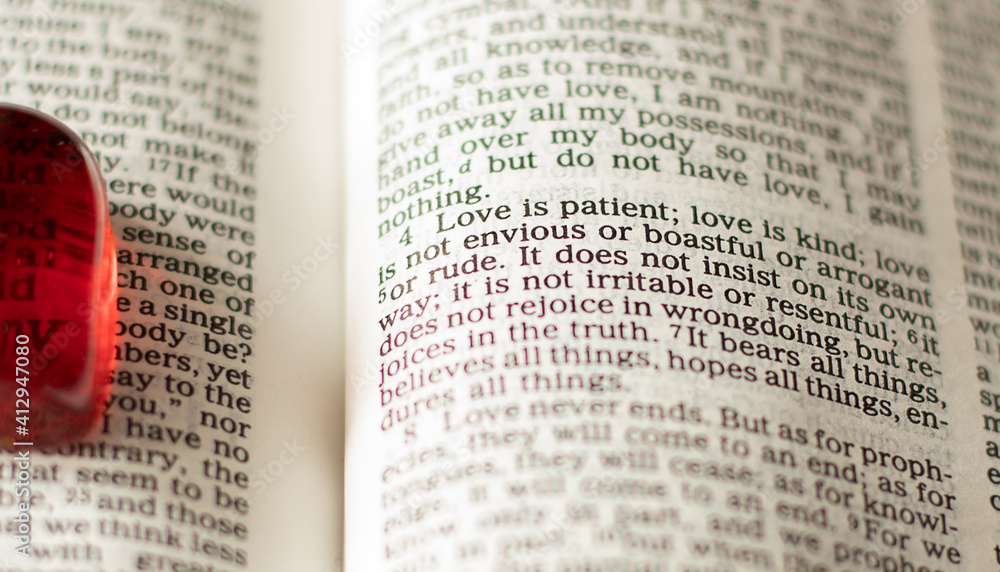
First Corinthians chapter 13 verses 4 through 7: “Charity suffereth long, and is kind; charity envieth not; charity vaunteth not itself, is not puffed up, doth not behave itself unseemly, seeketh not her own, is not easily provoked, thinketh no evil; rejoiceth not in iniquity, but rejoiceth in the truth; beareth all things, believeth all things, hopeth all things, endureth all things.”

VERSE CONTEXT
The apostle Paul (Pawl) wrote the First Epistle to the Corinthians while he was in Ephesus (Ef-uh-suhs), likely around A.D. 55. Paul’s purpose in this letter was to correct various problems within the Corinthian church, a church he had personally planted during his second missionary journey. Corinth was a wealthy, cosmopolitan city in Greece, but it was also infamous for immorality and rampant divisions, both cultural and spiritual. The church in Corinth struggled with factions, sexual immorality, misuse of spiritual gifts, and improper worship practices. In chapter 13, Paul shifts his focus to the supremacy of love (charity), teaching that even the most spectacular spiritual gifts are meaningless without genuine love. This chapter serves as the heart of Paul’s teaching on what it means to live as Christ’s body, putting others ahead of self.

The key word in this passage is “charity,” which is the King James Version’s translation of the Greek word agapē (ah-gah-pay). Agapē refers to the highest form of love—selfless, sacrificial, and godly love. This is not romantic or friendly love, but the kind of love God shows toward humanity and commands believers to show to each other. Strong’s Concordance defines agapē as “affection, good will, love, benevolence,” but within the biblical context, it carries the weight of divine love that seeks the best for others regardless of personal cost.

Let’s examine a few significant phrases. “Suffereth long” comes from the Greek makrothymeō (mak-roth-oo-meh’-o), meaning to bear patiently, to endure offense without retaliation. “Vaunteth not itself” translates perpereuomai (per-per-yoo’-om-ahee), meaning not boastful or bragging. “Rejoiceth not in iniquity” comes from chairei epi adikia (khahee-reh’ ep-ee ad-ee-kee’-ah), meaning love finds no joy in wrongdoing, but rather, as Paul says next, “rejoiceth in the truth”—synchairei tē alētheia (soon-khahee-reh’ tay al-ay’-thi-ah), meaning love celebrates truth and righteousness.

Paul presents love not as a fleeting feeling, but a constant, active choice to put others first, rooted in the very character of God. In a church obsessed with status and self-promotion, this teaching would have been a direct rebuke.

BROADER CONTEXT
Chapter 13 is nestled between Paul’s teachings on spiritual gifts (chapter 12) and orderly worship (chapter 14). This placement is deliberate. Paul is teaching that no matter how gifted believers are—whether they prophesy, speak in tongues, or possess great knowledge—without love, these gifts are empty. First Corinthians chapter 13 elevates love as the necessary foundation for all Christian living and service. Paul’s emphasis on agapē love connects to Jesus’ teaching in John chapter 13 verse 35: “By this shall all men know that ye are my disciples, if ye have love one to another.” This chapter also serves as a bridge between the vertical love of God for His people and the horizontal love believers must show each other.

The broader message of First Corinthians as a whole is a call to unity, holiness, and selflessness in the face of division and pride. Corinth’s believers were ranking themselves by spiritual gifts, wealth, and status, but Paul dismantles that mindset by showing that love—true godly love—defines spiritual maturity far more than gifts or status ever could.

APPLICATION

Appreciating God’s Greatness
These verses remind us of the sheer beauty and perfection of God’s love. Every attribute Paul lists is fully embodied in how God loves His people. God suffers long with our failures, His kindness is undeserved, and He rejoices in truth while showing us mercy. When we grasp that God’s love is not based on our worthiness but on His character, we are left in awe. Romans chapter 5 verse 8 reinforces this truth: “But God commendeth his love toward us, in that, while we were yet sinners, Christ died for us.” His love bears all our burdens, believes in His divine purpose for us, hopes in our redemption, and endures every rebellion until the day of our salvation or final judgment.

For the Believer
This passage is both comforting and convicting for followers of Christ. It comforts because it reveals how God loves us—patiently, kindly, without arrogance, and without holding grudges. Yet it convicts because it sets the standard for how we are called to love others. Believers are not merely invited to love like this; we are commanded to. John chapter 15 verse 12 says: “This is my commandment, That ye love one another, as I have loved you.”

Call to Action
Ask yourself: Is my love patient or impatient? Kind or sharp-tongued? Do I rejoice when others fall, or do I rejoice in truth and righteousness? This passage calls us to reflect on how we treat family, friends, church members, and even enemies. Choose today to demonstrate agapē love—not just when it’s easy, but especially when it’s hard.

For the Unbeliever
If you have never trusted Christ, these verses offer a glimpse into the kind of love God has for you. This love is not earned. It is not based on your performance or goodness. It is a free gift offered through Jesus Christ. First John chapter 4 verse 9 declares: “In this was manifested the love of God toward us, because that God sent his only begotten Son into the world, that we might live through him.” God loves you with perfect, patient, forgiving love—a love that led Christ to the cross on your behalf. If you’ve ever wondered if anyone could truly love you, the answer is here. God does, and He invites you into a relationship with Him through Jesus Christ.

FINAL ENCOURAGEMENT
First Corinthians chapter 13 verses 4 through 7 is not just a description of love—it is a reflection of God’s very nature. As you meditate on these verses today, let them challenge you to love more like Christ, and let them comfort you with the truth that you are already fully loved by Him. Whether you are struggling in relationships, wrestling with forgiveness, or simply feeling unloved, remember: God’s love suffers long, is kind, and bears all things—including you.

You are loved, so much in fact that we want you to know and be Believers of Biblical Truth.

The Holy Spirit: Our Teacher and Our Peace

John 14:26-27
“But the Comforter, which is the Holy Ghost, whom the Father will send in my name, he shall teach you all things, and bring all things to your remembrance, whatsoever I have said unto you.Peace I leave with you, my peace I give unto you: not as the world giveth, give I unto you. Let not your heart be troubled, neither let it be afraid.”

Commentary

Jesus spoke these words to His disciples on the night before His crucifixion. He knew what was about to happen. He knew they would be afraid, confused, and shaken by what they were about to witness. Yet, instead of dwelling on His own suffering, He comforted them with a promise—one that would not only sustain them in the days ahead but would be a source of strength and guidance for all believers to come.

The disciples had spent years walking with Jesus, hearing His teachings, and witnessing His miracles. But soon, He would no longer be physically with them. That reality must have felt overwhelming. How would they remember everything He had taught them? How would they carry on His mission? Would they be left alone in their struggles?

Jesus reassures them that they will not be abandoned. The Comforter, the Holy Ghost, would come. More than just a presence, the Spirit would actively teach them, remind them of Christ’s words, and guide them in truth. This was not an empty promise—it was a pledge of ongoing support, wisdom, and divine presence that would continue long after Jesus’ physical departure.

Then, He gives them another promise: peace. Not the kind of peace the world offers—the temporary, fragile peace that depends on circumstances—but a peace that is unshakable. The peace of Christ is something that cannot be stolen by hardship, fear, or uncertainty. It is a peace that settles deep in the soul, one that comes from knowing that no matter what happens, God is in control, and we are never alone.

And then He says something that applies as much to us today as it did to those disciples sitting around Him in that upper room: “Let not your heart be troubled, neither let it be afraid.”


Application

When we look at our world today, it is easy to feel troubled and afraid. Chaos seems to be everywhere. Wars, division, moral decay, uncertainty about the future—all of these things press on our minds and hearts. Anxiety has become a defining struggle for many people, and even faithful Christians can sometimes feel overwhelmed.

But Jesus’ words remind us that peace is not found in perfect circumstances. It is not found in a life free of struggle. It is found in Him.

Through the Holy Spirit, we are not left to navigate this world on our own. The Spirit is our teacher, illuminating the Scriptures and helping us understand God’s truth. The Spirit is our guide, leading us in righteousness when we might otherwise be led by our emotions or the pressures of the world. The Spirit is our reminder, bringing back to mind the things Christ has said so that in moments of doubt or fear, we are strengthened.

If you are feeling unsettled, if you are battling fear or uncertainty, this promise is for you. The Holy Spirit is with you, living within you, ready to bring clarity, guidance, and peace. It is not a fleeting feeling but a deep-rooted assurance that no matter what happens, you belong to God, and He will never leave you.


Broader Context

The Gospel of John was written by the Apostle John, one of Jesus’ closest disciples. It was written decades after Jesus’ resurrection, during a time when the early church faced persecution and uncertainty. Many of those who had walked with Christ were now suffering for their faith. Some had been martyred. Others were forced into hiding. The believers needed encouragement—they needed to be reminded of the promises Jesus had given.

That same reassurance applies to us today. The Holy Spirit is not just a concept or a doctrine; He is a living presence in the life of every believer. The peace Jesus gives is not just something we hope for—it is something we can experience right now, regardless of the turmoil around us.

Christ’s words were spoken to a group of men about to endure incredible hardship, yet they were not spoken in despair. They were words of confidence and certainty. The Holy Spirit did come, just as Jesus promised. The disciples were not left alone, and neither are we.


Final Encouragement

If you are struggling today, remember this: the Holy Spirit is with you. When doubts arise, when fear creeps in, when the world feels like too much to handle—He is your Comforter. He will remind you of truth, teach you what you need to know, and fill you with peace that surpasses understanding.

Jesus never promised that life would be easy. But He did promise that we would never face it alone. His Spirit is present, and His peace is available. Will you embrace it?


Call to Action

If you are a believer, take some time today to pray and invite the Holy Spirit to fill you with His peace. Open the Scriptures and ask Him to teach you, to remind you of Christ’s words, and to calm your troubled heart. You do not have to navigate life on your own—He is with you.

If you have never placed your faith in Jesus, this peace is available to you too. The world cannot give what only God can offer. Surrender your heart to Christ today, and allow the Holy Spirit to enter your life, bringing truth, comfort, and assurance that you are never alone.


You are loved, so much in fact that we want you to know and be believers of biblical truth.

“God’s Design for Women: Honored, Treasured, and Purposeful”

February 22, 2025

Bible Verse (KJV)

1 Peter 3:7
“Likewise, ye husbands, dwell with them according to knowledge, giving honour unto the wife, as unto the weaker vessel, and as being heirs together of the grace of life; that your prayers be not hindered.”


Commentary

Verse Context

This verse, written by the Apostle Peter, speaks directly to the relationship between husbands and wives, providing an essential understanding of God’s design for women. It instructs husbands to:

  • Dwell with their wives with understanding – Recognizing the unique way that God made them.
  • Give honor to their wives – Treating them with value and respect.
  • Acknowledge the differences – Recognizing that women are the weaker vessel, which refers to physical differences and emotional sensitivity, not spiritual worth or intelligence.
  • View marriage as a partnership in God’s grace – Both men and women are heirs together of God’s promises.

This verse does not demean women but instead elevates them in their God-given role. In Peter’s time, women were often seen as inferior, but this passage commands men to honor and cherish them.

At the same time, it rejects modern feminist ideas of total independence from men. God designed women to be a necessary help to men, not competitors or isolated individuals.


Application

Appreciating God’s Greatness

God’s perfect design is seen in the relationship between men and women. The world distorts this by either demeaning women or pushing them into roles that were not meant for them. But God’s way is one of balance, honor, and purpose:

  • Women are not meant to be weak, but they are meant to be cherished.
  • Men are not meant to dominate, but they are meant to lead in love.
  • Both are heirs together of God’s grace.

This is God’s greatness in creation—giving men and women distinct but complementary roles, both valuable in His sight.

For the Believer

  1. Men Must Honor Their Wives
    • Many Christian men fail in this. They either dominate their wives or neglect their leadership role altogether.
    • A godly husband leads with love, wisdom, and protection, ensuring his wife is cared for and honored.
    • Ephesians 5:25 says, “Husbands, love your wives, even as Christ also loved the church, and gave himself for it.”
  2. Women Must Embrace Their God-Given Role
    • The modern world pushes independence and rebellion against God’s order, but Scripture makes it clear that women are to be helpers, nurturers, and godly examples.
    • Genesis 2:18 reminds us that “It is not good that the man should be alone; I will make him an help meet for him.”
    • Proverbs 31 praises the virtuous woman as one who supports her husband, nurtures her home, and is full of wisdom and strength.
  3. The Curse of the Fall: Positional Lust, Not Sexual Lust
    • Many misunderstand Genesis 3:16, where God tells Eve:
      “Thy desire shall be to thy husband, and he shall rule over thee.”
    • This desire is not sexual lust, but a positional desire—a craving for power over her husband.
    • The curse of the fall placed in women a natural rebellion against male headship. This is the root of feminism, where women seek to be both man and woman, both leader and nurturer, both father and mother.
    • This applies to:
      • Single mothers trying to fill the role of father and mother.
      • Wives who refuse to submit to their husbands and attempt to take control.
      • Women who reject marriage altogether, claiming total independence.
    • Biblical womanhood means rejecting this curse-driven rebellion and embracing God’s good design.
  4. Beware of Feminism’s Influence in the Church
    • Many churches celebrate feminism, forgetting that Scripture never calls women to seek dominance or independence from men.
    • Isaiah 3:12 warns, “As for my people, children are their oppressors, and women rule over them.” This was a judgment on Israel for rejecting God’s order.
    • Biblical womanhood is about faithfulness, wisdom, and nurturing—not rebellion and contention.

For the Unbeliever

The world distorts the value of women, either treating them as inferior or promoting independence from men and rejection of God’s order. Neither is biblical.

  • God designed women with purpose—not to be exploited, and not to be in rebellion, but to fulfill a unique and honored role.
  • True joy is found in living according to God’s design. Modern feminism promises freedom, but instead, it leaves many women alone, struggling, and unfulfilled.
  • God’s way is better. If you’ve been chasing independence, consider the beauty of God’s design—a life of honor, love, and purpose in His perfect plan.

Christ redeems and restores. No matter where you are today, you can find your identity and purpose in Him.


Broader Context

What Does the Bible Say About Women?

📖 Genesis 2:18“It is not good that the man should be alone; I will make him an help meet for him.”
🔹 Women were created to complement and support men, not to compete with them.

📖 1 Corinthians 11:8-9“For the man is not of the woman; but the woman of the man. Neither was the man created for the woman; but the woman for the man.”
🔹 This verse reinforces the order of creation and the role of women in supporting men.

📖 Proverbs 31:10-12“Who can find a virtuous woman? for her price is far above rubies. The heart of her husband doth safely trust in her, so that he shall have no need of spoil. She will do him good and not evil all the days of her life.”
🔹 A godly woman strengthens her home, her husband, and her family through faithfulness.

📖 Genesis 3:16“Thy desire shall be to thy husband, and he shall rule over thee.”
🔹 This desire is not romantic longing but a desire to rule over him, which is part of the curse of the fall.

📖 Isaiah 3:12“As for my people, children are their oppressors, and women rule over them.”
🔹 A nation where men fail to lead and women take charge is under judgment, not blessing.


Final Encouragement

The world promotes lies about womanhood, but the Bible tells the truth:

  • Women are honored in God’s design.
  • Women are meant to be treasured, not exploited.
  • Women were created for a unique and beautiful purpose—to support and nurture, not to dominate or rebel.

For believers, this is a call to embrace biblical womanhood and manhood. For non-believers, this is an invitation to discover the joy of living in God’s perfect plan.

The feminist movement has redefined womanhood, but it has not improved the lives of women. God’s way is better

You are loved, so much in fact that we want you to know and be believers of biblical truth.

Woe to the Wicked: God Sees and Will Repay!

Daily Bible Verse

Micah 2:1
Woe to them that devise iniquity, and work evil upon their beds! when the morning is light, they practise it, because it is in the power of their hand.


Commentary

Micah 2:1 is a warning against the scheming of the wicked. It condemns those who plan evil at night and carry it out in the morning simply because they have the power to do so. These individuals plot wickedness in their hearts before acting on it, showing premeditated sin rather than accidental wrongdoing.

This verse reflects a deep moral corruption—the wicked are not only committing evil acts but actively strategizing how to take advantage of others. They are guilty of abusing their power, taking what they want with no regard for righteousness.

Micah, a prophet from the 8th century B.C., directed this prophecy to the leaders and wealthy elites of Judah, who used their power to exploit the poor and oppress the vulnerable. The next verse (Micah 2:2) explains that these wicked people were stealing land and possessions, violating the laws of justice that God had given Israel.

This passage exposes the rotting core of greed and injusticesin that destroys both the individual and the nation.


Application

Appreciating God’s Greatness

God is just and holy. He does not turn a blind eye to corruption, oppression, or abuse of power. The greatness of God is revealed in His commitment to hold the wicked accountable. While human systems of justice may fail, God’s justice never does. Proverbs 15:3 says, “The eyes of the LORD are in every place, beholding the evil and the good.”

The wicked may think their schemes are hidden in the dark, but God sees all and will judge accordingly.

For the Believer

  1. Guard Your Heart Against Scheming
    • This verse reminds believers that sin starts in the heart before it manifests in actions. Jesus said in Matthew 15:19, “For out of the heart proceed evil thoughts, murders, adulteries, fornications, thefts, false witness, blasphemies.”
    • We must be careful not to rationalize sin—even small compromises can lead to destruction.
  2. Stand Against Injustice
    • As Christians, we cannot ignore or enable evil. Proverbs 31:8-9 calls us to: “Open thy mouth for the dumb in the cause of all such as are appointed to destruction. Open thy mouth, judge righteously, and plead the cause of the poor and needy.”
    • When we see oppression or deceit, we must speak truth and act righteously.
  3. Trust in God’s Justice
    • Sometimes it seems as if the wicked prosper, but God promises they will reap what they sow. Galatians 6:7 warns: “Be not deceived; God is not mocked: for whatsoever a man soweth, that shall he also reap.”
    • No matter how powerful the wicked may seem, their judgment is certain.

For the Unbeliever

This verse is a strong warning to those who plot evil, manipulate, or oppress others for personal gain.

  • If you think your actions are hidden, God sees. Hebrews 4:13 says: “Neither is there any creature that is not manifest in his sight: but all things are naked and opened unto the eyes of him with whom we have to do.”
  • If you have gained power, wealth, or success through deceit or oppression, it will not last. Psalm 37:35-36 states: “I have seen the wicked in great power, and spreading himself like a green bay tree. Yet he passed away, and, lo, he was not: yea, I sought him, but he could not be found.”

However, God’s justice is also merciful. If you repent and turn to Him, He will forgive and restore you. Isaiah 55:7 says, “Let the wicked forsake his way, and the unrighteous man his thoughts: and let him return unto the LORD, and he will have mercy upon him.”

You do not have to be trapped in a life of sin and deceit—turn to Christ today.


Broader Context

Who Wrote Micah?

The book of Micah was written by the prophet Micah, who was from a small rural town in Judah. He prophesied during the reigns of Jotham, Ahaz, and Hezekiah (about 735–700 B.C.), warning against the corruption of the leaders, priests, and wealthy elite who were exploiting the common people.

To Whom Was It Written?

Micah was sent to the people of Judah, particularly its leaders, judges, and wealthy landowners. His prophecy warned that if they did not repent, destruction would come—and it did. Jerusalem was later attacked, and much of Judah fell to the Assyrians.

Why Was It Written?

Micah’s book serves two purposes:

  1. To condemn injustice and warn of impending judgment.
  2. To offer hope that God would ultimately restore His people.

Micah 2 is focused on the first purpose, addressing how wicked leaders were abusing power for their own gain. God saw their sins and promised justice would come.

How Does This Apply Today?

  • Powerful people and governments still manipulate and oppress. God sees, and He will judge them.
  • Sin still starts in the heart before becoming action. We must guard ourselves from even the smallest compromises.
  • True justice belongs to God. Though evil seems unchecked, God will always bring the wicked to account.

This passage is a reminder that God is watching, and He will not let evil go unpunished.


Final Encouragement

Micah 2:1 is both a warning and a call to righteousness. For believers, it is a reminder to live with integrity and trust in God’s justice. For non-believers, it is a chance to repent and turn from evil before it is too late.

God is merciful, but He will not overlook sin forever. Where do you stand today?


Call to Action

Believers: Examine your heart—do you entertain small compromises that could lead to greater sin? Do you stand for righteousness, or do you turn a blind eye to injustice? Ask God to strengthen your integrity today.

Non-Believers: If you are involved in dishonesty, greed, or manipulation, know that God sees and will judge. But He also offers mercy through Jesus Christ. Repent today, and step into the light of His righteousness.


You are loved, so much in fact that we want you to know and be Believers of Biblical Truth.

📢 “The Day of the LORD: Justice Is Coming—Are You Ready?”

Daily Bible Verse

Obadiah 1:15


For the day of the LORD is near upon all the heathen: as thou hast done, it shall be done unto thee: thy reward shall return upon thine own head.


Commentary

Verse Context

Obadiah 1:15 declares a universal truth about God’s justice—the Day of the LORD is a time when God will bring judgment upon those who have rejected Him and lived in wickedness. The phrase “as thou hast done, it shall be done unto thee” is a warning that every nation and individual will reap what they sow.

This verse is part of God’s message to Edom, the nation descended from Esau. When Judah was attacked by the Babylonians, Edom betrayed their Israelite relatives, plundering their cities and capturing fugitives to turn them over to their enemies (Obadiah 1:10-14). Because of this, God declared that judgment would fall upon Edom.

Yet, Obadiah 1:15 expands beyond Edom—it is a warning to all nations that reject God’s authority. The principle of divine retribution (measure-for-measure justice) applies to all: what you do to others will be done to you. The Day of the LORD is a coming reality when God’s righteousness will be fully revealed.


Application

Appreciating God’s Greatness

God is a God of justice. While the world may overlook evil, God never does. His justice is absolute—no sin will go unpunished. At the same time, His justice is balanced with His mercy, offering grace to those who repent. Isaiah 30:18 reminds us: “For the LORD is a God of judgment: blessed are all they that wait for him.”

God’s greatness is seen in His unwavering righteousness—He does not tolerate injustice, yet He provides a way of escape for those who turn to Him.

For the Believer

  1. Trust in God’s Justice – The wicked may seem to thrive, but their time is limited. Psalm 37:28 says, “For the LORD loveth judgment, and forsaketh not his saints.” Even when evil seems unchecked, God is in control.
  2. Live with Integrity – The warning “as thou hast done, it shall be done unto thee” reminds us that our actions have consequences. Jesus said in Luke 6:31, “And as ye would that men should do to you, do ye also to them likewise.” We must reflect God’s righteousness in how we treat others.
  3. Be Ready for the Day of the LORD2 Peter 3:10 warns that “the day of the Lord will come as a thief in the night.” As believers, we must live holy lives, ensuring we are prepared for Christ’s return.

For the Unbeliever

This verse is a wake-up call. The Day of the LORD is coming, and no one escapes God’s justice. Many believe they can live without accountability, but God sees everything.

  • If you’ve ignored God, now is the time to seek Him. Isaiah 55:6 says, “Seek ye the LORD while he may be found, call ye upon him while he is near.”
  • The good news is that God is merciful. Though judgment is coming, He offers salvation through Jesus Christ. Romans 10:13 promises: “For whosoever shall call upon the name of the Lord shall be saved.”

You don’t have to face God’s wrath—turn to Him today and receive His grace.


Broader Context

The book of Obadiah is the shortest book in the Old Testament, consisting of only 21 verses, yet its message is powerful and timeless.

  • Who Wrote It? – The prophet Obadiah (name means “Servant of Yahweh”).
  • To Whom?Edom, a nation that betrayed Israel during Judah’s downfall.
  • Why Was It Written? – To announce God’s judgment on Edom and to warn all nations of coming judgment.
  • What Is Its Purpose? – To show that God’s justice is universal—He holds nations and individuals accountable for their actions.

This prophecy was fulfilled—Edom was completely destroyed. But the message remains relevant because the final “Day of the LORD” is still to come. The judgment of nations in Obadiah foreshadows the coming final judgment when Christ returns to establish His kingdom and judge the world.

We are living in a time of grace, but judgment is coming. God’s justice will not be delayed forever. Are we ready?


Final Encouragement

God is both just and merciful. For believers, this verse is a reminder to trust in His justice and live in righteousness. For unbelievers, it is a warning and an invitation—God’s justice is certain, but His grace is still available.

If the Day of the LORD came today, where would you stand?


Call to Action

Believers: Examine your life—are you living in righteousness, or have you drifted into complacency? Stay watchful, trust in God’s justice, and be ready for Christ’s return.

Non-Believers: The Day of the LORD is coming—don’t wait until it’s too late. Turn to Christ today, repent of your sins, and receive the salvation He freely offers.


You are loved, so much in fact that we want you to know and be believers of biblical truth.