
June 12, 2025
Matthew chapter 26 verse 24:
The Son of man goeth as it is written of him: but woe unto that man by whom the Son of man is betrayed! it had been good for that man if he had not been born.
VERSE CONTEXT
Judas Iscariot was not a stranger to Christ. He wasn’t a confused Pharisee or a deceived Roman. He was hand-picked by Jesus after a night of prayer (Luke 6:12–16). He was a disciple, a follower. He witnessed miracles. He sat under Jesus’ direct teaching. He was given power, along with the other apostles, to cast out devils and heal diseases (Matthew 10:1). He was even trusted with the money bag (John 12:6). In every visible way, Judas was a believer. But he wasn’t just a backslider. He was a betrayer.
That final night, at the Last Supper, Jesus looked across the table and said: “Verily I say unto you, that one of you shall betray me” (Matthew 26:21). Each disciple, with trembling, asked, “Lord, is it I?” But Judas said, “Master, is it I?” (v. 25). That word matters. The others called Him Lord. Judas called Him Master. He was close, but not submitted. He followed, but didn’t obey. And then Jesus said what should freeze every soul: “Thou hast said.”
Then came verse 24—today’s daily Bible verse:
“Woe unto that man… it had been good for that man if he had not been born.”
This is no metaphor. Jesus; the Lamb, the Savior, the Redeemer, is saying it would’ve been better for Judas to never exist than to betray the Lord and face what comes next. That is hell. That is eternal, conscious, damnation. Let no one say, “Jesus would never send anyone to hell.” He said this.
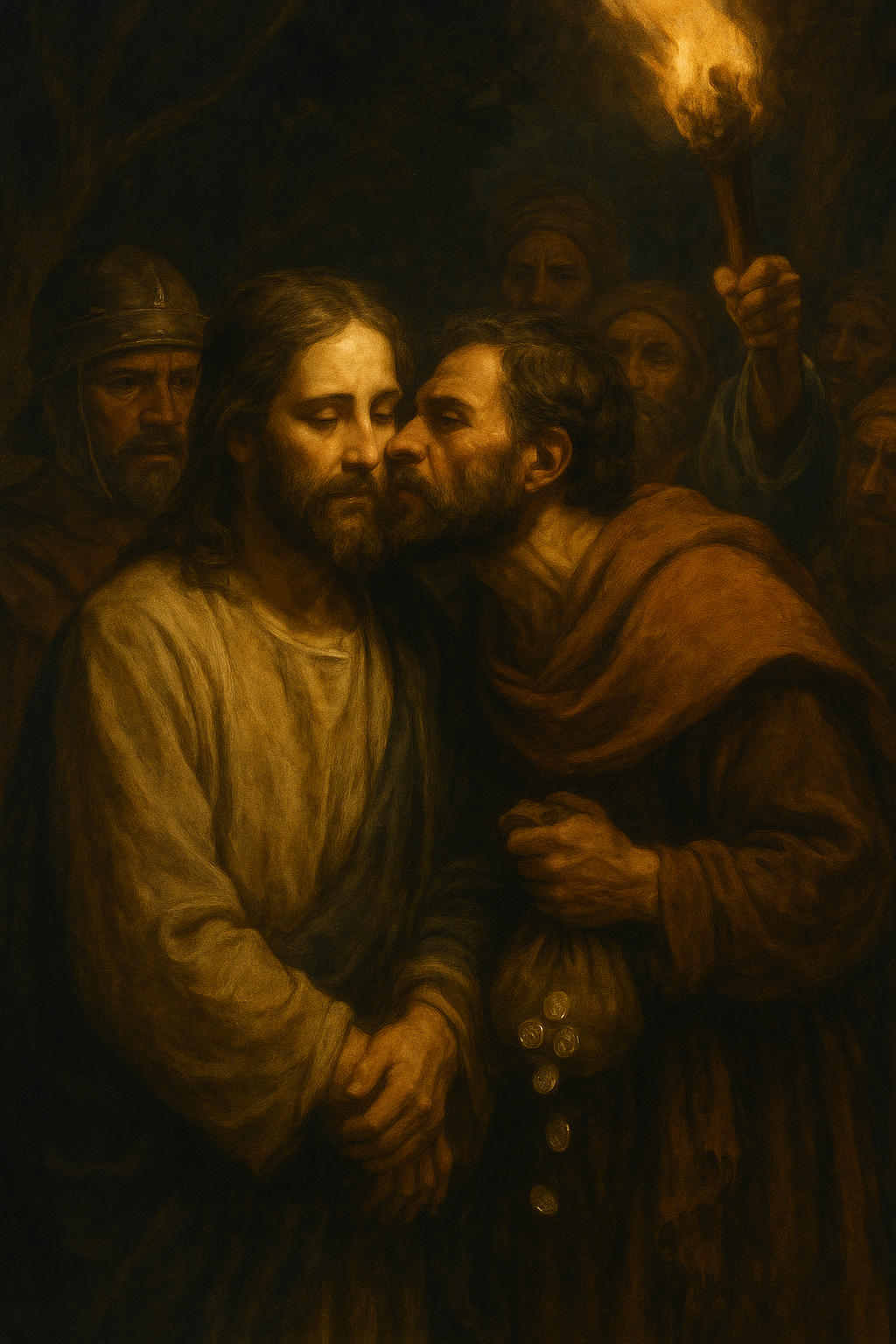
Judas didn’t stumble into apostasy. He walked into it with full knowledge. When he kissed Jesus in the garden, Jesus still gave him a chance: “Friend, wherefore art thou come?” (Matthew 26:50). But Judas was already gone, spiritually dead, even while breathing.
After the betrayal, the Bible says Judas repented himself (Matthew 27:3), but not toward God. It was guilt, not godly sorrow. There was no faith, no appeal to Christ, no tears like Peter’s. He gave the silver back to the priests and went and hanged himself.
Acts 1:18 says, “Now this man purchased a field with the reward of iniquity; and falling headlong, he burst asunder in the midst, and all his bowels gushed out.” The horror of his end mirrored the horror of his betrayal. But death was not the end. Acts 1:25 confirms where he went: “…that he might go to his own place.” That phrase has long been understood to mean hell, his appointed destination. He didn’t just fail. He quit and turned back. And that matches the warning in Hebrews chapter 10 verse 26:
“For if we sin wilfully after that we have received the knowledge of the truth, there remaineth no more sacrifice for sins.”
“For it is impossible for those who were once enlightened, and have tasted of the heavenly gift… if they shall fall away, to renew them again unto repentance…”
So why do we tell this story today? Because there are people reading this who are on the edge. You’ve been hurt. You’ve been disappointed. You feel like giving up. But today’s verse tells you why you must not quit. There is no safety outside of Christ.
There is no reward for those who turn back. There is no second chance after deliberate apostasy. You must finish the race. You must endure. You must stay the course. Let Judas be the eternal reminder that knowing Christ is not enough.
You must follow Him to the end.
Broader Context
When we consider the story of Judas Iscariot and the terrifying statement made by Jesus in Matthew 26:24, “It had been good for that man if he had not been born”, we are reminded that walking away from the truth after knowing it is not only possible but eternally deadly. This reality should sober every believer, especially those going through immense pain and suffering. Life can break a person in ways they never expected. But the broader testimony of Scripture answers, not always with why it happened, but with what we must do in response: endure. The pain is real, but so is the command to stay faithful.
The Bible doesn’t hide the hardship of life. In fact, it tells us plainly in Colossians chapter 3:1-2, “If ye then be risen with Christ, seek those things which are above… Set your affection on things above, not on things on the earth.” This is not optional. It is survival. The believer who places their hope in anything on this earth, health, family, career, even church leadership, will be devastated when that thing falls. And it will fall. Loved ones die. Bodies fail. Dreams are crushed. But Jesus remains, and we are commanded to keep our eyes fixed above. If our affection is set on heaven, then even in tragedy we are not destroyed. That’s what Paul meant when he said in Second Corinthians chapter 4, “Though our outward man perish, yet the inward man is renewed day by day.” His “light affliction” wasn’t light by human standards. He was beaten, shipwrecked, left for dead, betrayed, and imprisoned. But he called it light, because he measured it against eternity, not against comfort.
When Jesus said Judas would have been better off never being born, He wasn’t being dramatic. He was being honest. Hell is real, and Judas is there now, not because he sinned, but because he turned back and never returned. That is the danger we face if we allow suffering to uproot our faith. Hebrews chapter 10 verse 26 warns, “For if we sin wilfully after that we have received the knowledge of the truth, there remaineth no more sacrifice for sins.” This is not about losing salvation like a dropped coin. This is about rejecting Christ after knowing Him, knowing the gospel, sitting under the Word, seeing God’s goodness, and then walking away. There is no sacrifice left for that person, only a fearful judgment. Judas didn’t just fall into sin. He hardened his heart. That’s why Hebrews 6 says it is impossible to renew some again to repentance. The Holy Spirit doesn’t jump in and out. If you reject Him knowingly, you reject Him eternally.
But not every story ends like Judas’. There are believers who’ve endured immense suffering and stayed faithful. One such man was Horatio Spafford. He was a wealthy Christian lawyer whose real estate investments were destroyed in the Chicago fire. Shortly after, his four daughters died in a shipwreck. As he sailed over the very waters where they drowned, he wrote the hymn, “It Is Well With My Soul.” That’s not myth. That’s real. In the depth of loss, he held firm to his Savior. He didn’t let tragedy drive him away from God, he let it anchor him deeper. That’s what we must do. We must not quit. We must not let grief or confusion become our permission slip for unbelief. Jesus said in Matthew chapter 10 verse 22, “He that endureth to the end shall be saved.” Not he that starts the race, not he that shows promise, but he that finishes. That verse wasn’t written for the strong, it was written for the weary. For the woman crying in a silent house. For the man who just buried his child. For the worker who dreads waking up tomorrow. It was written for you, and for me.
The pain we feel is not proof that God has abandoned us. It is the fire that reveals where our hope truly rests. Some people will suffer and curse God. Others will suffer and cling to Him all the more. The difference is not strength, it’s faith. The faith that endures is the faith that saves. Peter failed Jesus too, but Peter wept and returned. Judas failed and walked into the night. The choice is ours every time tragedy hits: walk away in bitterness, or fall on our knees in trust. And make no mistake, God sees the choice. He does not forget it. There is no eternal reward for temporary faith. There is no crown for those who put their hand to the plough and look back. Only those who endure to the end will be saved.
APPLICATION
For the Believer
If you are walking through deep pain, grief, confusion, or weariness, this message is for you. You are not alone in wondering why God seems silent or why tragedy has struck your life. Many faithful believers have cried out in agony asking why God would allow them to lose a spouse, bury a child, endure disease, or feel abandoned in the midst of heartbreak. These are not signs of weak faith. These are the battles of real faith. Let the pain press you into Christ, not push you away. Let the storm drive you to your knees, not back into the world. If Judas teaches us anything, it is this: to be near Jesus, to know the truth, to taste grace, and then to throw it away, is a greater sin than to have never known at all. But if you stay the course, if you hold fast when everything else falls, then Jesus, the same Judge who condemned Judas, will welcome you with arms wide open and say, “Well done.” Finish well. Heaven is worth it.
The pain you carry may not be your fault, but what you do with it is your responsibility. Judas allowed his guilt and confusion to pull him away from Jesus. Instead of returning in repentance, like Peter, he walked into the darkness and never came back. He stopped believing that forgiveness was possible. He stopped trusting that Jesus was still the answer. He tried to fix it himself, and it destroyed him. The message for the believer is simple but serious: you must finish. Jesus doesn’t reward those who begin the race, He crowns those who endure to the end. Your tears are real, but they are not excuses to let go of the Savior.
You may feel crushed by grief. You may be angry. You may feel numb. But if you still call Jesus your Lord, then you cannot walk away. You must stay the course, even when it hurts. Especially when it hurts. Because the crown is not given for comfort, it’s given for faithfulness. Hold on, even if all you can do is whisper His name.
Call to Action
If you are hurting, don’t isolate. Don’t stop praying. Don’t stop reading your Bible. Don’t let pain drive you to bitterness. Surround yourself with truth, not with noise. Get around people who will point you back to Christ, not feed your doubts. Confess your sorrow to the Lord, and ask Him to keep your heart soft. Stay in the Word, stay in prayer, stay planted in a church that preaches the truth. You may not feel strong, but you don’t need to be strong, you just need to endure. Finish the race. Finish with Jesus. Don’t be like Judas. Be like Peter. Weep if you must, but return.
For the Unbeliever
If you are reading this and you have not fully surrendered your life to Jesus Christ, do not think that knowing about Him is the same as knowing Him. Judas knew Jesus. He heard His voice. He followed Him for years. But he never believed in Him as Lord. His heart was never changed. And when his world fell apart, he had no faith to fall back on. He tried to fix his guilt by returning the silver, but without repentance, there is no salvation.
This is your warning. If you’ve heard the gospel, if you know that Jesus died for your sins and rose again, and yet you continue to delay, you are playing with eternal fire. Judas delayed. Judas hardened his heart. Judas died without Christ. And Jesus Himself said it would have been better if Judas had never been born. Don’t let that be you.
There is still time. Right now, God is giving you one more chance to believe. But you do not know if you’ll get another. Do not walk away from the truth. Do not turn your back on the only One who can save you. You are not promised another hour. Repent today. Believe today. Surrender your life to Jesus Christ while the door of mercy is still open. Because the day will come when it is not.
PRAYER
Heavenly Father,
We come before You today with trembling hearts and tear-stained eyes, knowing that life on this earth can shake us to the core. But Lord, even in our grief, even in our pain, help us never to walk away from You. Let the sorrow we carry drive us to our knees, not out the door. Strengthen every weary believer who is reading this today, those who feel like giving up, those who are angry, those who are overwhelmed. Remind them, Lord, that You are still with them, even when You feel distant. That Your Word is still true, even when life feels cruel. That You are still faithful, even when the storm has not passed.
Help us to endure. Help us to finish. Keep us from becoming like Judas, Lord. Give us the faith to return like Peter. Give us the endurance to follow like Paul. Give us the hope to worship like Job. Let not one soul reading these words fall away. And for those who have not yet surrendered to Christ, break through the hardness of their hearts and let this be the day they repent and believe. We ask this in the holy and righteous name of Jesus Christ, the Savior who never fails. Amen.
CLOSING
If you’ve found these daily verses encouraging, enlightening, or fruitful, please consider helping us spread the truth and light of God’s Word by subscribing to the blog and YouTube channels and liking and following the Facebook page. Most of all, share Believers of Biblical Truth and our links with others who may need the sermons and daily teachings just as much as we do.
You are loved, so much in fact, that we want you to know and be Believers of Biblical Truth.
Shalom Shalom.

 Believers of Biblical Truth
You must be logged in to post a comment.