Today’s Daily Bible Verse

1 John 2:3-6,

And hereby we do know that we know him, if we keep his commandments. He that saith, I know him, and keepeth not his commandments, is a liar, and the truth is not in him. But whoso keepeth his word, in him verily is the love of God perfected: hereby know we that we are in him. He that saith he abideth in him ought himself also so to walk, even as he walked.

VERSE CONTEXT

The apostle John wrote this letter near the end of the first century, around A.D. 85–95, from Ephesus. By this time, Christianity had spread far beyond Jerusalem, and many believers were second-generation Christians who had never seen Jesus personally. The church was facing growing threats from false teachers, particularly those influenced by Gnosticism, a heretical belief that emphasized secret knowledge over faithful obedience. Gnostics claimed that salvation came through enlightenment rather than moral transformation, leading some to believe they could “know” Jesus without living like Him. John directly opposes this idea by stating that true knowledge of Jesus is demonstrated through obedience to His commandments.

John was writing to Christian communities who were in danger of being misled. Some false teachers were treating Jesus as a spiritual concept rather than a real, historical person whose life was meant to be the pattern for all believers. Others were reducing Jesus to a tool for salvation, claiming that as long as they acknowledged His death and resurrection, their personal conduct did not matter. This mindset stripped Jesus of His role as the model for Christian living. John refutes this by making obedience the defining mark of a true believer. To truly know Jesus means to live as He lived. Those who claim to know Him but refuse to follow His teachings are deceiving themselves and others.

The historical and social context of this passage is crucial. Unlike the early church, which had direct access to the apostles and firsthand witnesses of Jesus, many of John’s readers were relying on secondhand teachings. This made them vulnerable to distortions of the faith. John reminds them that Christianity is not just about intellectual assent but about transformation. The idea of knowing Jesus is not about possessing secret knowledge or using Him as a means to an end, but about walking in continuous fellowship with Him. The phrase “keep his commandments” does not mean legalistic rule-following but rather treasuring and obeying His words as a way of life.

John also introduces the concept of abiding in Christ, which means remaining in an ongoing, living relationship with Him. Abiding is not a passive state but an active commitment to follow Jesus’ example. The statement “He that saith he abideth in him ought himself also so to walk, even as he walked” establishes Jesus as the standard by which believers should measure their lives. Christianity is not just about securing eternal life but about becoming more like Christ every day. This passage challenges those who reduce faith to a transaction—believing in Jesus only to secure salvation—without embracing Him as the pattern for their existence.

John’s words directly confront the misconception that Jesus is merely a bridge to heaven rather than the model for living. Many people see Jesus as a lucky charm, something to invoke when they need protection, guidance, or blessing, but not as the example they are meant to follow. John makes it clear that this approach is false. True believers are not just those who acknowledge Jesus but those who walk as He walked. This passage serves as a corrective to shallow faith and emphasizes that Jesus is not just a means to an end—He is the way itself.

BROADER CONTEXT

The book of First John was written to clarify the true nature of Christian faith and to counter false teachings that had infiltrated the church. One of the primary issues John addressed was the growing influence of Gnosticism, a heretical belief system that separated spiritual knowledge from moral living. Gnostics claimed that salvation was achieved through enlightenment rather than through obedience to God’s commandments. This teaching led many to believe that they could claim to know Jesus without living in accordance with His example. John’s letter directly refutes this false notion, emphasizing that genuine faith in Christ is always accompanied by a transformed life.

Chapter 2 of First John builds upon the themes introduced in Chapter 1, where John declared that God is light and that those who claim fellowship with Him must walk in the light. In Chapter 2, John expands on what it means to truly know God, making it clear that knowing Him is inseparable from obeying Him. The verses leading up to today’s passage discuss Jesus as our advocate and propitiation for sins, reinforcing that while salvation is by grace, obedience is the evidence of genuine faith. John’s argument is that faith cannot be reduced to a simple acknowledgment of Jesus as Savior while ignoring His commands. Faith is demonstrated by action, and true believers will reflect the character of Christ in their lives.

The entire letter of First John focuses on the contrast between those who truly belong to Christ and those who only claim to follow Him. This is seen throughout the book, particularly in John’s repeated use of sharp distinctions such as light versus darkness, truth versus lies, and love versus hatred. These contrasts reinforce the idea that there is no middle ground in the Christian life—either a person walks as Jesus walked, or they do not truly know Him. This theme runs throughout the book and is especially pronounced in today’s passage, where John states that those who claim to know Christ but do not obey His commands are liars. This is a direct challenge to those who reduce Jesus to a mere mechanism for salvation rather than recognizing Him as the model for how they should live.

The broader context of First John chapter 2 also introduces a significant challenge to cultural Christianity. Many people profess faith in Jesus, yet their lives do not reflect obedience to His teachings. This chapter confronts that mindset head-on, making it clear that faith in Jesus is not just about believing in certain truths but about being transformed into His likeness. The idea that Jesus is merely a means to an end—whether that end is heaven, personal blessings, or moral security—is entirely inconsistent with John’s teaching. Instead, John presents Jesus as the very foundation and pattern for life itself.

John’s message remains just as relevant today as it was in the first century. Many people still treat Jesus as a tool for personal gain, rather than as the example they are called to follow. This can be seen in prosperity gospel teachings, where faith is often framed as a way to achieve health, wealth, or success. It is also evident in cultural Christianity, where people may attend church, participate in religious rituals, and claim faith in Christ, yet fail to live in obedience to Him. John’s letter makes it clear that such an approach is false. True Christianity is not about using Jesus to achieve personal goals; it is about conforming our lives to His.

This passage also fits within the broader theme of discipleship found throughout Scripture. Jesus Himself repeatedly emphasized that following Him requires more than just verbal acknowledgment. In Luke chapter 6 verse 46, He says, “And why call ye me, Lord, Lord, and do not the things which I say?” This aligns perfectly with John’s message that knowing Christ is proven by obedience. The entire message of First John reinforces the teaching of Jesus: faith without obedience is not genuine faith.

The larger biblical context also supports John’s message. Throughout Scripture, God has always required not just belief but faithful obedience. In Deuteronomy chapter 10 verse 12, Moses asks, “And now, Israel, what doth the Lord thy God require of thee, but to fear the Lord thy God, to walk in all his ways, and to love him, and to serve the Lord thy God with all thy heart and with all thy soul?” This Old Testament principle is echoed in the teachings of Jesus and now reaffirmed by John. Faith is not passive; it requires an active response.

In summary, the broader context of this passage in First John emphasizes that true faith in Jesus is inseparable from obedience to His commands. John wrote to correct the false belief that one could claim to know Jesus without walking in His ways. He makes it clear that Jesus is not merely a tool for salvation but the very pattern by which all believers must live. Those who truly abide in Him will reflect His character in their actions. This chapter serves as a powerful reminder that Christianity is not about using Jesus as a means to an end—it is about becoming like Him in every way.

APPLICATION

Appreciating God’s Greatness

This passage reveals the greatness of God in His unwavering consistency. From the Old Testament to the New Testament, God has never changed His standard—faith is always demonstrated by obedience. He does not merely ask for intellectual belief; He requires a transformed life. His greatness is displayed in the way He provides not only salvation through Christ but also the perfect example of how to live. God did not leave humanity without direction; He sent His Son as the model for what it means to walk in righteousness. In First John chapter 2 verses 3 through 6, we see that knowing God is not about possessing special knowledge or adhering to religious rituals but about truly abiding in Him. His greatness is evident in the way He calls believers to live as Jesus lived, demonstrating that true faith is an active, living relationship, not a mere acknowledgment of truth.

For the Believer

For believers, this passage is a call to examine their faith and ensure that it is more than just words. Many people claim to follow Christ, but John makes it clear that true discipleship is marked by obedience. The question every believer must ask is not just “Do I believe in Jesus?” but “Am I walking as He walked?” This passage confronts any tendency to reduce faith to a one-time decision or a mere intellectual agreement with Christian doctrine. Instead, it presents faith as an ongoing commitment to live as Jesus lived.

Believers must also recognize the danger of separating faith from obedience. Many churches emphasize belief in Jesus but fail to stress the necessity of living according to His example. John leaves no room for a passive or cultural Christianity. A true relationship with Jesus is evident in daily life. This passage challenges every believer to move beyond seeing Jesus as a means to an end and instead embrace Him as the model for how to live.

Call to Action

Believers must take tangible steps to align their lives with Christ’s example. This means evaluating daily choices, attitudes, and actions in light of Jesus’ teachings. Are we keeping His commandments? Are we demonstrating love, humility, and obedience as He did? The call to action is clear: if we claim to abide in Christ, we must walk as He walked. This requires intentional commitment—studying His Word, applying His teachings, and surrendering to His lordship in every area of life. Rather than treating Jesus as a tool for personal salvation or success, believers must actively follow His example in all things.

For the Unbeliever

For those who have not yet placed their faith in Christ, this passage challenges the idea that Christianity is simply about believing in certain facts about Jesus. Many people assume that as long as they acknowledge Jesus, they have secured their place in heaven, but John’s words challenge this assumption. Merely claiming to know Jesus is not enough—true faith is evidenced by obedience. This means that salvation is not about repeating a prayer or agreeing with Christian teachings but about entering into a relationship with Jesus that results in a transformed life.

The danger of viewing Jesus as just a means to an end is that it leads to an incomplete and ineffective faith. If someone only comes to Jesus for what He can provide—whether that be heaven, prosperity, or comfort—then they miss the true purpose of the gospel. Jesus calls people not just to believe in Him but to follow Him. This passage is an invitation for unbelievers to see Jesus not as a distant religious figure but as the very foundation for life itself.

FINAL ENCOURAGEMENT

First John chapter 2 verses 3 through 6 provides a clear and challenging message: true faith in Jesus is not just about acknowledging His existence or agreeing with Christian beliefs—it is about living as He lived. Many people reduce Jesus to a concept, a figure they call upon in times of need, or a tool for securing salvation, but John makes it clear that such a faith is empty. Knowing Jesus means following Him, obeying Him, and patterning our lives after His.

This passage is a reminder that Christianity is not just about what we believe but about how we live. It is easy to claim to know Christ, but the evidence of that claim is found in obedience. Those who truly abide in Him will reflect His character, love, and righteousness. This is both a challenge and an encouragement. It challenges us to examine our faith honestly—are we living in obedience, or are we simply using Jesus as a means to an end? But it also encourages us because God has given us the perfect example to follow. We are not left to figure out faith on our own; we have Jesus as our model, and through Him, we have the strength to walk as He walked.

For those who struggle with their faith, wondering whether they truly know Jesus, this passage provides clarity. The evidence of knowing Him is found in a life of obedience. It does not mean perfection, but it does mean a sincere desire to follow Him, learn from Him, and reflect His ways. No one can claim to belong to Christ while disregarding His commandments. Jesus is not just a bridge to heaven—He is the foundation for our lives. True Christianity is not about using Him for salvation but becoming like Him in every way.

John’s message is just as urgent today as it was when he wrote it. The world offers many versions of Christianity—some that treat Jesus as a lucky charm, others that make Him into a self-help figure—but John strips all of that away. The truth is simple: if we claim to know Jesus, we must walk as He walked. That is the mark of genuine faith. That is the life to which every believer is called.


YOU ARE LOVED, SO MUCH IN FACT THAT WE WANT YOU TO KNOW AND BE BELIEVERS OF BIBLICAL TRUTH.

TODAY’S DAILY BIBLE VERSE

Proverbs chapter 5, verses 15 through 23:

“Drink waters out of thine own cistern, and running waters out of thine own well. Let thy fountains be dispersed abroad, and rivers of waters in the streets. Let them be only thine own, and not strangers’ with thee. Let thy fountain be blessed: and rejoice with the wife of thy youth. Let her be as the loving hind and pleasant roe; let her breasts satisfy thee at all times; and be thou ravished always with her love. And why wilt thou, my son, be ravished with a strange woman, and embrace the bosom of a stranger? For the ways of man are before the eyes of the Lord, and he pondereth all his goings. His own iniquities shall take the wicked himself, and he shall be holden with the cords of his sins. He shall die without instruction; and in the greatness of his folly he shall go astray.”

VERSE CONTEXT

The book of Proverbs, written primarily by King Solomon, is filled with wisdom concerning righteous living, the fear of the Lord, and moral integrity. Proverbs chapter 5 is a direct warning against adultery and the dangers of sexual immorality. The first half of the chapter, verses 1 through 14, warns against the allure of the “strange woman” (the adulterous or immoral woman). Solomon describes how her words may seem sweet like honey at first, but they lead to destruction and death. He stresses that those who follow her path will be filled with deep regret, disgrace, and sorrow.

However, in verses 15 through 23, Solomon shifts the focus. Instead of merely warning against adultery, he presents a positive, God-honoring vision of marriage. This section exalts the sacredness of the marital bond, portraying it as a wellspring of satisfaction, joy, and lifelong commitment. He commands faithfulness and encourages husbands to delight in their wives, rather than seeking pleasure in forbidden relationships. The passage ends with a solemn reminder that God sees everything, and those who reject His wisdom will be bound by their own sin.

BROADER CONTEXT

The book of Proverbs often contrasts wisdom and foolishness, righteousness and wickedness, life and death. Chapter 5 follows this pattern by presenting two distinct paths:

  • The path of adultery and sin (verses 1-14) leads to ruin, shame, and regret.
  • The path of marital faithfulness and love (verses 15-23) leads to blessing, joy, and divine favor.

Marriage, in the Bible, is established as a holy covenant (Genesis chapter 2, verses 24: “Therefore shall a man leave his father and his mother, and shall cleave unto his wife: and they shall be one flesh.”). It is a sacred institution ordained by God for companionship, love, and purity. Solomon’s wisdom in this passage aligns with God’s design—faithfulness in marriage is not just a duty but a source of great joy.

This message is echoed throughout Scripture:

  • Hebrews chapter 13, verse 4: “Marriage is honourable in all, and the bed undefiled: but whoremongers and adulterers God will judge.”
  • Malachi chapter 2, verse 14: “The Lord hath been witness between thee and the wife of thy youth, against whom thou hast dealt treacherously: yet is she thy companion, and the wife of thy covenant.”

APPLICATION

1. Appreciating God’s Greatness

Marriage is a divine gift from God, a sacred covenant that reflects His own love for His people. Just as God remains faithful to His covenant, He calls husbands and wives to remain faithful to each other. The beauty of marriage is not just in its companionship, but in its design as a lifelong commitment of love, sacrifice, and mutual fulfillment.

2. For the Believer

Solomon’s words call believers to cherish and protect the sanctity of marriage. The imagery of a cistern and well represents an exclusive source of satisfaction—just as a well supplies water for life, a godly marriage supplies fulfillment and joy.

Call to Action:
  • If you are married, honor your spouse. Find joy in your husband or wife, and cultivate a love that grows deeper over time.
  • If you are single, respect the sanctity of marriage. Prepare yourself for a godly union by living a life of purity and self-discipline.
  • Pray for marriages—your own, your friends’, and those in your church. The enemy constantly seeks to destroy what God has ordained as holy.

3. For the Unbeliever

For those who do not yet follow Christ, this passage shows the stark reality of sin and its consequences. Solomon warns that those who reject wisdom will be ensnared by their own choices, trapped in a cycle of sin and destruction. But there is hope! Christ offers redemption, forgiveness, and the ability to walk in righteousness. The first step is to turn away from sin and trust in Him.

FINAL ENCOURAGEMENT

Marriage is not merely a human contract—it is a sacred covenant designed by God. Proverbs chapter 5, verses 15 through 23 calls us to revere, honor, and celebrate marriage as God intended. A husband should find his joy in his wife, and a wife should find her joy in her husband. The world may cheapen marriage, but God has established it as a blessing, a refuge, and a testimony of His own faithfulness. Let us uphold this holy institution with reverence and gratitude.

You are loved, so much in fact that we want you to know and be Believers of Biblical Truth.

TODAY’S DAILY BIBLE VERSE

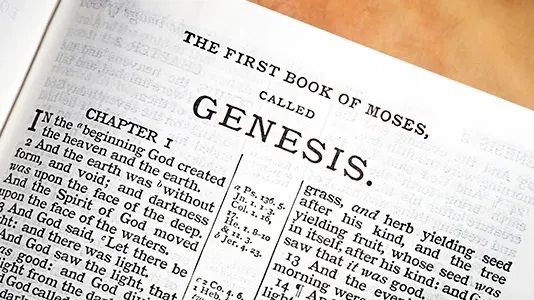
Genesis chapter 1 verse 27: “So God created man in his own image, in the image of God created he him; male and female created he them.”

VERSE CONTEXT

The book of Genesis, written by Moses under divine inspiration, serves as the foundational book of the Bible, revealing God as the Creator of all things. Genesis chapter 1 presents the six-day creation account, showing God’s order, power, and intention for humanity. Verse 27 is part of the sixth day of creation, where God forms mankind as the pinnacle of His work. Unlike animals, which were made according to their kinds, man is made in the “image of God,” signifying a special relationship with the Creator. This phrase, “image of God,” points to humanity’s unique ability to reflect God’s nature through reason, morality, creativity, and spiritual communion.

A keyword in this verse is “image”, meaning a representation or likeness. It does not mean we physically resemble God, that God has fingers and toes and needs to eat and drink to stay alive, for He is Spirit (John chapter 4 verse 24: “God is a Spirit: and they that worship him must worship Him in spirit and in truth.”), but rather that we bear His moral and spiritual characteristics. Another key phrase, “male and female created he them,” emphasizes God’s design for humanity in two complementary sexes, each bearing equal dignity and worth.

BROADER CONTEXT

Genesis chapter 1 establishes God’s supreme authority over creation. Each day builds upon the next, culminating in the creation of mankind. The chapter presents a structured, intentional act of divine craftsmanship, countering the idea that life is an accident. The phrase “God saw that it was good” appears repeatedly, but after creating mankind, God declares in Genesis chapter 1 verse 31: “And God saw every thing that he had made, and, behold, it was very good.” This shift from “good” to “very good” emphasizes that humans were God’s crowning creation, designed to rule over the earth, cultivate it, and walk in fellowship with Him.

The concept of being made in God’s image also establishes the foundation for human dignity, value, and purpose. The fall in Genesis chapter 3 marred this image, but through Jesus Christ, restoration is possible. Colossians chapter 3 verse 10 speaks of believers being “renewed in knowledge after the image of him that created him,” showing that salvation restores what was lost in sin.

APPLICATION

Appreciating God’s Greatness

This verse reminds us that God’s creation of humanity was intentional and personal. He did not create us out of necessity but out of love. Psalm chapter 139 verse 14 states: “I will praise thee; for I am fearfully and wonderfully made: marvellous are thy works; and that my soul knoweth right well.” God’s image in us means we are set apart from all creation, capable of knowing, loving, and worshiping Him.

For the Believer

Understanding that we are created in God’s image gives us purpose and responsibility. We are called to reflect His character, showing love, mercy, and holiness in our daily lives. Ephesians chapter 4 verse 24 encourages believers to “put on the new man, which after God is created in righteousness and true holiness.” This verse also serves as a reminder of the relationship God desires with us. From the beginning, He intended for us to walk with Him, as seen in Genesis chapter 3 verse 8 when He walked in the garden with Adam and Eve before sin disrupted that fellowship.

Call to Action:

As image-bearers, we must ask ourselves: Are we living in a way that honors the God who made us? Are we seeking to restore our relationship with Him through Christ? Let us commit ourselves to reflecting His love and holiness in all we do.

For the Unbeliever

This verse is a direct invitation to recognize that you are not an accident. You were created with purpose, designed to know and love your Creator. While sin has separated us from God, He made a way for restoration through Jesus Christ. Romans chapter 5 verse 8 declares: “But God commendeth his love toward us, in that, while we were yet sinners, Christ died for us.” God does not just tolerate humanity—He loves us deeply and offers salvation to all who come to Him in faith.

FINAL ENCOURAGEMENT

Genesis chapter 1 verse 27 is a powerful reminder that we are created in the image of a loving, intentional God who desires a relationship with us. Despite the brokenness caused by sin, His love remains steadfast, and through Jesus, we can be restored to our intended purpose. Let us embrace this truth and live in the fullness of the relationship God has designed for us.

You are loved, so much in fact that we want you to know and be Believers of Biblical Truth.

TODAY’S DAILY BIBLE VERSE

March 7, 2025

Matthew chapter 6 verses 19 through 21:
Verse 19: Lay not up for yourselves treasures upon earth, where moth and rust doth corrupt, and where thieves break through and steal:
Verse 20: But lay up for yourselves treasures in heaven, where neither moth nor rust doth corrupt, and where thieves do not break through nor steal:
Verse 21: For where your treasure is, there will your heart be also.


Verse Context:

Matthew chapter 6 verses 19 through 21 come from the middle portion of the famous Sermon on the Mount, a lengthy teaching delivered by Jesus to His disciples and the gathered crowd. The author of the Gospel of Matthew is Matthew himself, a former tax collector who became a disciple of Jesus. Matthew’s Gospel was written to a Jewish audience, aiming to show that Jesus is the promised Messiah, the fulfillment of Old Testament prophecy, and the true King of Israel.

The historical and social context of this passage helps us understand why Jesus used such direct language about wealth. In the first century, particularly in Galilee and Judea, wealth was primarily stored in material goods like clothing, precious metals, and grain. Moths could easily destroy fine garments, rust could corrode valuable metals, and homes—often made of stone or mudbrick—were vulnerable to thieves who could literally dig through the walls to steal stored goods. Jesus was speaking to a people who lived day-to-day with these risks, making His words immediately relevant to their real lives.

Theologically, Jesus is teaching a principle that transcends economics—it’s about allegiance and the orientation of the heart. He warns against the trap of trusting in earthly wealth, which is temporary, and directs His followers toward investing in heavenly treasure—eternal rewards tied to faithfulness, generosity, righteousness, and devotion to God. The “treasures in heaven” concept was familiar in Jewish thought, particularly in writings like the Wisdom of Sirach, but Jesus expands and deepens its meaning.


Broader Context:

Matthew chapter 6 as a whole is part of the larger Sermon on the Mount, found in Matthew chapters 5 through 7. This sermon covers a wide range of topics, all tied to the kingdom of God and the life of faithful discipleship. In chapter 6, Jesus teaches about spiritual practices—giving to the needy, prayer (including the Lord’s Prayer), fasting, and how to rightly view wealth and material possessions.

The overall purpose of Matthew’s Gospel reinforces this teaching, because Matthew repeatedly emphasizes that true righteousness is not about outward appearances or religious performance, but about the inward condition of the heart. This section directly follows Jesus’ teaching on prayer and fasting, making the point that just as spiritual practices must be done with sincerity before God, so also must the way believers handle wealth reflect a heart devoted to God’s kingdom.

This theme continues throughout the Gospel of Matthew. In Matthew chapter 19 verse 21, Jesus tells the rich young ruler: “If thou wilt be perfect, go and sell that thou hast, and give to the poor, and thou shalt have treasure in heaven: and come and follow me.” This shows that for Jesus, earthly possessions are always secondary to eternal matters. Similarly, in Matthew chapter 13 verse 44, Jesus says: “Again, the kingdom of heaven is like unto treasure hid in a field; the which when a man hath found, he hideth, and for joy thereof goeth and selleth all that he hath, and buyeth that field.” This reinforces that heavenly treasure is worth any earthly sacrifice.


Application:

Appreciating God’s Greatness:

This passage reveals God’s greatness by showing that His kingdom operates on eternal principles, not temporary ones. God offers eternal security, lasting rewards, and incorruptible treasure to those who trust in Him. Unlike the fragile wealth of this world, God’s blessings cannot be stolen, corrupted, or lost. This reveals God’s faithfulness and His ability to fully provide for His people—not just for today, but for eternity. In this, we see God’s unmatched power and wisdom, because He alone offers what truly lasts.

For the Believer:

For believers, this passage serves as a heart check. It asks us to evaluate where our treasure truly is. Are we investing our time, talents, and treasure into things that will matter for eternity—serving others, sharing the Gospel, cultivating a Christlike character—or are we more focused on building earthly wealth that will ultimately vanish?

Call to Action:

Believers are called to intentionally store up treasures in heaven by living lives of faith, obedience, and generosity. This includes supporting missions, helping the poor, investing in the spiritual growth of others, and living out the Gospel daily. Jesus’ teaching is not anti-wealth, but it challenges believers to ask: Am I using my wealth in a way that honors God and advances His kingdom? Every decision we make about money, possessions, and priorities reveals where our heart truly rests.

For the Unbeliever:

For those who do not yet believe, this passage is an invitation to consider what you are truly living for. Earthly treasures—whether money, possessions, status, or pleasure—will all pass away. None of them can provide ultimate security, peace, or purpose. Jesus offers something far greater: eternal life and a place in God’s kingdom, where true treasure is found. This treasure is not earned through wealth, but received through faith in Christ.

The question is simple: Where is your treasure? If your heart longs for things that fade, you will end up empty. But if you seek the treasure found in Jesus—His grace, His presence, and His promise of eternal life—you will gain a treasure no thief can steal and no moth can destroy.


Final Encouragement:

Matthew chapter 6 verses 19 through 21 remind us that life is about much more than accumulating things. Our hearts follow our treasure, so if we want hearts that belong to God, we must make Him our greatest treasure. Earthly wealth can be a useful tool when used for God’s purposes, but it can never be our master or our source of security. True treasure is found in living for God’s glory, and that treasure lasts forever.

You are loved, so much in fact that we want you to know and be Believers of Biblical Truth.

TODAY’S DAILY BIBLE VERSE


First Peter chapter 1 verses 3 through 5:

Verse 3: Blessed be the God and Father of our Lord Jesus Christ, which according to his abundant mercy hath begotten us again unto a lively hope by the resurrection of Jesus Christ from the dead,
Verse 4: To an inheritance incorruptible, and undefiled, and that fadeth not away, reserved in heaven for you,
Verse 5: Who are kept by the power of God through faith unto salvation ready to be revealed in the last time.


Verse Context:
The apostle Peter wrote First Peter to encourage believers who were facing trials, persecution, and uncertainty. This letter, written around AD 64-65, was likely composed in Rome and sent to believers scattered across regions of Asia Minor (modern Turkey). These early Christians were suffering, many of them driven from their homes and communities because of their faith in Jesus Christ. Peter, who knew firsthand the pain of denying Jesus and the joy of being restored by Him, wrote with deep pastoral care. His purpose was clear: to anchor suffering believers in the unshakable hope found in Jesus Christ.

The word “begotten” in verse 3 is important. It means to be “born again” or “given new life.” This is not a hope we create for ourselves — it is the direct result of God’s mercy through Jesus’ resurrection. The word “lively hope” stands out. It isn’t a fragile wish or a passing thought. It’s a living, breathing, unbreakable confidence because it rests in the power of the risen Savior. Peter is teaching that our hope isn’t tied to circumstances; it’s anchored in a historical event — the resurrection of Jesus. That’s why it’s “lively,” meaning it’s alive and active, not dead or theoretical.

Peter also speaks of an “inheritance incorruptible.” This inheritance refers to eternal life in God’s presence. In Jewish culture, inheritance was often tied to land, family honor, and possessions passed down through generations. But Peter says this inheritance is different — it cannot be corrupted, polluted, or lost. This is important for scattered believers who may have lost earthly homes and wealth. Peter assures them that what they have in Christ can never be taken away.

Finally, verse 5 brings in another powerful phrase: “kept by the power of God.” The word “kept” is a military term, meaning to be guarded or shielded like a fortress under heavy protection. This is not believers keeping themselves saved — this is God Himself standing guard over their salvation until the day it is fully revealed.


Broader Context:
First Peter as a whole is a letter about hope, holiness, and perseverance in suffering. The entire book functions as a survival guide for believers living in hostile territory. Peter does not downplay the reality of suffering, but he continually points upward — to the inheritance awaiting believers, to the example of Jesus’ own suffering, and to the ultimate victory guaranteed by Christ’s resurrection.

The theme of hope runs like a golden thread through the whole letter. This hope is not wishful thinking, but certainty built on the finished work of Christ. The book also ties hope directly to holiness — because of this hope, believers are called to live differently, with reverence toward God and love toward one another. Historically, commentators such as Matthew Henry, Charles Spurgeon, and John Calvin have emphasized Peter’s tender pastoral heart in this letter, noting that his own personal journey of failure, restoration, and hope in Christ gives him a unique voice to write about living hope.


Application:
Appreciating God’s Greatness:
These verses shine a spotlight on the mercy and faithfulness of God. It is God who initiates new birth, God who guarantees the inheritance, and God who guards His people by His power. This reveals the heart of God — a Father who gives not only mercy but abundant mercy. His mercy does not just forgive sin, but completely remakes sinners into children of God, heirs of an eternal kingdom. This greatness of God, His power and mercy working together, is the foundation of every hope we have.

For the Believer:
These verses are written directly for you as a believer. When you feel discouraged, beaten down, or tempted to lose heart, Peter calls you back to the core of your faith — the resurrection of Jesus. Your hope is not tied to today’s circumstances. It is rooted in an empty tomb and a living Savior. That’s why it’s called “lively hope.” This hope shapes how you face today and tomorrow. No matter what happens, your inheritance is safe, your future is secure, and God’s power is actively guarding you.

Call to Action:
Today, remind yourself of this living hope. Speak it aloud if you need to — “My hope is alive because Jesus is alive.” When negative thoughts or discouragement creep in, confront them with the truth of First Peter chapter 1 verses 3 through 5. Also, look for someone around you who needs encouragement. Share this living hope with them. Sometimes the best way to rekindle hope in our own hearts is to offer it to someone else.

For the Unbeliever:
If you do not yet know Jesus personally, these verses extend an invitation to you. The hope Peter describes is available only through new birth — being born again into God’s family. This happens when you put your faith in Jesus Christ, trusting His death and resurrection to save you from sin and make you right with God. Without Jesus, life will always be uncertain, hope will always be fragile, and the future will always be unsure. But with Jesus, you can have a living hope — one that death itself cannot destroy. If you want this hope, it begins by calling on Jesus in prayer, asking Him to forgive you, save you, and make you new.


Final Encouragement:
First Peter chapter 1 verses 3 through 5 reminds us that hope in Jesus is not fragile, temporary, or dependent on our own strength. It is living, because Jesus lives. It is guaranteed, because God guards it. And it is glorious, because it leads to an eternal inheritance that nothing in this world can touch. Today, no matter how hard life feels, this hope is yours if you are in Christ. Let your heart settle into this truth — you are held by a hope that cannot fail.