
TODAY’S DAILY BIBLE VERSE: Little Foxes, Big Problems

August 08, 2025

Song of Solomon 2:15- 15Take us the foxes, the little foxes, that spoil the vines: for our vines have tender grapes.

Verse Context

This verse comes in the midst of a romantic and poetic dialogue between the bride and bridegroom in the Song of Solomon, a book traditionally attributed to King Solomon. The imagery of foxes refers to small but destructive animals that could ruin a vineyard by eating young grapes or damaging vines. Spiritually and relationally, these “little foxes” are symbolic of small problems, sins, or neglected issues that, if left unchecked, can harm love and intimacy in marriage. The vines and tender grapes represent the blossoming of love and the fruit of the relationship, which requires intentional care and protection.

In the context of marriage, the verse teaches the importance of addressing minor issues before they grow into larger, relationship-damaging problems. Just as a vineyard must be guarded from pests to preserve its fruit, a marriage must be guarded from unresolved conflicts, unkind words, hidden temptations, or lapses in affection.

Here, the poetic voice urges both partners to take responsibility together, “take us the foxes”, showing that maintaining a strong, godly marriage is a shared effort. This reflects the biblical principle that husband and wife are united in protecting the covenant bond God has established between them.

Broader Context

The Song of Solomon, also known as the Song of Songs, is a poetic celebration of marital love, intimacy, and commitment. Traditionally attributed to King Solomon, it is considered an allegory of God’s covenant relationship with His people, while also providing a literal depiction of the beauty and sanctity of romantic love within marriage.

Chapter 2 presents a back-and-forth exchange between the bride and bridegroom, filled with imagery from nature, flowers, vineyards, springtime, symbolizing new love and growth. The surrounding verses (2:8–17) describe the bride’s delight in the bridegroom’s approach and the beauty of their union. This is not mere infatuation, but a picture of love maturing into deep commitment.

Verse 15 fits into this progression as a warning within the joy: their relationship is blossoming, but they must guard against anything that could harm it. The “little foxes” become a central metaphor in the book’s teaching, love must be tended like a vineyard, with vigilance against the small intrusions that can cause great damage if ignored.

On a spiritual level, this verse also reflects the believer’s relationship with God. Just as foxes threaten the fruitfulness of a vineyard, small compromises, unchecked sins, and distractions can damage our walk with Christ. In the same way that marriage requires continual care, so does our spiritual intimacy with the Lord.

Application

Appreciating God’s Greatness
God is the ultimate designer of marriage, creating it to be a covenant of love, trust, and mutual care. His greatness is revealed in how He uses even the smallest details of creation, like foxes in a vineyard, to teach profound spiritual and relational truths. The Lord knows that both in marriage and in our relationship with Him, it is often the small, unnoticed compromises that can lead to great destruction. His Word shows us that He cares not only about our salvation, but also about the daily health and fruitfulness of our love for Him and for one another.

For the Believer
This verse calls believers to be vigilant in both their marriages and their spiritual lives. The “little foxes” could be anything from unspoken resentments, selfish attitudes, or habitual neglect, to temptations that slowly creep in. In our walk with Christ, they could be the compromises we justify, the spiritual disciplines we neglect, or the worldly distractions we allow to crowd out our devotion.

Call to Action: Examine your heart and your home today. Ask the Lord to reveal any “little foxes” that might be hindering love or fruitfulness. Be willing to address them immediately, through repentance, forgiveness, intentional acts of kindness, and renewed spiritual commitment. Guard what God has entrusted to you, and remember that a healthy marriage and a vibrant walk with Christ require constant care and intentional effort.

For the Unbeliever
If you have not yet given your life to Christ, this verse speaks to you as well. The “little foxes” in your life may be the sins you consider small or harmless. Yet over time, they spoil the most important vineyard, your soul. Sin doesn’t always destroy all at once; often it works subtly, chipping away at your peace, joy, and hope. But Jesus offers forgiveness and new life. He can cleanse the vineyard of your heart and cause it to bear good fruit, both now and for eternity.

Final Encouragement

A vineyard left unattended will eventually be overtaken by pests, weeds, and decay, and so will a marriage or a soul left unguarded. God calls us to be watchful, not fearful, because He has given us everything we need to protect and nurture what He has entrusted to us. Whether it’s your marriage, your faith, or your character, do not overlook the “little foxes.” Deal with them quickly, and you will enjoy the sweet fruit of peace, joy, and love that comes from walking in God’s ways. Remember, strong love is not accidental; it is cultivated through daily faithfulness and intentional care.

Our Prayer For You

Heavenly Father, we thank You for the beauty of love and the covenant of marriage that You designed. We pray for every reader today, whether married or single, that You would reveal any “little foxes” seeking to harm their relationships or their walk with You. Give them the courage to confront these issues, the humility to repent, and the grace to forgive. Strengthen marriages to reflect Your love, and draw every heart closer to You so that the vineyard of their life will bear fruit that glorifies Your name. In Jesus’ name we pray, Amen.

Closing

If you’ve found these daily verses encouraging, enlightening, or fruitful, please consider helping us spread the truth and light of God’s Word by subscribing to the blog and YouTube channels and liking and following the Facebook page. Most of all, share Believers of Biblical Truth and our links with others who may need the sermons and daily teachings just as much as we do.

You are loved, so much in fact, that we want you to know and be Believers of Biblical Truth. Shalom Shalom.

Today’s Daily Bible Verse: Being Saved Means Being Renewed

June 30, 2025

Second Corinthians chapter 4 verse 16:
For which cause we faint not; but though our outward man perish, yet the inward man is renewed day by day.

Verse Context

The Apostle Paul wrote Second Corinthians around A.D. 55–57, most likely from Macedonia during his third missionary journey. This letter is his most emotionally transparent, written after a painful visit to Corinth and a sorrowful letter that had caused grief but ultimately led to the church’s repentance (see 2 Corinthians 7:8–10).

Here in chapter 4, Paul is defending his ministry while also encouraging believers to endure suffering for Christ’s sake. Verse 16 is part of a powerful passage (verses 7–18) where Paul contrasts the temporal suffering of the flesh with the eternal glory of the spirit. His message is clear: don’t lose heart. Even though the “outward man” (our physical body) weakens with age, affliction, or persecution, the “inward man” (our spiritual self, born again by the Holy Ghost) is daily renewed by God’s strength.

The Greek word used for “renewed” is anakainoutai (ἀνακαινοῦται), ah-nah-kai-NOO-tai: ah – like “father,” nah – like “nah, I’m good,” kai – rhymes with “eye,” NOO – stressed syllable, like “noon” without the ‘n’ at the end, tai – rhymes with “tie,” meaning to be made new again, to be refreshed. This points to the ongoing, present-tense activity of the Holy Spirit at work in the believer’s heart, not a one-time event. It also reminds us of Lamentations 3:22–23: “It is of the Lord’s mercies that we are not consumed, because his compassions fail not. They are new every morning; great is thy faithfulness.”

Broader Context

The entire fourth chapter of Second Corinthians contrasts human weakness with God’s power. Paul reminds the Corinthian believers that the treasure of the gospel is held in “earthen vessels”, fragile clay jars (verse 7), so that the exceeding power is of God, and not of us.

This chapter focuses on perseverance in ministry, faith in the unseen, and eternal perspective. Paul is repeatedly afflicted, perplexed, and cast down, but not forsaken. He makes it clear that his endurance is not fueled by human strength but by the life of Jesus made manifest in him (verse 10). The message of verse 16 culminates in verses 17–18: “For our light affliction, which is but for a moment, worketh for us a far more exceeding and eternal weight of glory; While we look not at the things which are seen, but at the things which are not seen: for the things which are seen are temporal; but the things which are not seen are eternal.” Paul’s message is timeless: Don’t let decay, sickness, or suffering shake you, the eternal soul is being shaped for glory, day by day.

Application

Appreciating God’s Greatness

This verse reveals God as a faithful, daily restorer of our inner man. He does not simply save us once and leave us to survive on yesterday’s strength. His renewing work is constant, like manna from heaven, His mercy and strength come new every morning, giving spiritual life even while the body ages or weakens.

For the Believer

No matter what you’re facing today, exhaustion, depression, chronic pain, discouragement in ministry, this verse is a reminder that God has not left you. The spiritual life within you is not dependent on your circumstances, but on the continual presence of the Holy Ghost.

Call to Action:
Spend time in prayer today and ask the Lord to renew your inner man. Don’t let weakness or weariness define your day. Instead, lean on the Spirit of God and meditate on this truth: “yet the inward man is renewed day by day.” Let the Word, worship, and communion with God refresh your spirit. Encourage others with this verse as well, especially those who are suffering or weary.

For the Unbeliever

You may feel the decline of life, the stress, the anxiety, the weight of time, but there is no inward renewal apart from Christ. This verse does not apply to those outside the faith. While your outward body perishes, so too does your spirit, unless you receive new life through Jesus Christ. The “inward man” can only be born through repentance and faith in Christ (John 3:3). Without Him, you are perishing both inside and out. But if you surrender to Him, He will make you new, give you peace, and renew you every day from the inside out.

Final Encouragement

This verse is a lifeline. It tells you that even when you’re physically weak, God’s Spirit is strong inside of you. You may be tired, but you are not abandoned. You may be in pain, but you are being renewed. Keep your eyes on the eternal. Let God strengthen your spirit today, He has fresh strength for you, every single day.

Prayer

Father God, we thank You for being the strength of our lives. Though we are tired, aging, or weary in the flesh, Your Spirit never fails to revive us. Renew our hearts today, Lord. Fill our minds with Your peace and our souls with fresh courage. For those struggling with sickness, sorrow, or exhaustion, bring the comfort of knowing that You are at work inside them even now. Help us not to focus on what we see with our eyes, but on the eternal truth of Your Word. We trust You. We love You. We surrender to Your daily renewal. In Jesus’ holy name we pray, Amen.

Closing

If you’ve found these daily verses encouraging, enlightening, or fruitful, please consider helping us spread the truth and light of God’s Word by subscribing to the blog and YouTube channels and liking and following the Facebook page. Most of all, share Believers of Biblical Truth and our links with others who may need the sermons and daily teachings just as much as we do.

You are loved, so much in fact, that we want you to know and be Believers of Biblical Truth.

Shalom Shalom.
Today’s Daily Bible Verse: Empty Faith

June 27, 2025

Luke chapter 6 verse 46:
And why call ye me, Lord, Lord, and do not the things which I say?

VERSE CONTEXT

This powerful statement was spoken by Jesus during what is often called the “Sermon on the Plain,” a message that parallels the more well-known “Sermon on the Mount.” While Matthew emphasized the setting on a mountain, Luke’s Gospel (written by Luke the physician and companion of Paul) highlights a more level setting to symbolize Jesus reaching people of every class and background. Luke’s Gospel often emphasizes Jesus’ heart for the outcast, the Gentile, the poor, and the sinner.

In Luke chapter 6, Jesus had just finished teaching on love for enemies, judging others, and the fruit of righteousness. Then He asked this question to pierce through hypocrisy: Why do you say I am your Lord if you do not obey Me? The Greek word for “Lord” here is Kyrios (κύριος) [KOO-ree-os], meaning “master,” “owner,” or “sovereign.” In Hebrew culture, calling someone Lord was a declaration of submission and authority. So when Jesus says, “Why call ye me, Lord, Lord,” He’s pointing out the contradiction of honoring Him with words while denying Him in action.

This verse isn’t just a mild rebuke; it is a courtroom charge. Jesus is challenging all who profess Him to consider whether their lives match their lips. The repetition of Lord, Lord adds urgency and emphasis; it reflects a passionate, outward show of allegiance. But words mean nothing without obedience.

BROADER CONTEXT

This verse serves as the climax to Luke’s version of the Sermon. Right after this, in verses 47–49, Jesus tells the parable of the wise and foolish builders; the one who hears and does His words is like a man who dug deep and laid the foundation on rock. But the one who hears and does not obey is like a man who built his house without a foundation. So Luke 6:46 introduces that teaching by confronting the heart of every professing follower: Do you obey Me, or do you only acknowledge Me when it’s convenient?

This is also connected to the greater theme of all four Gospels: true discipleship. Jesus is not interested in empty religion, ritualistic obedience, or shallow allegiance. Over and over again, He exposes superficial faith, people who follow Him for miracles or popularity but not for truth, holiness, and surrender. Luke 6:46 cuts straight to the core of the Christian walk: If He is your Lord, obedience is not optional.

APPLICATION

APPRECIATING GOD’S GREATNESS

God is not silent. He speaks, He teaches, and He commands, but not to burden us. He gives commands because He is holy and because obedience leads to life, blessing, and spiritual freedom. It is a testimony of His mercy that He even invites us to obey rather than simply judging us for disobedience. That Jesus would ask this question shows that He desires not just our service, but our hearts.

FOR THE BELIEVER

Jesus is asking us today, “Why do you call Me your Lord but live in contradiction to My Word?” If we call Him Lord, that means we’ve surrendered every area of life to Him: our words, our choices, our relationships, and our priorities. This verse confronts the danger of lip-service Christianity. Church attendance, Christian phrases, and emotional worship are not enough. Our obedience must be real, daily, and wholehearted.

CALL TO ACTION

Examine your life today. Is there a command of Jesus you’re ignoring? Is there something He has told you to do that you’ve delayed, avoided, or refused? Don’t harden your heart. Let this verse prompt repentance and renewal. Confess where you’ve fallen short and make a firm decision to do what Jesus says, not just say what He wants to hear.

FOR THE UNBELIEVER

You may believe Jesus is a good teacher or prophet. But He is more; He is Lord. And He is calling you not just to admire Him but to follow and obey Him. Luke 6:46 warns that claiming Jesus without obeying Him is meaningless. Salvation begins with surrender. If you have never repented and made Jesus your Lord, your Master, not just your safety net, today is the day to do it. Call on Him in truth, and begin to walk in obedience by faith.

FINAL ENCOURAGEMENT

Jesus is not fooled by titles or religious appearances. He sees the heart. Luke 6:46 is not a condemnation, it’s an invitation to real discipleship. To call Jesus Lord is to recognize Him as King, Redeemer, and Ruler. Don’t just say it, live it. His commands are not grievous; they are life-giving. Build your life on His Word, and walk in obedience, not just admiration.

PRAYER

Lord Jesus,
You are worthy to be called Lord in every sense of the word. Forgive us for the times we have honored You with our lips but resisted You with our actions. Teach us to obey not out of fear but out of love. Help us to examine ourselves honestly, to surrender our pride, and to follow You in every area of life. May our words and our deeds reflect the truth that You are Lord of all. In Your holy and precious name we pray, Amen.

CLOSING

If you’ve found these daily verses encouraging, enlightening, or fruitful, please consider helping us spread the truth and light of God’s Word by subscribing to the blog and YouTube channels and liking and following the Facebook page. Most of all, share Believers of Biblical Truth and our links with others who may need the sermons and daily teachings just as much as we do.

You are loved; so much in fact, we want you to know and be Believers of Biblical Truth.


Shalom Shalom.

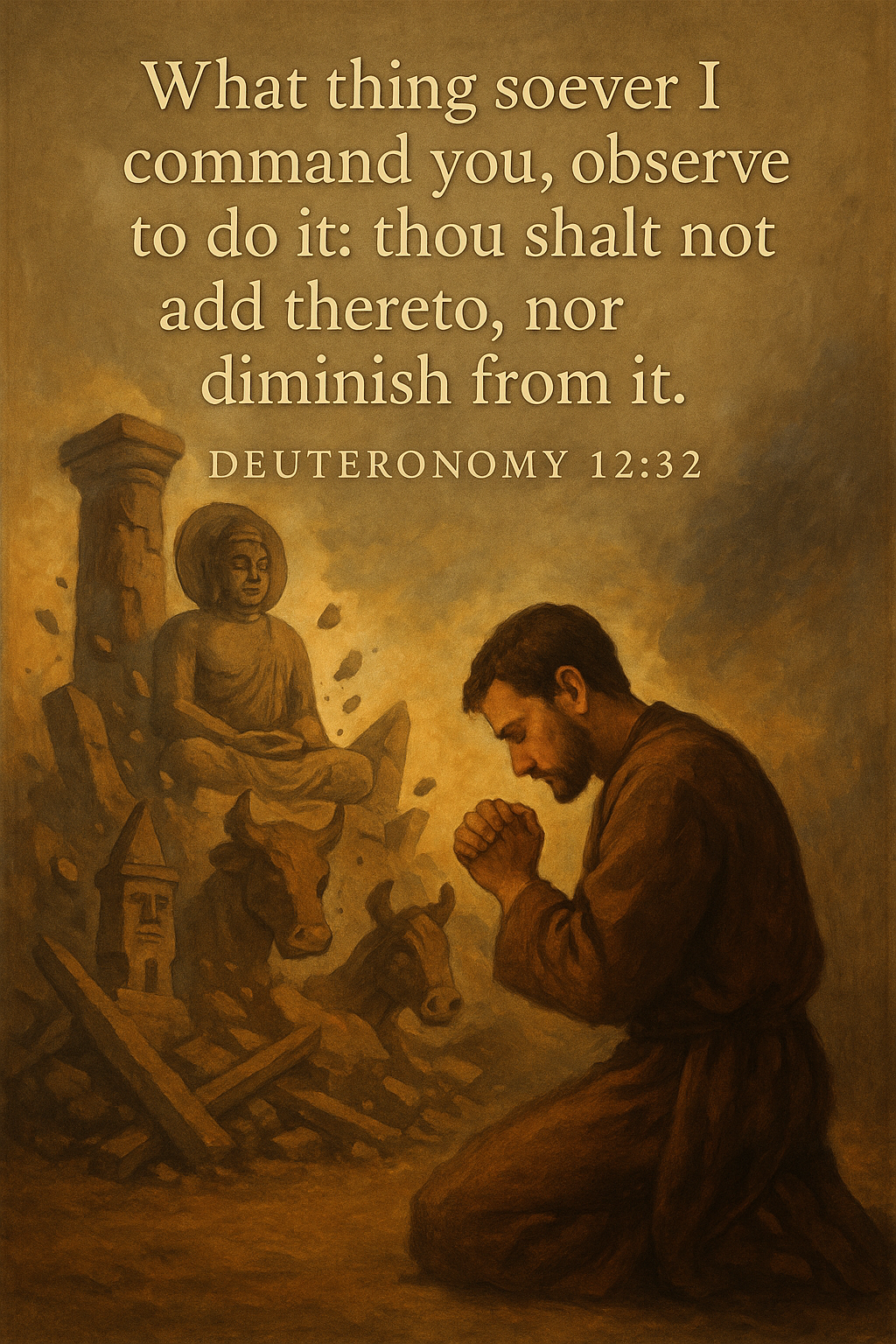
Today’s Daily Bible Verse: There is Only One God

June 24, 2025

Deuteronomy chapter 12 verse 32:
What thing soever I command you, observe to do it: thou shalt not add thereto, nor diminish from it.

Verse Context:

This verse comes at the end of a larger passage in which God warns His people against imitating the pagan worship practices of the nations they are to dispossess (see Deuteronomy chapter 12 verse 30). God had just commanded them to destroy the altars, groves, and images of false gods (see verse 3), and then firmly insisted that worship was to take place only in the way He prescribed, not by inventing new rituals or mixing in cultural trends.

Moses then seals this warning with a thunderous charge: “Observe to do it!” The Hebrew word here for observe is “shamar” (שָׁמַר), meaning to guard, watch closely, or keep diligently. This is no passive suggestion. It is a command to actively and carefully carry out God’s revealed instructions—nothing more and nothing less.

The second half of the verse uses legal language:

  • “Thou shalt not add thereto”: meaning do not create additional rules, traditions, or spiritual ideas that God did not give.
  • “Nor diminish from it”: meaning do not water down, ignore, or omit any part of His command.

This same command is echoed in Proverbs chapter 30 verse 6:
“Add thou not unto his words, lest he reprove thee, and thou be found a liar.”

And again in Revelation chapter 22 verses 18–19, where it applies to the entire prophetic message of Scripture.

This verse ultimately teaches the supremacy and sufficiency of God’s Word. There is one God, one truth, one standard, and one way to worship, and that way is not up for revision.

Broader Context:

Author: Moses, speaking under divine inspiration as the mediator of God’s covenant with Israel.
Time Period: Circa 1406 B.C., as Israel was preparing to enter the Promised Land.
Audience: The second generation of Israelites after the Exodus, who had not experienced Mount Sinai firsthand.
Setting: On the plains of Moab, just before crossing the Jordan River.

The Book of Deuteronomy is Moses’ final sermon series to Israel. In chapter 12, he begins the section known as the Deuteronomic Code: a covenantal restatement of how the Israelites are to live, worship, and govern themselves once they enter Canaan.

Deuteronomy chapter 12 particularly emphasizes God’s exclusive claim to worship, Destruction of idolatry, Centralized worship at the place God chooses (eventually Jerusalem). Strict obedience to His commands, without innovation or deviation

This chapter and verse is especially vital in today’s era where man-centered religion is increasingly normalized. People want to “customize” their Christianity, adding rituals, embracing ideologies God condemns, or subtracting anything that offends the flesh.

But Deuteronomy chapter 12 verse 32 lays it bare: You don’t have the authority to edit God.

Application:

Appreciating God’s Greatness:

This verse exalts God’s absolute authority. He alone sets the terms of worship, morality, and truth. He does not ask for input. He is not a consultant. He is the LORD. And it is His mercy that He gives us commands at all. Instead of leaving us blind, He gives us light. Instead of letting us destroy ourselves, He gives us a way to live that leads to blessing, peace, and eternal life. His Word is perfect, complete, and unchangeable.

For the Believer:

You must watch your life and doctrine closely (compare to First Timothy chapter 4 verse 16). Do not add to God’s commands by inventing personal convictions that He never required. And do not subtract from them just because culture finds them offensive.

Many believers today are unknowingly practicing “designer faith”: a form of Christianity edited to match personal comfort or social acceptance. This is disobedience cloaked in convenience.

Call to Action:
Return to the Word. Examine your worship, your doctrine, your lifestyle. Ask:

  • Am I obeying God fully, or just partially?
  • Have I added human traditions or personal opinions to God’s commands?
  • Have I omitted anything God told me to do, like sharing the Gospel, honoring biblical gender roles, or speaking truth in love?

If so, repent, and recommit to full obedience.

For the Unbeliever:

You cannot create your own spiritual path and expect it to lead to Heaven. God has already revealed the only way: through faith in Jesus Christ (John chapter 14 verse 6: “I am the way, the truth, and the life: no man cometh unto the Father, but by me.”)

Any attempt to earn salvation through good works, self-made religion, or spiritual philosophies is rebellion. Salvation comes by grace through faith, but it is only given to those who receive the truth of God’s Word.

Today, submit yourself to the one true God. Stop rewriting the rules. Stop editing His commands. Believe the Gospel and obey His voice.

Final Encouragement:

The Word of God does not evolve, and truth does not bend. Our calling is not to reshape God’s commandments, but to honor them, live by them, and teach them without compromise. True freedom is not in self-rule, but in obedient worship of the one true God.

Prayer:

Heavenly Father,
We bow before You today as the One True God. Forgive us for every time we’ve tried to add to or take away from Your holy Word. Keep us from self-made religion, from cultural compromise, and from the pride that whispers we know better than You. Give us hearts that tremble at Your Word, and minds that cling to Your commands. Strengthen us to walk in obedience, even when it costs us everything. Teach us to worship You in spirit and in truth. In Jesus’ name, Amen.

Closing:

If you’ve found these daily verses encouraging, enlightening, or fruitful, please consider helping us spread the truth and light of God’s Word by subscribing to the blog and YouTube channels and liking and following the Facebook page. Most of all, share Believers of Biblical Truth and our links with others who may need the sermons and daily teachings just as much as we do.

You are loved, so much in fact, that we want you to know and be Believers of Biblical Truth.

Shalom Shalom.

Today’s Daily Bible Verse: Who Does God Give Blessings to?

June 16, 2025

Proverbs chapter 10 verse 22:
The blessing of the LORD, it maketh rich, and he addeth no sorrow with it.

Verse Context

The Book of Proverbs, authored primarily by King Solomon is filled with practical wisdom for daily life, drawn from God’s eternal truth. Proverbs chapter 10 begins a series of short sayings that contrast the ways of the righteous and the wicked. In this verse, Solomon points to a specific kind of wealth, not just financial, but spiritual and emotional abundance, that can only come from the blessing of the LORD.

The Hebrew word translated “blessing” is berakah (בְּרָכָה, beh-rah-KAH), which refers to divine favor or benefit. To be blessed by God is to receive something from Him that brings peace, stability, and purpose. When Solomon says “it maketh rich,” he’s not limiting that to money. It includes a richness of life; joy, fulfillment, relationships, contentment, and eternal hope. And most importantly, He addeth no sorrow with it. Unlike worldly gain, which can bring anxiety, guilt, and destruction, God’s blessing brings peace with no hidden burden. The world may give you wealth and fame that ultimately destroys your soul, but when God gives, it uplifts and purifies.

This verse also teaches us something deeper: God’s blessings are not random acts of kindness. They are covenant-driven rewards for obedience, reverence, and relationship with Him. While the wicked may appear to prosper, their gain is often stained with sorrow. But for the righteous, every good gift is holy and sustaining.

Broader Context

Understanding what the Bible means when it talks about being “blessed” is essential. Many people believe blessings are merely material or circumstantial; health, money, a new job, a happy family. But scripture offers a much richer picture. God’s blessings are not limited to the physical. They are rooted in a relationship with Him.

Throughout scripture, God does indeed show kindness to all people. This is often referred to as common grace. In Matthew chapter 5 verse 45, Jesus teaches: “For he maketh his sun to rise on the evil and on the good, and sendeth rain on the just and on the unjust.” This means that even those who reject Him may still enjoy the warmth of the sun, the bounty of harvest, and the joy of family life. These are temporary, earthly blessings, not the spiritual, eternal blessings reserved for His people.

For those who are saved, redeemed through Christ, there is another category of blessing entirely. Ephesians chapter 1 verse 3 says: “Blessed be the God and Father of our Lord Jesus Christ, who hath blessed us with all spiritual blessings in heavenly places in Christ.” These are blessings of adoption into God’s family, the indwelling Holy Spirit, divine wisdom, eternal inheritance, and peace with God. These do not belong to the unbeliever. He may show mercy for a time, but He withholds the covenantal blessings that belong to His people.

Application

Appreciating God’s Greatness

God’s blessings are never random; they are personal, purposeful, and perfect. He knows exactly what His children need and provides it in a way that brings joy and peace without regret. That is a mark of His goodness. Even when He blesses the unbelieving world with food or beauty or comfort, it is a sign of His long-suffering love, giving them more time to repent. And when He blesses His children, He does so with eternity in view.

For the Believer

You are blessed because you are His. Whether your bank account is full or empty, whether you feel strong or weak, you are under the blessing of the Lord if you belong to Christ. Do not measure your blessing by your circumstance. Measure it by your position in Christ. The world cannot take away what God has given you. Walk in gratitude. Trust that every hardship is filtered through His hand and every joy is a whisper of His love.

Call to Action:
Praise Him today for the spiritual blessings you often overlook. Salvation. Forgiveness. His Word. His Spirit. His promises. Rejoice that you are among the blessed who are heard when you pray. And never forget, He adds no sorrow to what He gives.

For the Unbeliever

If you’ve been living outside of God’s will, recognize that what you’re enjoying now, your health, your home, your success, is temporary. These are not proof that you are right with God. They are proof that He is merciful. But He desires to give you so much more. A new heart. A renewed mind. A cleansed soul. The kind of blessing that endures. But you must come to Him through repentance and faith in Jesus Christ. Until you do, your prayers are hindered, your soul remains lost, and your blessings are fleeting.

Final Encouragement

Being blessed doesn’t mean being lucky or rich or happy for a moment. It means being right with God. It means receiving from Him what the world cannot give. The blessing of the LORD truly does make us rich, and He adds no sorrow with it.

Prayer

Lord God, thank You for being the Giver of true and lasting blessings. Thank You for blessing us with things far greater than gold or comfort. Thank You for hearing our prayers, for guiding our steps, and for granting us peace. Help us to walk in obedience so we remain under the covering of Your favor. And for those who have not yet believed, open their eyes to see that You long to bless them with life, not just now, but forever. In Jesus’ name, Amen.

Closing

If you’ve found these daily verses encouraging, enlightening, or fruitful, please consider helping us spread the truth and light of God’s Word by subscribing to the blog and YouTube channels and liking and following the Facebook page. Most of all, share Believers of Biblical Truth and our links with others who may need the sermons and daily teachings just as much as we do.

You are loved, so much in fact, that we want you to know and be Believers of Biblical Truth.

Shalom Shalom.