
Born Again

Billy Graham has, on several occasions, given an analogy of a pig when referencing being born again and the changes of regeneration. His thoughts are that if you take a pig into your bathroom and give it a bath, pat it down with Chanel No. 5, put a ribbon around its neck, and sit it on your couch, you might think you’ve made it a perfect gentleman. But as soon as you open the door, that pig will run straight back to the mud. Why? Because its nature hasn’t changed—only its exterior has been cleaned. That’s how it is with many of us. We make changes to conform to social or religious expectations, yet inside, we remain unchanged.

This is what Jesus was addressing when He spoke to Nicodemus. He said, “Nicodemus, you need to be changed on the inside, and only the Holy Spirit can accomplish that. You must be born from above.”

Being born again is a supernatural act of God. The Holy Spirit convicts us of sin, showing us how we’ve sinned against God. Then He regenerates us—that is, He makes us new. Afterward, the Holy Spirit resides in our hearts, helping us in our daily lives.

The Example of Nicodemus

Our text for this message is John 3:5–6, where Jesus says:
“Verily, verily, I say unto thee, except a man be born of water and of the Spirit, he cannot enter into the kingdom of God. That which is born of the flesh is flesh; and that which is born of the Spirit is spirit.”

Nicodemus was a Pharisee, part of a group of religious leaders who were experts in the Mosaic Law. He was also a member of the Sanhedrin, a ruling council that investigated alleged crimes against the Word of God. Nicodemus was wealthy, powerful, and influential, yet he was intrigued by Jesus and His teachings.

John 3:1–2 says:
“There was a man of the Pharisees, named Nicodemus, a ruler of the Jews: The same came to Jesus by night, and said unto him, Rabbi, we know that thou art a teacher come from God: for no man can do these miracles that thou doest, except God be with him.”

Why did Nicodemus come at night? While we can’t know for sure, it’s possible he wanted to avoid the scrutiny of his peers. As a Pharisee and a member of the Sanhedrin, associating with Jesus could have jeopardized his position and reputation.

What Does It Mean to Be Born Again?

When Jesus said, “Except a man be born again,” the Greek term used means “born from above.” Nicodemus, however, misunderstood this, thinking Jesus referred to physical rebirth. He asked, “How can a man be born when he is old? Can he enter the second time into his mother’s womb and be born?” (John 3:4).

Jesus clarified that there is a distinction between physical birth (of water) and spiritual birth (of the Spirit). The physical represents human nature, while the spiritual represents divine transformation.

The Living Water: Jesus Christ

To understand spiritual rebirth, we must grasp the concept of Jesus as the Living Water. In the wilderness, when Moses struck the rock and water flowed out to quench the Israelites’ thirst, it was a foreshadowing of Jesus (Exodus 17:6). He is the source of life-giving water, which cleanses and renews us.

In John 4, Jesus spoke to the Samaritan woman at the well, saying:
“Whosoever drinketh of this water shall thirst again: But whosoever drinketh of the water that I shall give him shall never thirst; but the water that I shall give him shall be in him a well of water springing up into everlasting life” (John 4:13–14).

This living water represents the salvation and eternal satisfaction found in Christ.

True Transformation Through Regeneration

Being born again means more than attending church, knowing Scripture, or following religious rituals. It is a complete transformation—a regeneration of the heart and spirit. As 2 Corinthians 5:17 says:
“Therefore if any man be in Christ, he is a new creature: old things are passed away; behold, all things are become new.”

Regeneration involves a hatred for sin and a love for righteousness. It’s not about becoming a “good person” by worldly standards but about being made righteous through Christ.

The Call to Action

Jesus concluded His conversation with Nicodemus by emphasizing the necessity of spiritual rebirth:
“For God so loved the world, that he gave his only begotten Son, that whosoever believeth in him should not perish, but have everlasting life” (John 3:16).

Are you born again? Examine your heart. Has there been a real, lasting change in your life? Have you turned away from sin and embraced a new life in Christ?
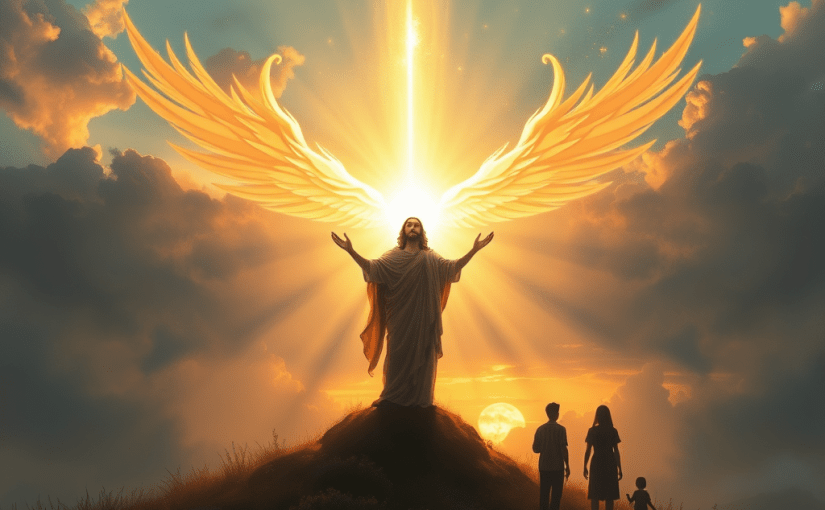
Understanding Luke 14:26: Christ Above All

In Luke 14:26, Jesus lays out one of the most challenging statements in the Bible:
“If any man come to me, and hate not his father, and mother, and wife, and children, and brethren, and sisters, yea, and his own life also, he cannot be my disciple.”

At first glance, these words might seem shocking. How could the One who commands us to love others also tell us to “hate” our closest family members? Is this a contradiction? Of course not. The Bible is inerrant, and it never contradicts itself. What Jesus is doing here is using a hyperbole—a rhetorical tool to exaggerate for emphasis.

We use hyperbole to emphasize a point. In this case, Jesus is making it clear that our love for Him must be so great, so consuming, that every other relationship pales in comparison. This isn’t a call to neglect or despise others but to prioritize Christ above all else. After all, the same Scriptures that record this verse also command us to honor and love one another:

  • Exodus 20:12 reminds us to honor our parents: “Honour thy father and thy mother: that thy days may be long upon the land which the LORD thy God giveth thee.”
  • John 13:34-35 calls us to love each other: “A new commandment I give unto you, That ye love one another; as I have loved you, that ye also love one another. By this shall all men know that ye are my disciples, if ye have love one to another.”
  • Matthew 22:37-39 teaches the greatest commandments: to love God with all our hearts and to love our neighbors as ourselves.

So, how do we reconcile these teachings with Luke 14:26? Jesus is teaching us about priority. He is not urging us to despise our family, but to love Him so deeply that all other attachments become secondary. This is the cost of discipleship, and it requires total devotion.


Context and Background

Let’s set the scene for this challenging teaching. Earlier in Luke 14, Jesus had been dining with a Pharisee. The Pharisees, for those who may not know, were religious leaders who focused on rigidly following the law and their own traditions. They often missed the heart of God’s commands—love, mercy, and humility—and instead prided themselves on outward displays of piety.

At this dinner, Jesus healed a man on the Sabbath, challenging the Pharisees’ legalistic mindset. He then told several parables, including one about humility. He taught that those who exalt themselves will be humbled, and those who humble themselves will be exalted.

Later, Jesus told the parable of the great banquet. A man prepared a feast and invited many guests, but those invited made excuses. One bought a field, another oxen, and another married. Their excuses reflected misplaced priorities—work, possessions, and relationships had taken precedence over the host’s invitation. The host, angered by their rejection, invited the poor, the crippled, and the outcasts—those who recognized their need. This parable reveals a sobering truth: excuses rooted in earthly attachments can cause us to miss God’s invitation to His kingdom.


The Radical Call of Discipleship

From this parable, Jesus transitioned to addressing the crowds directly in Luke 14:25–26. He explained to the crowds that following Him was about commitment, not curiosity or convenience. To be His disciple, one must:

  • Love Him so deeply that all other relationships seem secondary (v. 26).
  • Bear one’s cross, symbolizing a willingness to endure suffering and sacrifice (v. 27).
  • Count the cost of following Him, as one would when building a tower or preparing for war (vv. 28-32).
  • Forsake all else for His sake (v. 33).

Jesus wasn’t looking for half-hearted followers. Scripture repeats the theme of radical devotion, which Jesus was calling for. Revelation 3:16 warns against being lukewarm: “So then because thou art lukewarm, and neither cold nor hot, I will spue thee out of my mouth.”  Jesus desires fervent disciples, not those who waver between Him and the world.


Living Under Christ’s Headship

To follow Christ means to acknowledge His headship—His supreme authority in our lives. Colossians 1:18 says, “And he is the head of the body, the church: who is the beginning, the firstborn from the dead; that in all things he might have the preeminence.” This means Christ must have supremacy in every area of our lives: our relationships, our work, our priorities, and even our very selves.

To live under Christ’s headship, we must:

  • Deny ourselves and take up our cross daily (Luke 9:23-24).
  • Present our bodies as living sacrifices (Romans 12:1-2).
  • Be zealous for good works and for the Lord (Titus 2:14; Colossians 3:23).

Examples of Misplaced Priorities

Throughout the Bible, we see believers who failed to prioritize God:

  • Martha (Luke 10) was distracted by her tasks and missed the chance to sit at Jesus’ feet.
  • The rich young ruler (Matthew 19) clung to his possessions and walked away from Jesus.
  • Solomon allowed his foreign wives to lead him into idolatry (1 Kings 11).

Even today, we see misplaced priorities in modern churches that focus on entertainment rather than Christ, in believers who let grief or relationships overshadow their faith, and in the allure of worldly success and comfort.


Encouragement and Invitation

Despite the cost, following Christ is worth everything. As Jesus said in John 10:10“I am come that they might have life, and that they might have it more abundantly.” The promise of eternal life far outweighs the temporary sacrifices we make.

If you’ve never surrendered your life to Christ, let me invite you to take that step today. The Romans Road shows us the way:

  • “For all have sinned, and come short of the glory of God” (Romans 3:23).
  • “For the wages of sin is death; but the gift of God is eternal life through Jesus Christ our Lord” (Romans 6:23).
  • “That if thou shalt confess with thy mouth the Lord Jesus, and shalt believe in thine heart that God hath raised him from the dead, thou shalt be saved” (Romans 10:9).

Will you make Christ the head of your life? Will you count the cost and follow Him above all else?


Conclusion

Jesus’ call in Luke 14:26 is not about losing relationships—it’s about redefining them under His Lordship. By placing Christ above all, we gain everything. So, let us examine our priorities, repent of lukewarmness, and pursue Him with zeal, knowing that the cost of discipleship is small compared to the reward of eternal life.

May God’s blessings be upon you and your home, may the truth of the Bible light your path, and may we all be fervent believers of biblical truth.