TODAY’S DAILY BIBLE VERSE

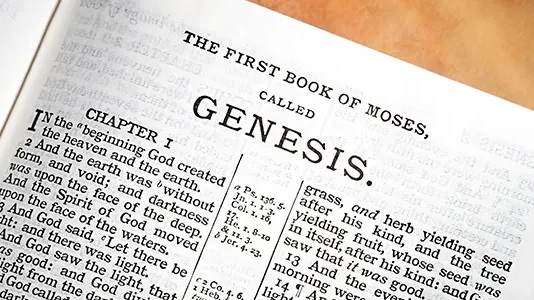
Genesis chapter 1 verse 27: “So God created man in his own image, in the image of God created he him; male and female created he them.”

VERSE CONTEXT

The book of Genesis, written by Moses under divine inspiration, serves as the foundational book of the Bible, revealing God as the Creator of all things. Genesis chapter 1 presents the six-day creation account, showing God’s order, power, and intention for humanity. Verse 27 is part of the sixth day of creation, where God forms mankind as the pinnacle of His work. Unlike animals, which were made according to their kinds, man is made in the “image of God,” signifying a special relationship with the Creator. This phrase, “image of God,” points to humanity’s unique ability to reflect God’s nature through reason, morality, creativity, and spiritual communion.

A keyword in this verse is “image”, meaning a representation or likeness. It does not mean we physically resemble God, that God has fingers and toes and needs to eat and drink to stay alive, for He is Spirit (John chapter 4 verse 24: “God is a Spirit: and they that worship him must worship Him in spirit and in truth.”), but rather that we bear His moral and spiritual characteristics. Another key phrase, “male and female created he them,” emphasizes God’s design for humanity in two complementary sexes, each bearing equal dignity and worth.

BROADER CONTEXT

Genesis chapter 1 establishes God’s supreme authority over creation. Each day builds upon the next, culminating in the creation of mankind. The chapter presents a structured, intentional act of divine craftsmanship, countering the idea that life is an accident. The phrase “God saw that it was good” appears repeatedly, but after creating mankind, God declares in Genesis chapter 1 verse 31: “And God saw every thing that he had made, and, behold, it was very good.” This shift from “good” to “very good” emphasizes that humans were God’s crowning creation, designed to rule over the earth, cultivate it, and walk in fellowship with Him.

The concept of being made in God’s image also establishes the foundation for human dignity, value, and purpose. The fall in Genesis chapter 3 marred this image, but through Jesus Christ, restoration is possible. Colossians chapter 3 verse 10 speaks of believers being “renewed in knowledge after the image of him that created him,” showing that salvation restores what was lost in sin.

APPLICATION

Appreciating God’s Greatness

This verse reminds us that God’s creation of humanity was intentional and personal. He did not create us out of necessity but out of love. Psalm chapter 139 verse 14 states: “I will praise thee; for I am fearfully and wonderfully made: marvellous are thy works; and that my soul knoweth right well.” God’s image in us means we are set apart from all creation, capable of knowing, loving, and worshiping Him.

For the Believer

Understanding that we are created in God’s image gives us purpose and responsibility. We are called to reflect His character, showing love, mercy, and holiness in our daily lives. Ephesians chapter 4 verse 24 encourages believers to “put on the new man, which after God is created in righteousness and true holiness.” This verse also serves as a reminder of the relationship God desires with us. From the beginning, He intended for us to walk with Him, as seen in Genesis chapter 3 verse 8 when He walked in the garden with Adam and Eve before sin disrupted that fellowship.

Call to Action:

As image-bearers, we must ask ourselves: Are we living in a way that honors the God who made us? Are we seeking to restore our relationship with Him through Christ? Let us commit ourselves to reflecting His love and holiness in all we do.

For the Unbeliever

This verse is a direct invitation to recognize that you are not an accident. You were created with purpose, designed to know and love your Creator. While sin has separated us from God, He made a way for restoration through Jesus Christ. Romans chapter 5 verse 8 declares: “But God commendeth his love toward us, in that, while we were yet sinners, Christ died for us.” God does not just tolerate humanity—He loves us deeply and offers salvation to all who come to Him in faith.

FINAL ENCOURAGEMENT

Genesis chapter 1 verse 27 is a powerful reminder that we are created in the image of a loving, intentional God who desires a relationship with us. Despite the brokenness caused by sin, His love remains steadfast, and through Jesus, we can be restored to our intended purpose. Let us embrace this truth and live in the fullness of the relationship God has designed for us.

You are loved, so much in fact that we want you to know and be Believers of Biblical Truth.

TODAY’S DAILY BIBLE VERSE

Acts chapter 4 verse 12:
“Neither is there salvation in any other: for there is none other name under heaven given among men, whereby we must be saved.”


VERSE CONTEXT

The book of Acts, written by Luke, records the actions of the apostles and the early church after Jesus’ resurrection and ascension. Chapter 4 takes place shortly after Peter and John healed a lame man at the temple gate called Beautiful in Acts chapter 3. This miracle drew the attention of the Jewish leaders, who were alarmed at the apostles’ growing influence. They arrested Peter and John and brought them before the Sanhedrin, the Jewish ruling council.

Acts chapter 4 verse 12 is part of Peter’s bold response to the Sanhedrin. Instead of backing down, Peter proclaims that salvation is found in Jesus Christ alone. This statement was radical because it directly opposed the Jewish leaders’ belief that righteousness came through the Law of Moses. Peter’s declaration affirms that Jesus is the only way to salvation, rejecting any other path.

A key word in this verse is “salvation”, which means deliverance or rescue. In the biblical sense, it refers to being saved from sin and eternal separation from God. Peter insists that salvation is exclusively through Jesus, which aligns with Jesus’ own words in John chapter 14 verse 6:
“Jesus saith unto him, I am the way, the truth, and the life: no man cometh unto the Father, but by me.”

Another critical phrase is “none other name under heaven given among men”—this signifies that no prophet, religious leader, or moral teacher can offer salvation. Only Jesus, through His death and resurrection, provides the way to eternal life.


BROADER CONTEXT

Acts chapter 4 continues the theme of bold witness for Christ. The apostles were filled with the Holy Spirit and did not hesitate to proclaim Jesus even under threat of persecution. The Sanhedrin, the same council that had condemned Jesus, now faced His disciples preaching in His name.

This chapter emphasizes three major themes:

  1. The Power of Jesus’ Name – The apostles healed and preached in Jesus’ name, showing that His authority continued beyond His physical presence on earth.
  2. The Opposition of Religious Leaders – The Sanhedrin wanted to silence Peter and John, just as they had silenced Jesus. However, they could not deny the miracle and the boldness of the apostles.
  3. The Boldness of the Early Church – The apostles refused to compromise their message, even when threatened. They later prayed for even more boldness instead of safety.

Acts as a whole is a record of how the early church grew through the power of the Holy Spirit. The apostles, though once fearful, became fearless in their preaching after Jesus’ resurrection. Their message—salvation through Jesus alone—remains the foundation of the Christian faith today.


APPLICATION

1. Appreciating God’s Greatness

This verse reveals the greatness of God by showing that He provided a single, clear way to salvation. He did not leave humanity to wander in confusion but sent Jesus as the perfect Savior. Unlike man-made religions that rely on works or rituals, God’s salvation is a gift through faith in Christ.

2. For the Believer

This verse serves as a reminder that Jesus is the only hope for salvation. In a world that promotes multiple paths to God, believers must hold firmly to the truth of Acts chapter 4 verse 12. This truth should give confidence in witnessing, knowing that no other belief system can offer true salvation.

Call to Action:

Stand firm in your faith. Share the message of Jesus with boldness, just as Peter and John did. Do not be ashamed to declare that salvation is found in Christ alone.

3. For the Unbeliever

If you have not yet placed your trust in Jesus, this verse makes it clear that there is no other way to be saved. Good works, religious rituals, or personal morality cannot earn salvation. Only Jesus can save you.

Call to Action:

Consider the truth of this verse. Ask yourself, “Am I trusting in Jesus alone for salvation?” If not, turn to Him today, believing that He died for your sins and rose again to give you eternal life.


FINAL ENCOURAGEMENT

Acts chapter 4 verse 12 is a bold declaration of the exclusivity of Jesus Christ. It challenges both believers and non-believers to acknowledge that salvation cannot be found in any other person or system. Just as Peter and John courageously proclaimed this truth before the Sanhedrin, we too must stand firm in our faith, knowing that Jesus is the only way to eternal life.

You are loved, so much in fact that we want you to know and be Believers of Biblical Truth.

TODAY’S DAILY BIBLE VERSE

March 7, 2025

Matthew chapter 6 verses 19 through 21:
Verse 19: Lay not up for yourselves treasures upon earth, where moth and rust doth corrupt, and where thieves break through and steal:
Verse 20: But lay up for yourselves treasures in heaven, where neither moth nor rust doth corrupt, and where thieves do not break through nor steal:
Verse 21: For where your treasure is, there will your heart be also.


Verse Context:

Matthew chapter 6 verses 19 through 21 come from the middle portion of the famous Sermon on the Mount, a lengthy teaching delivered by Jesus to His disciples and the gathered crowd. The author of the Gospel of Matthew is Matthew himself, a former tax collector who became a disciple of Jesus. Matthew’s Gospel was written to a Jewish audience, aiming to show that Jesus is the promised Messiah, the fulfillment of Old Testament prophecy, and the true King of Israel.

The historical and social context of this passage helps us understand why Jesus used such direct language about wealth. In the first century, particularly in Galilee and Judea, wealth was primarily stored in material goods like clothing, precious metals, and grain. Moths could easily destroy fine garments, rust could corrode valuable metals, and homes—often made of stone or mudbrick—were vulnerable to thieves who could literally dig through the walls to steal stored goods. Jesus was speaking to a people who lived day-to-day with these risks, making His words immediately relevant to their real lives.

Theologically, Jesus is teaching a principle that transcends economics—it’s about allegiance and the orientation of the heart. He warns against the trap of trusting in earthly wealth, which is temporary, and directs His followers toward investing in heavenly treasure—eternal rewards tied to faithfulness, generosity, righteousness, and devotion to God. The “treasures in heaven” concept was familiar in Jewish thought, particularly in writings like the Wisdom of Sirach, but Jesus expands and deepens its meaning.


Broader Context:

Matthew chapter 6 as a whole is part of the larger Sermon on the Mount, found in Matthew chapters 5 through 7. This sermon covers a wide range of topics, all tied to the kingdom of God and the life of faithful discipleship. In chapter 6, Jesus teaches about spiritual practices—giving to the needy, prayer (including the Lord’s Prayer), fasting, and how to rightly view wealth and material possessions.

The overall purpose of Matthew’s Gospel reinforces this teaching, because Matthew repeatedly emphasizes that true righteousness is not about outward appearances or religious performance, but about the inward condition of the heart. This section directly follows Jesus’ teaching on prayer and fasting, making the point that just as spiritual practices must be done with sincerity before God, so also must the way believers handle wealth reflect a heart devoted to God’s kingdom.

This theme continues throughout the Gospel of Matthew. In Matthew chapter 19 verse 21, Jesus tells the rich young ruler: “If thou wilt be perfect, go and sell that thou hast, and give to the poor, and thou shalt have treasure in heaven: and come and follow me.” This shows that for Jesus, earthly possessions are always secondary to eternal matters. Similarly, in Matthew chapter 13 verse 44, Jesus says: “Again, the kingdom of heaven is like unto treasure hid in a field; the which when a man hath found, he hideth, and for joy thereof goeth and selleth all that he hath, and buyeth that field.” This reinforces that heavenly treasure is worth any earthly sacrifice.


Application:

Appreciating God’s Greatness:

This passage reveals God’s greatness by showing that His kingdom operates on eternal principles, not temporary ones. God offers eternal security, lasting rewards, and incorruptible treasure to those who trust in Him. Unlike the fragile wealth of this world, God’s blessings cannot be stolen, corrupted, or lost. This reveals God’s faithfulness and His ability to fully provide for His people—not just for today, but for eternity. In this, we see God’s unmatched power and wisdom, because He alone offers what truly lasts.

For the Believer:

For believers, this passage serves as a heart check. It asks us to evaluate where our treasure truly is. Are we investing our time, talents, and treasure into things that will matter for eternity—serving others, sharing the Gospel, cultivating a Christlike character—or are we more focused on building earthly wealth that will ultimately vanish?

Call to Action:

Believers are called to intentionally store up treasures in heaven by living lives of faith, obedience, and generosity. This includes supporting missions, helping the poor, investing in the spiritual growth of others, and living out the Gospel daily. Jesus’ teaching is not anti-wealth, but it challenges believers to ask: Am I using my wealth in a way that honors God and advances His kingdom? Every decision we make about money, possessions, and priorities reveals where our heart truly rests.

For the Unbeliever:

For those who do not yet believe, this passage is an invitation to consider what you are truly living for. Earthly treasures—whether money, possessions, status, or pleasure—will all pass away. None of them can provide ultimate security, peace, or purpose. Jesus offers something far greater: eternal life and a place in God’s kingdom, where true treasure is found. This treasure is not earned through wealth, but received through faith in Christ.

The question is simple: Where is your treasure? If your heart longs for things that fade, you will end up empty. But if you seek the treasure found in Jesus—His grace, His presence, and His promise of eternal life—you will gain a treasure no thief can steal and no moth can destroy.


Final Encouragement:

Matthew chapter 6 verses 19 through 21 remind us that life is about much more than accumulating things. Our hearts follow our treasure, so if we want hearts that belong to God, we must make Him our greatest treasure. Earthly wealth can be a useful tool when used for God’s purposes, but it can never be our master or our source of security. True treasure is found in living for God’s glory, and that treasure lasts forever.

You are loved, so much in fact that we want you to know and be Believers of Biblical Truth.

TODAY’S DAILY BIBLE VERSE


First Peter chapter 1 verses 3 through 5:

Verse 3: Blessed be the God and Father of our Lord Jesus Christ, which according to his abundant mercy hath begotten us again unto a lively hope by the resurrection of Jesus Christ from the dead,
Verse 4: To an inheritance incorruptible, and undefiled, and that fadeth not away, reserved in heaven for you,
Verse 5: Who are kept by the power of God through faith unto salvation ready to be revealed in the last time.


Verse Context:
The apostle Peter wrote First Peter to encourage believers who were facing trials, persecution, and uncertainty. This letter, written around AD 64-65, was likely composed in Rome and sent to believers scattered across regions of Asia Minor (modern Turkey). These early Christians were suffering, many of them driven from their homes and communities because of their faith in Jesus Christ. Peter, who knew firsthand the pain of denying Jesus and the joy of being restored by Him, wrote with deep pastoral care. His purpose was clear: to anchor suffering believers in the unshakable hope found in Jesus Christ.

The word “begotten” in verse 3 is important. It means to be “born again” or “given new life.” This is not a hope we create for ourselves — it is the direct result of God’s mercy through Jesus’ resurrection. The word “lively hope” stands out. It isn’t a fragile wish or a passing thought. It’s a living, breathing, unbreakable confidence because it rests in the power of the risen Savior. Peter is teaching that our hope isn’t tied to circumstances; it’s anchored in a historical event — the resurrection of Jesus. That’s why it’s “lively,” meaning it’s alive and active, not dead or theoretical.

Peter also speaks of an “inheritance incorruptible.” This inheritance refers to eternal life in God’s presence. In Jewish culture, inheritance was often tied to land, family honor, and possessions passed down through generations. But Peter says this inheritance is different — it cannot be corrupted, polluted, or lost. This is important for scattered believers who may have lost earthly homes and wealth. Peter assures them that what they have in Christ can never be taken away.

Finally, verse 5 brings in another powerful phrase: “kept by the power of God.” The word “kept” is a military term, meaning to be guarded or shielded like a fortress under heavy protection. This is not believers keeping themselves saved — this is God Himself standing guard over their salvation until the day it is fully revealed.


Broader Context:
First Peter as a whole is a letter about hope, holiness, and perseverance in suffering. The entire book functions as a survival guide for believers living in hostile territory. Peter does not downplay the reality of suffering, but he continually points upward — to the inheritance awaiting believers, to the example of Jesus’ own suffering, and to the ultimate victory guaranteed by Christ’s resurrection.

The theme of hope runs like a golden thread through the whole letter. This hope is not wishful thinking, but certainty built on the finished work of Christ. The book also ties hope directly to holiness — because of this hope, believers are called to live differently, with reverence toward God and love toward one another. Historically, commentators such as Matthew Henry, Charles Spurgeon, and John Calvin have emphasized Peter’s tender pastoral heart in this letter, noting that his own personal journey of failure, restoration, and hope in Christ gives him a unique voice to write about living hope.


Application:
Appreciating God’s Greatness:
These verses shine a spotlight on the mercy and faithfulness of God. It is God who initiates new birth, God who guarantees the inheritance, and God who guards His people by His power. This reveals the heart of God — a Father who gives not only mercy but abundant mercy. His mercy does not just forgive sin, but completely remakes sinners into children of God, heirs of an eternal kingdom. This greatness of God, His power and mercy working together, is the foundation of every hope we have.

For the Believer:
These verses are written directly for you as a believer. When you feel discouraged, beaten down, or tempted to lose heart, Peter calls you back to the core of your faith — the resurrection of Jesus. Your hope is not tied to today’s circumstances. It is rooted in an empty tomb and a living Savior. That’s why it’s called “lively hope.” This hope shapes how you face today and tomorrow. No matter what happens, your inheritance is safe, your future is secure, and God’s power is actively guarding you.

Call to Action:
Today, remind yourself of this living hope. Speak it aloud if you need to — “My hope is alive because Jesus is alive.” When negative thoughts or discouragement creep in, confront them with the truth of First Peter chapter 1 verses 3 through 5. Also, look for someone around you who needs encouragement. Share this living hope with them. Sometimes the best way to rekindle hope in our own hearts is to offer it to someone else.

For the Unbeliever:
If you do not yet know Jesus personally, these verses extend an invitation to you. The hope Peter describes is available only through new birth — being born again into God’s family. This happens when you put your faith in Jesus Christ, trusting His death and resurrection to save you from sin and make you right with God. Without Jesus, life will always be uncertain, hope will always be fragile, and the future will always be unsure. But with Jesus, you can have a living hope — one that death itself cannot destroy. If you want this hope, it begins by calling on Jesus in prayer, asking Him to forgive you, save you, and make you new.


Final Encouragement:
First Peter chapter 1 verses 3 through 5 reminds us that hope in Jesus is not fragile, temporary, or dependent on our own strength. It is living, because Jesus lives. It is guaranteed, because God guards it. And it is glorious, because it leads to an eternal inheritance that nothing in this world can touch. Today, no matter how hard life feels, this hope is yours if you are in Christ. Let your heart settle into this truth — you are held by a hope that cannot fail.


DAILY BIBLE VERSE

Revelation chapter 3 verses 1 through 6:

“And unto the angel of the church in Sardis (Sahr-dis) write; These things saith he that hath the seven Spirits of God, and the seven stars; I know thy works, that thou hast a name that thou livest, and art dead. Be watchful, and strengthen the things which remain, that are ready to die: for I have not found thy works perfect before God. Remember therefore how thou hast received and heard, and hold fast, and repent. If therefore thou shalt not watch, I will come on thee as a thief, and thou shalt not know what hour I will come upon thee. Thou hast a few names even in Sardis (Sahr-dis) which have not defiled their garments; and they shall walk with me in white: for they are worthy. He that overcometh, the same shall be clothed in white raiment; and I will not blot out his name out of the book of life, but I will confess his name before my Father, and before his angels. He that hath an ear, let him hear what the Spirit saith unto the churches.”

Verse Context

The book of Revelation, including this message to the church at Sardis (Sahr-dis), was written by the Apostle John while exiled on the island of Patmos (Pat-mohs), likely around A.D. 95-96. John received this revelation directly from Jesus Christ, who instructed him to write to the seven churches of Asia Minor, located in modern-day Turkey. Sardis was a wealthy city with a rich history, but by the time this letter was written, its reputation far exceeded its reality. Sardis had once been a great capital of the Lydian kingdom, known for its impressive fortress and its role in commerce and trade, but it had fallen into complacency and decline.

In verse 1, Jesus describes Himself as the One who holds the “seven Spirits of God” and the “seven stars.” The phrase “seven Spirits” (Greek: ta hepta pneumata tou Theou) reflects the fullness and completeness of the Holy Spirit’s work (Isaiah chapter 11 verse 2 lists seven aspects of the Spirit’s ministry—Spirit of the Lord, wisdom, understanding, counsel, might, knowledge, and fear of the Lord). The “seven stars” are the angels, or messengers, of the seven churches (Revelation chapter 1 verse 20). By introducing Himself this way, Jesus reminds Sardis that He holds complete authority over the spiritual life and destiny of the church.

Jesus immediately confronts the reality that Sardis has a name—a reputation—that they are alive, but they are actually spiritually dead. This accusation strikes at the heart of Sardis’ greatest failing: they looked good on the outside but were lifeless inside. The word “name” (Greek: onoma) refers to their public identity or reputation, but Christ sees through to the truth.

Verse 2 calls them to “be watchful” (Greek: gregoreo), which means to stay alert and vigilant. This is a pointed rebuke for Sardis, a city that had twice in its history fallen to enemies because of its failure to keep watch at its walls. Spiritually, the church mirrored the city—careless, complacent, and unaware of its own vulnerability.

Jesus urges them to “strengthen the things which remain, that are ready to die.” This implies there were still faint embers of spiritual life, but without immediate action, even those would perish. The phrase “not found thy works perfect before God” uses the Greek word pleroo, meaning complete or fully filled. Their works lacked full obedience and wholehearted devotion.

In verse 3, Jesus tells them to “remember,” “hold fast,” and “repent.” This echoes the warnings given to Israel by the prophets—calling them to remember God’s word, cling to it, and turn back from their sinful ways. The threat of Jesus coming “as a thief” draws directly from His own teaching in Matthew chapter 24 verse 43, where the thief comes unexpectedly to those who are unprepared.

Verse 4 brings comfort, noting that there are still “a few names” in Sardis who have “not defiled their garments.” The phrase “defiled” (Greek: moluno) means to stain or pollute. In ancient Sardis, the making and dyeing of garments was a major industry, so this imagery would have been immediately understood. White garments symbolize purity and victory, a promise for those who have remained faithful.

Verse 5 promises the overcomer will be “clothed in white raiment” and their name will not be blotted out of the “book of life.” The book of life (Greek: biblos zoes) is a heavenly record of all who belong to God (Exodus chapter 32 verse 32; Philippians chapter 4 verse 3). To “confess his name before my Father” recalls Jesus’ teaching in Matthew chapter 10 verse 32. This is a promise of personal recognition and public affirmation before the throne of God.

Finally, verse 6 repeats the refrain given to all seven churches: “He that hath an ear, let him hear what the Spirit saith unto the churches.” This is a call to spiritual sensitivity, urging every believer to pay attention to the Spirit’s voice.

Broader Context

The message to Sardis is part of a larger series of letters to the seven churches in Revelation chapters 2 and 3. Each church receives a message tailored to its unique condition, yet all are called to overcome and remain faithful. Sardis stands out because it receives no commendation—only correction. This underscores the seriousness of their spiritual complacency.

Thematically, Revelation emphasizes that Christ is Lord of the Church, fully aware of its true condition, and that spiritual reputation means nothing if it does not reflect reality. Sardis was physically rich but spiritually bankrupt. The message fits within Revelation’s larger call to endure faithfully in the face of both persecution and prosperity. As Matthew Henry noted, “There may be a name to live where there is no spiritual life.”

Application

Appreciating God’s Greatness
This passage reveals God’s perfect knowledge of His Church. While others see outward appearances, God sees the heart. His ability to discern truth from illusion reminds us that nothing is hidden from His gaze (Hebrews chapter 4 verse 13). His sovereignty over the Spirit and the angels of the churches shows that Christ is fully in control of His people and their destiny.

For the Believer
The warning to Sardis serves as a sobering reminder for believers today. It is possible to have an impressive outward reputation while being spiritually dead inside. Jesus calls us to stay alert, repent, and cling to what we have received—the pure gospel of grace.

Call to Action: Examine your spiritual life. Are you resting on a reputation, or are you pursuing a vibrant, living relationship with Christ? Strengthen what remains by returning to regular prayer, studying scripture, and seeking the Holy Spirit’s guidance every day.

For the Unbeliever
This passage exposes the danger of false confidence. Having a name, attending church, or performing religious acts does not equal salvation. True life comes only through faith in Jesus Christ, who offers purity, forgiveness, and eternal security to those who repent and believe.

If you have never fully surrendered to Christ, today is the day to repent and believe the gospel. Trust in Him, and your name will be written in the Lamb’s book of life.

Final Encouragement
The church at Sardis teaches us that spiritual life is not about reputation but about reality. Jesus offers mercy to those who will wake up and repent, but He also warns that ignoring His call invites judgment. Whether you are a seasoned believer or someone seeking truth, the message is clear: true life is found in Christ alone.

You are loved, so much in fact that we want you to know and be Believers of Biblical Truth.