
Today’s Daily Bible Verse: Why Endure Unto the End?

June 12, 2025

Matthew chapter 26 verse 24:
The Son of man goeth as it is written of him: but woe unto that man by whom the Son of man is betrayed! it had been good for that man if he had not been born.

VERSE CONTEXT

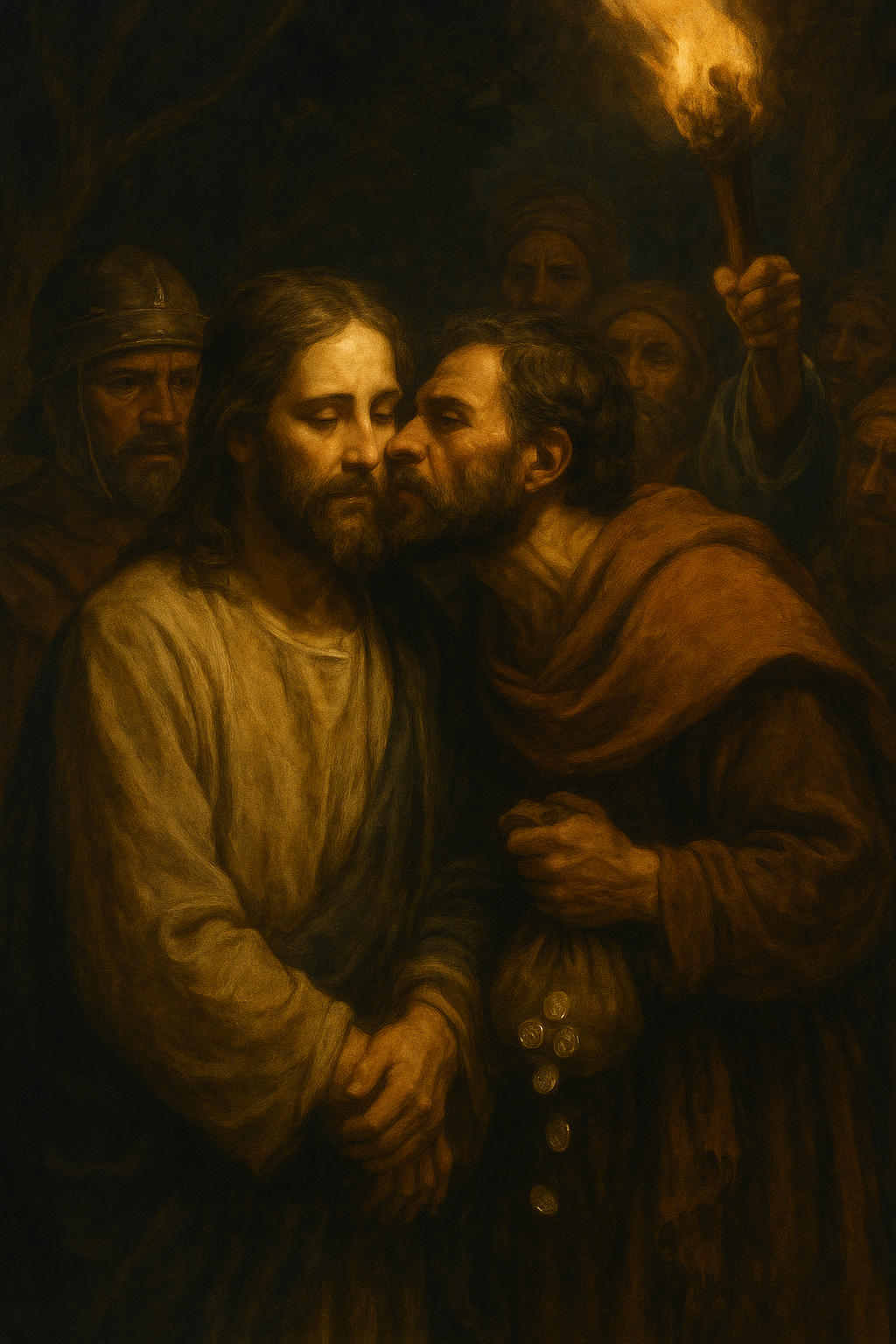
Judas Iscariot was not a stranger to Christ. He wasn’t a confused Pharisee or a deceived Roman. He was hand-picked by Jesus after a night of prayer (Luke 6:12–16). He was a disciple, a follower. He witnessed miracles. He sat under Jesus’ direct teaching. He was given power, along with the other apostles, to cast out devils and heal diseases (Matthew 10:1). He was even trusted with the money bag (John 12:6). In every visible way, Judas was a believer. But he wasn’t just a backslider. He was a betrayer.

That final night, at the Last Supper, Jesus looked across the table and said: “Verily I say unto you, that one of you shall betray me” (Matthew 26:21). Each disciple, with trembling, asked, “Lord, is it I?” But Judas said, “Master, is it I?” (v. 25). That word matters. The others called Him Lord. Judas called Him Master. He was close, but not submitted. He followed, but didn’t obey. And then Jesus said what should freeze every soul: “Thou hast said.”

Then came verse 24—today’s daily Bible verse:

“Woe unto that man… it had been good for that man if he had not been born.”

This is no metaphor. Jesus; the Lamb, the Savior, the Redeemer, is saying it would’ve been better for Judas to never exist than to betray the Lord and face what comes next. That is hell. That is eternal, conscious, damnation. Let no one say, “Jesus would never send anyone to hell.” He said this.

Judas didn’t stumble into apostasy. He walked into it with full knowledge. When he kissed Jesus in the garden, Jesus still gave him a chance: “Friend, wherefore art thou come?” (Matthew 26:50). But Judas was already gone, spiritually dead, even while breathing.

After the betrayal, the Bible says Judas repented himself (Matthew 27:3), but not toward God. It was guilt, not godly sorrow. There was no faith, no appeal to Christ, no tears like Peter’s. He gave the silver back to the priests and went and hanged himself.

Acts 1:18 says, “Now this man purchased a field with the reward of iniquity; and falling headlong, he burst asunder in the midst, and all his bowels gushed out.” The horror of his end mirrored the horror of his betrayal. But death was not the end. Acts 1:25 confirms where he went: “…that he might go to his own place.” That phrase has long been understood to mean hell, his appointed destination. He didn’t just fail. He quit and turned back. And that matches the warning in Hebrews chapter 10 verse 26:

“For if we sin wilfully after that we have received the knowledge of the truth, there remaineth no more sacrifice for sins.”

“For it is impossible for those who were once enlightened, and have tasted of the heavenly gift… if they shall fall away, to renew them again unto repentance…”

So why do we tell this story today? Because there are people reading this who are on the edge. You’ve been hurt. You’ve been disappointed. You feel like giving up. But today’s verse tells you why you must not quit. There is no safety outside of Christ.
There is no reward for those who turn back. There is no second chance after deliberate apostasy. You must finish the race. You must endure. You must stay the course. Let Judas be the eternal reminder that knowing Christ is not enough.
You must follow Him to the end.

Broader Context

When we consider the story of Judas Iscariot and the terrifying statement made by Jesus in Matthew 26:24, “It had been good for that man if he had not been born”, we are reminded that walking away from the truth after knowing it is not only possible but eternally deadly. This reality should sober every believer, especially those going through immense pain and suffering. Life can break a person in ways they never expected. But the broader testimony of Scripture answers, not always with why it happened, but with what we must do in response: endure. The pain is real, but so is the command to stay faithful.

The Bible doesn’t hide the hardship of life. In fact, it tells us plainly in Colossians chapter 3:1-2, “If ye then be risen with Christ, seek those things which are above… Set your affection on things above, not on things on the earth.” This is not optional. It is survival. The believer who places their hope in anything on this earth, health, family, career, even church leadership, will be devastated when that thing falls. And it will fall. Loved ones die. Bodies fail. Dreams are crushed. But Jesus remains, and we are commanded to keep our eyes fixed above. If our affection is set on heaven, then even in tragedy we are not destroyed. That’s what Paul meant when he said in Second Corinthians chapter 4, “Though our outward man perish, yet the inward man is renewed day by day.” His “light affliction” wasn’t light by human standards. He was beaten, shipwrecked, left for dead, betrayed, and imprisoned. But he called it light, because he measured it against eternity, not against comfort.

When Jesus said Judas would have been better off never being born, He wasn’t being dramatic. He was being honest. Hell is real, and Judas is there now, not because he sinned, but because he turned back and never returned. That is the danger we face if we allow suffering to uproot our faith. Hebrews chapter 10 verse 26 warns, “For if we sin wilfully after that we have received the knowledge of the truth, there remaineth no more sacrifice for sins.” This is not about losing salvation like a dropped coin. This is about rejecting Christ after knowing Him, knowing the gospel, sitting under the Word, seeing God’s goodness, and then walking away. There is no sacrifice left for that person, only a fearful judgment. Judas didn’t just fall into sin. He hardened his heart. That’s why Hebrews 6 says it is impossible to renew some again to repentance. The Holy Spirit doesn’t jump in and out. If you reject Him knowingly, you reject Him eternally.

But not every story ends like Judas’. There are believers who’ve endured immense suffering and stayed faithful. One such man was Horatio Spafford. He was a wealthy Christian lawyer whose real estate investments were destroyed in the Chicago fire. Shortly after, his four daughters died in a shipwreck. As he sailed over the very waters where they drowned, he wrote the hymn, “It Is Well With My Soul.” That’s not myth. That’s real. In the depth of loss, he held firm to his Savior. He didn’t let tragedy drive him away from God, he let it anchor him deeper. That’s what we must do. We must not quit. We must not let grief or confusion become our permission slip for unbelief. Jesus said in Matthew chapter 10 verse 22, “He that endureth to the end shall be saved.” Not he that starts the race, not he that shows promise, but he that finishes. That verse wasn’t written for the strong, it was written for the weary. For the woman crying in a silent house. For the man who just buried his child. For the worker who dreads waking up tomorrow. It was written for you, and for me.

The pain we feel is not proof that God has abandoned us. It is the fire that reveals where our hope truly rests. Some people will suffer and curse God. Others will suffer and cling to Him all the more. The difference is not strength, it’s faith. The faith that endures is the faith that saves. Peter failed Jesus too, but Peter wept and returned. Judas failed and walked into the night. The choice is ours every time tragedy hits: walk away in bitterness, or fall on our knees in trust. And make no mistake, God sees the choice. He does not forget it. There is no eternal reward for temporary faith. There is no crown for those who put their hand to the plough and look back. Only those who endure to the end will be saved.

APPLICATION

For the Believer

If you are walking through deep pain, grief, confusion, or weariness, this message is for you. You are not alone in wondering why God seems silent or why tragedy has struck your life. Many faithful believers have cried out in agony asking why God would allow them to lose a spouse, bury a child, endure disease, or feel abandoned in the midst of heartbreak. These are not signs of weak faith. These are the battles of real faith. Let the pain press you into Christ, not push you away. Let the storm drive you to your knees, not back into the world. If Judas teaches us anything, it is this: to be near Jesus, to know the truth, to taste grace, and then to throw it away, is a greater sin than to have never known at all. But if you stay the course, if you hold fast when everything else falls, then Jesus, the same Judge who condemned Judas, will welcome you with arms wide open and say, “Well done.” Finish well. Heaven is worth it.

The pain you carry may not be your fault, but what you do with it is your responsibility. Judas allowed his guilt and confusion to pull him away from Jesus. Instead of returning in repentance, like Peter, he walked into the darkness and never came back. He stopped believing that forgiveness was possible. He stopped trusting that Jesus was still the answer. He tried to fix it himself, and it destroyed him. The message for the believer is simple but serious: you must finish. Jesus doesn’t reward those who begin the race, He crowns those who endure to the end. Your tears are real, but they are not excuses to let go of the Savior.

You may feel crushed by grief. You may be angry. You may feel numb. But if you still call Jesus your Lord, then you cannot walk away. You must stay the course, even when it hurts. Especially when it hurts. Because the crown is not given for comfort, it’s given for faithfulness. Hold on, even if all you can do is whisper His name.

Call to Action

If you are hurting, don’t isolate. Don’t stop praying. Don’t stop reading your Bible. Don’t let pain drive you to bitterness. Surround yourself with truth, not with noise. Get around people who will point you back to Christ, not feed your doubts. Confess your sorrow to the Lord, and ask Him to keep your heart soft. Stay in the Word, stay in prayer, stay planted in a church that preaches the truth. You may not feel strong, but you don’t need to be strong, you just need to endure. Finish the race. Finish with Jesus. Don’t be like Judas. Be like Peter. Weep if you must, but return.

For the Unbeliever

If you are reading this and you have not fully surrendered your life to Jesus Christ, do not think that knowing about Him is the same as knowing Him. Judas knew Jesus. He heard His voice. He followed Him for years. But he never believed in Him as Lord. His heart was never changed. And when his world fell apart, he had no faith to fall back on. He tried to fix his guilt by returning the silver, but without repentance, there is no salvation.

This is your warning. If you’ve heard the gospel, if you know that Jesus died for your sins and rose again, and yet you continue to delay, you are playing with eternal fire. Judas delayed. Judas hardened his heart. Judas died without Christ. And Jesus Himself said it would have been better if Judas had never been born. Don’t let that be you.

There is still time. Right now, God is giving you one more chance to believe. But you do not know if you’ll get another. Do not walk away from the truth. Do not turn your back on the only One who can save you. You are not promised another hour. Repent today. Believe today. Surrender your life to Jesus Christ while the door of mercy is still open. Because the day will come when it is not.

PRAYER

Heavenly Father,
We come before You today with trembling hearts and tear-stained eyes, knowing that life on this earth can shake us to the core. But Lord, even in our grief, even in our pain, help us never to walk away from You. Let the sorrow we carry drive us to our knees, not out the door. Strengthen every weary believer who is reading this today, those who feel like giving up, those who are angry, those who are overwhelmed. Remind them, Lord, that You are still with them, even when You feel distant. That Your Word is still true, even when life feels cruel. That You are still faithful, even when the storm has not passed.


Help us to endure. Help us to finish. Keep us from becoming like Judas, Lord. Give us the faith to return like Peter. Give us the endurance to follow like Paul. Give us the hope to worship like Job. Let not one soul reading these words fall away. And for those who have not yet surrendered to Christ, break through the hardness of their hearts and let this be the day they repent and believe. We ask this in the holy and righteous name of Jesus Christ, the Savior who never fails. Amen.

CLOSING

If you’ve found these daily verses encouraging, enlightening, or fruitful, please consider helping us spread the truth and light of God’s Word by subscribing to the blog and YouTube channels and liking and following the Facebook page. Most of all, share Believers of Biblical Truth and our links with others who may need the sermons and daily teachings just as much as we do.

You are loved, so much in fact, that we want you to know and be Believers of Biblical Truth.

Shalom Shalom.

TODAY’S DAILY BIBLE VERSE: The Merchant and The Pearl

May 4, 2025

Matthew 13:45–46
“Again, the kingdom of heaven is like unto a merchant man, seeking goodly pearls: Who, when he had found one pearl of great price, went and sold all that he had, and bought it.”

VERSE CONTEXT

The parable of the pearl of great price is spoken by Jesus during a series of parables that make up one of His most concentrated teachings on the nature of the kingdom of heaven. Matthew chapter 13 contains seven parables, each of which reveals different characteristics of God’s kingdom: its growth, value, mixed membership, and coming judgment. The parables include the sower, the tares, the mustard seed, the leaven, the hidden treasure, the pearl of great price, and the net.

This specific parable (verses 45–46) is told immediately after the parable of the hidden treasure (verse 44), and both share a central truth: the immense, surpassing value of the kingdom of heaven. However, there is a notable difference in imagery and emphasis. In the hidden treasure, the man stumbles upon treasure accidentally. In the pearl parable, the merchant is actively seeking. The difference is important. Jesus is addressing different kinds of people—those who come to the truth unexpectedly and those who have been diligently searching for it their whole lives. Both are drawn to surrender everything for the true riches of Christ.

“Again, the kingdom of heaven is like unto a merchant man, seeking goodly pearls:”
This opening line introduces us to the character—a merchant man, not a casual buyer or an impulsive collector, but someone trained in discerning value. The Greek word translated “merchant” (emporos) means a wholesale trader—one who knows markets, quality, and cost. He is searching for “goodly pearls,” which are high-quality, beautiful pearls—objects of significant value and status in the ancient world. In the first century, pearls were more precious than gold in many regions, and only the wealthy could afford them. Some Roman women wore them sewn into their clothes and hair to show status. This merchant represents the seeker—the one looking for truth, meaning, and purpose with intention and wisdom. He’s not playing games—he is looking for something of real value.

“Who, when he had found one pearl of great price, went and sold all that he had, and bought it.”
Notice the phrase “one pearl of great price.” This is not one of many—this is the one, the single treasure that outshines all others. Once he finds it, his response is immediate: he sells everything. The word all is critical. No hesitation. No bargaining. No regret. He knows the pearl’s value, and in his mind, it is worth infinitely more than everything he owns.

This parallels how a soul must come to the gospel. The kingdom of heaven—God’s rule in our lives and our eternal place with Him—is not one treasure among many. It is the treasure. True salvation is not an accessory added to life—it is a radical transformation that demands our whole life. Just as the merchant gave up all he had for one pearl, the true believer yields every worldly ambition, status, comfort, and possession, recognizing the surpassing worth of being in the kingdom of God. This is not salvation by works; rather, it is a depiction of the inward posture of surrender that faith brings about. The man didn’t pay for the kingdom with money—he surrendered all because he believed the kingdom was worth it.

This parable also subtly refutes the modern “easy-believism” mindset where Christ is treated as an add-on instead of a consuming Lord. The merchant gave up all—and gladly. He didn’t hesitate because he understood the value. Jesus is drawing attention to the necessity of recognizing the matchless worth of God’s reign in one’s life.

BROADER CONTEXT

Matthew chapter 13 is a turning point in Jesus’ public ministry. Up until this chapter, He had taught plainly in synagogues and open gatherings. But here, we find a decisive shift in His approach. For the first time, Jesus teaches the multitude almost exclusively in parables, fulfilling the prophecy found in Psalm 78:2: “I will open my mouth in a parable: I will utter dark sayings of old.” When the disciples ask Him why He speaks in this way, Jesus explains in Matthew 13:11: “Because it is given unto you to know the mysteries of the kingdom of heaven, but to them it is not given.”

This reveals that the parables serve a dual purpose—they reveal spiritual truth to those with ears to hear (true disciples), and they conceal it from the hard-hearted and unbelieving. In this way, parables become both a mirror and a filter—they reflect one’s spiritual condition and separate the sincere from the superficial.

By placing the pearl parable alongside the hidden treasure, Jesus gives us a double witness to the message that God’s kingdom is worth everything—and only those willing to forsake all will truly enter it. But whereas the hidden treasure depicts a man who stumbles upon something precious (as Paul once persecuted Christians before his radical conversion), the merchant seeking the pearl is more like Cornelius in Acts 10—a sincere man searching for truth, who finally finds the gospel through divine revelation.

Matthew’s Gospel is structured to present Jesus as the promised Messiah and King. It was written primarily to a Jewish audience to prove that Christ fulfilled the Old Testament prophecies concerning the coming kingdom. Matthew chapter 13, then, is Jesus’ clear answer to those who misunderstood the kingdom to be a political or earthly rule. He shifts their vision: this is a spiritual kingdom, not made of borders and armies, but of hearts that surrender fully to the King.

This parable also connects with Jesus’ teachings elsewhere. In Luke 14:33, He says, “So likewise, whosoever he be of you that forsaketh not all that he hath, he cannot be my disciple.” This is not about literal poverty—it is about the heart’s total submission. The pearl is the gospel—Christ Himself, His kingdom, His righteousness, and our eternal inheritance. He is the “unspeakable gift” of Second Corinthians 9:15, and nothing we possess compares to Him.

APPLICATION

Appreciating God’s Greatness
In this brief but powerful parable, we are given a glimpse into the immeasurable worth of God’s kingdom. The merchant sold all he had—not reluctantly, but joyfully—because he recognized the value of what he found. This is how God reveals Himself: not as one treasure among many, but as the supreme treasure who alone satisfies. The greatness of God is seen in the fact that He offers this pearl—His Son, His kingdom, His salvation—to anyone willing to forsake the lesser things of the world. It is not our search that makes the kingdom valuable; it is the nature of the kingdom itself that is worth more than everything we own. Only a God of infinite love and worth could be so desirable, so necessary, and so complete that a person would joyfully give all to have Him. God’s greatness is seen in the way He satisfies the deepest longings of the sincere seeker and offers something the world cannot rival—Himself.

For the Believer
Too often, even believers forget the surpassing value of what we have in Christ. We begin to treat our salvation as something common, rather than priceless. This parable is a reminder to examine our lives and ask: do we live as though Christ is worth more than all our possessions, ambitions, or comforts? Have we truly “sold all” in our hearts? That doesn’t mean every Christian must live in poverty, but it does mean that nothing must compete with Christ for first place in our lives. If we have found the Pearl, then our joy should be full, our worship genuine, and our priorities eternally focused.

Call to Action:
Take time today to examine what you may still be clinging to. Is there a possession, a sin, a relationship, a dream, or a comfort you are reluctant to lay down? Ask yourself: “If Christ asked me to surrender it, would I?” If the answer is no, then that thing has become your treasure. Return to the joy of your salvation—meditate on the worth of Christ, and be willing to reorient your life around Him again. The merchant gave all, not because he was reckless, but because he was wise. So be wise—live like someone who has found the Pearl.

For the Unbeliever
If you are still searching—still unsure about faith, salvation, or whether God is even real—this parable is speaking directly to you. You are the merchant, seeking truth, meaning, and something that satisfies. And Jesus says that what you are looking for is Him. You may have tried religion, relationships, money, or pleasure, but none of those pearls will ever be enough. Christ is the one pearl of great price, and He alone can fill the void. The call is simple: recognize that nothing in this world will compare, and be willing to let go of anything that keeps you from Him. Salvation is not earned—it is received by faith—but receiving it requires a heart that lets go of false treasures.

Will you come to Christ today? Will you sell the imitation pearls and take hold of the one that can never fade, never rot, and never disappoint?

FINAL ENCOURAGEMENT

The parable of the pearl of great price is short, but it speaks volumes to the soul that is listening. The kingdom of heaven is not a side item—it is the treasure that eclipses all others. Jesus did not tell this parable to suggest that we can buy salvation with money or effort, but to show us that the heart transformed by faith sees Christ as worth everything. That kind of faith holds nothing back.

If you’re a believer who has grown distracted or weary, remember the joy of the merchant. He wasn’t grieved to let go of lesser things—he rejoiced because he found the one thing worth losing everything for. And if you’ve been seeking answers, searching for something real, something eternal, Jesus invites you to stop the search. You’ve found the Pearl—and His name is Jesus.

ENCOURAGING PRAYER

Heavenly Father,
Thank You for showing us, through this simple parable, the infinite worth of Your kingdom. We confess that too often we hold on to the things of this world as though they can satisfy. But only You can. Help us to see Christ as the true Pearl of great price. Help us to let go of every distraction, every idol, and every fear that keeps us from surrendering fully to You. May we live with joy, knowing that what we have in You is more valuable than anything this world could ever offer. For the one who is still searching, I pray You open their eyes today to see the beauty of Jesus and give them the courage to let go and take hold of eternal life. Let our hearts be fully Yours, today and every day.
In Jesus’ precious name, Amen.

CLOSING

If you’ve found these daily verses encouraging, enlightening, or fruitful, please consider helping us spread the truth and light of God’s Word by subscribing to the blog and YouTube channels and liking and following the Facebook page. Most of all, share Believers of Biblical Truth and our links with others who may need the sermons and daily teachings just as much as we do.

You are loved—so much in fact, that we want you to know and be Believers of Biblical Truth.

Shalom Shalom.

TODAY’S DAILY BIBLE VERSE

April 20, 2025

Matthew chapter 28 verse 6:
“He is not here: for he is risen, as he said. Come, see the place where the Lord lay.”

VERSE CONTEXT

The Gospel according to Matthew was written by the apostle Matthew, a former tax collector turned disciple of Jesus. He wrote primarily to a Jewish audience, showing them that Jesus was the fulfillment of Old Testament prophecies—the promised Messiah and King. The events of chapter 28 take place three days after the crucifixion. Roman soldiers had guarded the tomb to prevent Jesus’ followers from stealing His body, but something happened that no guard could prevent: a divine resurrection.

Verse 6 is spoken by the angel who appeared to Mary Magdalene and “the other Mary” when they came to visit the tomb early on the first day of the week. The verse itself captures the heart of the Gospel message. The angel declares that Jesus is no longer in the tomb—not because He was moved or stolen, but because He has risen. This simple but profound declaration changes everything.

“He is not here:”

This is a direct and physical statement. The body of Jesus was no longer in the tomb. This is not symbolic or spiritual—it refers to His actual, physical absence. The Gospel writers emphasize that His resurrection was bodily, not just spiritual or visionary. The tomb was empty.

“For he is risen, as he said:”

This phrase confirms that Jesus had prophesied His own resurrection multiple times during His earthly ministry (for example, Matthew chapter 16 verse 21: “From that time forth began Jesus to shew unto his disciples…that he must…be killed, and be raised again the third day”). This was not an unexpected miracle—it was a promised fulfillment. The resurrection proves that Jesus spoke the truth about His identity, His mission, and His divine authority.

“Come, see the place where the Lord lay.”

The angel invites the women to look at the evidence with their own eyes. They are not asked to believe blindly—they are called to witness the empty tomb for themselves. Christianity has always been a faith grounded in historical events, not myth or vague spirituality. This tomb had been sealed, guarded, and occupied—but now it stood open, unguarded, and empty.

It is also critical that this message was first delivered to women—in a culture where women’s testimony was not even considered legally binding. Yet God chose them to be the first eyewitnesses to the greatest event in human history. That detail further confirms that this account was not fabricated for credibility—it was recorded just as it happened.

This verse stands at the heart of Christian doctrine: Jesus Christ, the Son of God, died for sin, was buried, and rose again the third day. His resurrection was not only foretold—it was accomplished publicly and visibly. This singular truth sets Jesus apart from every other religious figure who has ever lived. We do not worship a teacher who died—we worship a Savior who lives.

BROADER CONTEXT

Matthew chapter 28 is the final chapter of Matthew’s Gospel and serves as the climax of the entire book. It begins with the resurrection of Jesus and ends with the Great Commission—the final instruction to take the message of His death and resurrection to the world. This chapter does not merely serve as the conclusion of a story, but as the launching point for the Church’s mission. In this way, the resurrection is not just an ending—it is a beginning.

From a broader perspective, the resurrection of Jesus is the central doctrine of Christianity. Without it, everything else collapses. The apostle Paul wrote in First Corinthians chapter 15 verse 17: “And if Christ be not raised, your faith is vain; ye are yet in your sins.” This means that the resurrection validates everything Jesus claimed about Himself: that He is the Son of God, that His death was sufficient for sin, and that eternal life is found in Him alone. Without it, the cross is a tragedy; with it, the cross becomes victory.

Matthew builds his Gospel to emphasize this reality. From the genealogy in chapter 1 establishing Jesus as the rightful heir to David’s throne, to His miracles, parables, and final Passover meal, Matthew shows Jesus as the Messiah-King who fulfills all righteousness. But in chapter 27, the King is crucified. He dies not for His own sins, but for the sins of His people. If the story ended there, Jesus would be no different from every other prophet, rabbi, or religious teacher who died and was buried. But chapter 28 changes everything. The tomb is empty.

In Jewish history, resurrection was already understood to be a sign of the last days—a final victory of God over sin and death. But Jesus’ resurrection happens in the middle of history. This means the end has broken into the present. His resurrection is a firstfruits, a preview of what will happen to all who belong to Him (First Corinthians chapter 15 verse 20: “But now is Christ risen from the dead, and become the firstfruits of them that slept”). The angel’s declaration in Matthew chapter 28 verse 6 is the fulfillment of Jesus’ own prophecies and the validation of all messianic hopes. This is the point where faith in the crucified Christ becomes trust in the living Christ.

This moment also distinguishes Christianity from every other religion in the world. No other religious founder predicted His death and resurrection and fulfilled it. Let’s consider this historically. Buddha, born in the 6th century B.C., taught the Eightfold Path to enlightenment and died at the age of 80. He was cremated, and his ashes were divided among relics. He never claimed to rise from the dead. Muhammad, the founder of Islam in the 7th century A.D., taught that he was a prophet and received revelations from Allah. He died in Medina in A.D. 632 and was buried. His grave remains a pilgrimage site. Confucius, a philosopher of ancient China, died in 479 B.C. and is buried in Qufu. His teachings formed a moral system, not a path to divine union or resurrection. Krishna and other Hindu deities appear in mythological cycles involving reincarnation, but these are not bodily, historical resurrections rooted in verifiable events. Joseph Smith, founder of Mormonism, was killed in 1844. His body remains in the ground in Illinois. In every case, their bodies remain in their tombs or were cremated. Their teachings continue, but they are dead. But Jesus of Nazareth walked out of His tomb, and over 500 people saw Him alive (First Corinthians chapter 15 verse 6). The resurrection is not a metaphor. It is not a symbolic victory over hardship. It is a real, historical event with real, eternal implications.

Historically, even skeptical scholars like Bart Ehrman (an agnostic New Testament scholar) acknowledge that the disciples believed they saw the risen Christ and were willing to die for that belief. That doesn’t prove the resurrection to a skeptic, but it does prove that the men who saw the empty tomb were convinced—even unto death—that Jesus rose. This resurrection is what caused the early Church to explode into existence. It wasn’t Jesus’ teachings alone that changed the world—it was the belief that the crucified Christ was alive. The apostles did not die for a philosophy—they died for a risen King.

When the angel says, “He is not here: for he is risen,” he is not simply stating a fact. He is declaring the defeat of sin, the triumph of truth, and the beginning of a new creation. Jesus is the firstborn from the dead. Because He lives, all who trust in Him will live also (John chapter 11 verse 25: “I am the resurrection, and the life: he that believeth in me, though he were dead, yet shall he live”).

APPLICATION

The resurrection of Jesus Christ is not a seasonal celebration—it is a permanent reality that demands a perpetual response. When the angel declared, “He is not here: for he is risen,” he wasn’t offering a poetic statement to inspire one day of the year. He was announcing the final and total defeat of sin, death, and the grave. That kind of victory does not allow for part-time faith. This is where the danger lies for many who identify as Christian in name but not in life. Every year on Easter, churches are filled with people—some with sincere belief, and others simply participating in a tradition. You can hear the words “He is risen” roll off lips that haven’t uttered a prayer in months. Suits are worn. Eggs are hunted. Pews are filled. But for many, Jesus remains a figure they acknowledge—not a Savior they follow. We need to be clear: Easter is not a holiday. It is a declaration of war against sin and death. It is not a photo opportunity or a family gathering. It is the anniversary of the moment when death itself was overthrown, and our debt was paid in full. To respond to that with seasonal attendance or casual acknowledgment is not just inadequate—it is offensive to the very cross we claim to celebrate.

You cannot proclaim “He is risen!” while living as if He is still buried.

The resurrection demands total surrender. Jesus did not rise from the grave so we could give Him an hour on Sunday or a nod on Christmas. He rose to be Lord of our lives—not a guest we invite in once a year. Romans chapter 6 verses 4–6 declares: “Therefore we are buried with him by baptism into death: that like as Christ was raised up from the dead… even so we also should walk in newness of life… knowing this, that our old man is crucified with him, that the body of sin might be destroyed.” That newness of life is daily, not annual.

If Christ is risen, then He is alive now. And if He is alive now, then He is King now. And if He is King, then our only proper response is to bow in obedience every day, all day, not just when it’s convenient or culturally expected. The resurrection was not God’s attempt to impress us—it was His demand that we turn from sin, repent, and live unto righteousness.

The once-a-year Christian must be warned in love: admiring Jesus will not save you—only following Him will. Jesus said in Luke chapter 9 verse 23: “If any man will come after me, let him deny himself, and take up his cross daily, and follow me.” The cross is not a holiday emblem. It’s a death sentence to our old life. The empty tomb is not an Easter prop—it is proof that Christ’s victory over sin is final, and our response must be faithful submission.

Let the resurrection remind every believer that this is our identity now: we are no longer dead in sin but alive in Christ. And let it be a warning to the nominal, cultural, or holiday-only Christian: God is not mocked. A risen Savior demands more than seasonal praise—He demands your whole life. So what shall we say to those who attend church on Easter and return to sin on Monday? We say: Come all the way. Die with Christ. Rise with Christ. Live with Christ. Or else, you are only decorating a tomb He already walked out of.

FINAL THOUGHT

He is not here: for he is risen, as he said.” These are not just words for Easter—they are the foundation of the Christian life. Jesus Christ rose bodily from the grave, just as He promised. That fact alone separates Christianity from every other religion and worldview. Every other founder lies buried. Every other teacher has returned to dust. But not Jesus.

The resurrection proves His identity, validates His sacrifice, and demands our full allegiance. Not one hour. Not one day. Not two holidays a year. But every day, all day. To say “He is risen” with our lips while living as though He is still in the grave is hypocrisy. The risen Savior is not seeking admiration—He demands obedience, repentance, and surrender.

For the true believer, today is a celebration of life, hope, and eternal promise. For the cultural Christian, it must be a wake-up call. Easter is not a seasonal tradition—it is a heavenly declaration that Jesus Christ is alive, Lord of all, and returning again. And when He comes, He’s not coming back to be ignored.

So let the resurrection not just inspire you today—let it transform you for life.

PRAYER

Risen King Jesus,
We give You glory today because You are alive. The tomb could not hold You. Death could not defeat You. And sin has no claim on You. We worship You as the living Savior who conquered the grave and bought our freedom with Your blood.

Lord, awaken every heart that has treated this holy day as just another tradition. Shake the souls of the comfortable and call back the wanderers. Let every once-a-year worshipper hear Your voice and come to full surrender.

And for those who are already Yours, fill us with resurrection power. Help us walk in the boldness, hope, and holiness that comes from knowing You are alive and reigning. May our lives be a living testimony that the tomb is empty and that Jesus Christ is Lord.

We praise You, Jesus, and we long for the day when faith becomes sight. Until then, keep us faithful. In Your matchless name we pray,
Amen.

CLOSING

If you’ve found these daily verses encouraging, enlightening, or fruitful, please consider helping us spread the truth and light of God’s Word by subscribing to the blog and YouTube channels and liking and following the Facebook page. Most of all, share Believers of Biblical Truth and our links with others who may need the sermons and daily teachings just as much as we do.

You are loved—so much in fact, that we want you to know and be Believers of Biblical Truth.

Shalom Shalom.

TODAY’S DAILY BIBLE VERSE

Matthew chapter 4 verse 17
“From that time Jesus began to preach, and to say, Repent: for the kingdom of heaven is at hand.”

Verse Context

Matthew chapter 4 verse 17 is one of the most important pivot points in all of Scripture. Up until this moment, Jesus has been relatively quiet. Born in Bethlehem, raised in Nazareth, baptized by John in the Jordan, and tested in the wilderness by Satan, He now steps onto the public stage. And the very first word He utters in His preaching ministry is not “love” or “peace” or “blessings”—it is “Repent.” That alone should demand our attention.

Let’s break this verse down in detail, word by word, so there’s no room for confusion:


“From that time…”

This phrase marks a decisive transition in the Gospel of Matthew. Up until now, we’ve seen Jesus preparing for His ministry—through baptism, fasting, and spiritual warfare in the wilderness. But now the focus shifts. This phrase is also used in Matthew chapter 16 verse 21, where it introduces Jesus’ shift toward preparing the disciples for His death. So, whenever Matthew writes, “from that time,” he’s signaling a major turn in Jesus’ mission. Here in chapter 4, the shift is from private preparation to public proclamation. The preparation is over—now it’s time to speak.


“Jesus began to preach…”

The word “preach” here is not passive. It’s translated from a Greek word meaning “to herald,” much like a royal messenger delivering the king’s decree in public spaces. This isn’t soft-spoken teaching or philosophical musing—this is proclamation with urgency and authority. Jesus wasn’t casually offering advice. He was delivering a divine summons. In first-century culture, a herald didn’t have the option to modify or soften the king’s message—he spoke it exactly as it was given, and expected the audience to respond with obedience.

A breakdown of this word ‘Herald’ is critical to understanding this verse. The word “herald” matters because of what it represents: a clear, unaltered, authoritative proclamation from the King. That’s what Jesus did in Matthew chapter 4 verse 17. That’s what the prophets did before Him. That’s what Paul calls preachers to do in Second Timothy chapter 4 verse 2:
“Preach the word; be instant in season, out of season; reprove, rebuke, exhort…”

To preach is to herald—to boldly proclaim God’s truth, even when it’s unpopular.

In the ancient world, a herald was an official public messenger, often employed by royalty or government. His job was not to debate, edit, or interpret the message—his job was to proclaim exactly what he was given. He would lift his voice in marketplaces, city gates, or streets and say, in effect, “Hear the decree of the king!” Think of the carol “Hark! The Herald Angels Sing.” That phrase points directly to the angelic announcement of Christ’s birth to the shepherds:

Luke chapter 2 verse 10:
“And the angel said unto them, Fear not: for, behold, I bring you good tidings of great joy, which shall be to all people.”

In that moment, the angel is functioning exactly like a herald—bringing the good news from heaven to people who would never have known otherwise. The Christmas carol uses the word “herald” because the angels are proclaiming the arrival of the King, much like royal heralds would announce the birth of a prince.

This might surprise some people, but there is a legitimate historical link here, though it’s more secular than sacred. Newspapers with names like “The Boston Herald,” “The Miami Herald,” or “The Herald Tribune” adopted the term because they saw themselves as public announcers of critical information. The idea is that this publication will inform the public of what they need to know, and that what it reports carries a kind of weight or urgency, just like a herald in the king’s court would have. In the Old Testament, prophets acted as heralds of God’s message.

In biblical theology, we needed a herald because humanity was not naturally seeking after God (see Romans chapter 3 verses 10–11: “There is none that seeketh after God”). We weren’t going to stumble into salvation or discover divine truth by accident. We needed someone to proclaim it boldly and clearly, with authority that didn’t come from man. In the New Testament, Jesus is the ultimate herald, because He is not just delivering the Word of God—He is the Word of God (John 1:1). And when He preaches repentance, He’s not merely offering a new idea—He’s enforcing the decree of Heaven: that sinners must turn from sin and believe the gospel.

In that moment, the angel is functioning exactly like a herald—bringing the good news from heaven to people who would never have known otherwise. The Christmas carol uses the word “herald” because the angels are proclaiming the arrival of the King, much like royal heralds would announce the birth of a prince.

So in carols, “herald” is theologically appropriate and historically consistent. The angels are the divine messengers, and the news they carry is not open to interpretation—it is a royal announcement from God Himself: Christ is born in Bethlehem.


“and to say, Repent:”

This is the command that begins His public ministry: Repent. That word is almost lost in today’s feel-good religion, but Jesus made it central. To repent means to turn around, change direction, and abandon your sin. It’s not merely feeling bad or saying sorry. Biblical repentance is a full mental, moral, and spiritual about-face.

In its original context, repentance involved acknowledging guilt, confessing sin, and actively turning away from it. It carried the weight of returning to God’s covenant. For Jews in the first century, this meant more than personal remorse—it was a call to national, personal, and spiritual realignment under the rule of God.

Importantly, Jesus didn’t say “believe” here first. He said, “repent.” Why? Because you cannot receive the heavenly kingdom without first renouncing the kingdom of sin. This demolishes the modern idea that we can “believe in Jesus” while still clinging to our sin. Jesus said, “Repent”—turn from sin—FIRST.

This wasn’t just for unbelievers either. It was a call to all who heard, including the religious elite, many of whom thought they didn’t need repentance. Jesus levels the ground—everyone must repent, not just the obviously immoral.


“for the kingdom of heaven is at hand.”

Now we get the reason: “for the kingdom of heaven is at hand.” The phrase “kingdom of heaven” is used exclusively in Matthew—a reverent way of saying “kingdom of God.” This kingdom isn’t just a future heaven—it’s the rule and reign of God breaking into human history through Jesus Himself.

When Jesus says it’s “at hand,” He means it’s imminent, pressing in, close enough to touch. The King is present, so His kingdom has arrived. And the only proper response to the arrival of a holy kingdom is to repent. There’s no room for neutrality.

This also signals urgency. Jesus wasn’t giving people time to ease into faith. He was telling them: the time is now. The King is here. The kingdom is here. Your response must be immediate.


Broader Context

Matthew chapter 4 is one of the most strategic chapters in all of the New Testament. It forms the bridge between Jesus’ preparation and His public mission, which is why Matthew chapter 4 verse 17 is such a critical turning point. The chapter begins with Jesus being led by the Spirit into the wilderness to be tempted by the devil. That scene in verses 1 through 11 mirrors the wilderness testing of Israel in the Old Testament, but where Israel failed, Jesus triumphed. That’s the point: the true Son of God does not fall to temptation. Once He has victoriously withstood Satan’s threefold temptation (appetite, pride, and power), He is proven ready to begin His public ministry.

Then we see a shift in verse 12:
“Now when Jesus had heard that John was cast into prison, he departed into Galilee.”
John the Baptist’s arrest marks the end of the forerunner’s ministry and the start of the Messiah’s full unveiling. From this point forward, the torch is passed. The light John bore witness to (John chapter 1 verse 8) is now shining in full. Verse 17 comes right after Jesus settles in Capernaum, fulfilling Isaiah’s prophecy that Galilee of the Gentiles would see a great light (Matthew chapter 4 verses 14–16). So when Jesus says, “Repent: for the kingdom of heaven is at hand,” He’s not just making a statement—He’s fulfilling prophecy, assuming divine authority, and announcing that the Messianic age has arrived.

Let’s step back now and look at the Gospel of Matthew as a whole. This Gospel presents Jesus as the promised Messiah and rightful King, descended from David, fulfilling Jewish prophecy. Over 60 Old Testament prophecies are fulfilled in Matthew alone. The phrase “kingdom of heaven” is used 32 times in Matthew and nowhere else in the New Testament—he was specifically crafting his message for a Jewish audience who would not casually speak the divine name “God.” The message of the kingdom is central: God’s promised reign has come near in the person of Jesus Christ. But this kingdom would not be gained through birthright or temple rituals—it would be entered through repentance and faith.

That’s why Jesus’ very first sermon begins with repentance. The Jews had long expected a conquering Messiah who would free them from Rome, but Jesus came instead to free them from sin. His kingdom wasn’t of this world—it was spiritual, internal, and transformational. And it demanded a radical break from sin, not just ceremonial devotion.

This also puts pressure on the religious status quo. The scribes and Pharisees had built a system of external righteousness, but Jesus was preaching internal transformation. His message of repentance cut to the heart and threatened the power structures of Israel’s religious leaders. That’s why He would later say in Matthew chapter 5 verse 20,
“Except your righteousness shall exceed the righteousness of the scribes and Pharisees, ye shall in no case enter into the kingdom of heaven.”
In other words, religious performance was not enough. Repentance was required.

Now, if we zoom out even wider and examine the entire New Testament narrative, this message of repentance is echoed by every major preacher of the early church:

  • John the Baptist introduced it in Matthew chapter 3 verse 2:
    “Repent ye: for the kingdom of heaven is at hand.”
  • Jesus repeats it in chapter 4 verse 17. Peter proclaims it in Acts chapter 2 verse 38:
    “Repent, and be baptized every one of you in the name of Jesus Christ for the remission of sins.”
  • And Paul declares it in Acts chapter 17 verse 30:
    “And the times of this ignorance God winked at; but now commandeth all men every where to repent.”

This consistency destroys the modern lie that repentance is an “Old Testament idea” or that Jesus focused only on love and inclusion. The New Testament begins with repentance (Jesus in Matthew 4), continues with repentance (Acts and the Epistles), and ends with repentance (Jesus again in Revelation chapters 2 and 3).

Even in Revelation, Jesus—speaking directly to churches—repeats the same message.

  • To the church in Ephesus:
    “Repent, and do the first works” (Revelation chapter 2 verse 5).
  • To Laodicea:
    “Be zealous therefore, and repent” (Revelation chapter 3 verse 19).

So we cannot separate Jesus’ love from His call to repentance. The loving Savior is the same One who lovingly commands sinners to turn back—not to feel better, but to be made new.

DO NOT MISS THIS

Finally, we must deal with the cultural misunderstanding that love is incompatible with confrontation. Modern Christians often hesitate to talk about sin, believing it’s more “loving” to avoid offense. But Matthew chapter 4 verse 17 dismantles that idea. The most loving man who ever walked the earth began His entire ministry by confronting sin. That means the refusal to talk about sin is not compassion—it’s compromise. It’s silence in the face of spiritual death. If Jesus—who is love—preached repentance as His opening message, how can we call ourselves His followers while refusing to speak it?


Application

Appreciating God’s Greatness

The greatness of God in Matthew chapter 4 verse 17 is revealed through His willingness to confront sin for the sake of our salvation. Jesus did not come to entertain, flatter, or merely soothe the crowds. He came to do the most loving and difficult thing: call sinners to repentance so they could be delivered from the wrath to come. That shows us a Savior who is not only full of mercy—but also full of truth, holiness, and authority.

God’s greatness is also seen in the timing of His kingdom. Jesus said, “The kingdom of heaven is at hand.” That means God didn’t wait for us to be good enough. He didn’t require humanity to fix itself. Instead, He brought the kingdom to us, in the person of Jesus Christ. God entered our world, walked in our dust, and spoke words of life—and the first word was repent. That alone is a display of divine patience, wisdom, and justice. He invites us into His kingdom, but on His terms, not ours. That’s greatness: God stooping down to offer grace, but refusing to dilute His holiness.


For the Believer

This verse confronts the common idea that once we are saved, repentance is behind us. But the life of a Christian is one of ongoing repentance. We don’t just turn from sin once—we continue turning, daily, as we grow in grace. Jesus’ first command still echoes through our spiritual walk: Repent. Not because we’re under wrath, but because we are under grace, and grace gives us eyes to see the sin we used to ignore.

Believers are also called to model and preach what Jesus Himself preached. Can I get an AMEN on that? That means we must not shrink back from the topic of sin. Too often, Christians confuse kindness with silence. But Jesus showed that love means speaking the truth, ESPECIALLY when it comes to eternal consequences. If we really love the lost, we won’t leave them comfortable in sin—we’ll gently and truthfully show them their need to repent, just as we once did.

Call to Action

  • Examine your own life for areas where sin has crept back in, and repent with sincerity and urgency.
  • Let Jesus’ words shape your conversations. When witnessing, don’t avoid repentance—follow His model and present it as the doorway into the kingdom.
  • Ask God for courage to speak the truth in love, especially when it’s easier to stay silent.

We must not be ashamed of the very message Christ began with!


For the Unbeliever

If you are not yet a follower of Christ, this verse is Jesus speaking directly to you. His first recorded words are not threats—they are an invitation. When He says “Repent,” He is offering a new life, a new kingdom, a new heart. He’s not asking you to clean yourself up—He’s asking you to turn to Him, and He will do the cleansing.

Repentance means acknowledging that sin is not just a mistake—it’s rebellion against a holy God. It’s a breaking of His law, and the penalty is eternal separation. But Jesus came because God doesn’t want you to perish. His call to repentance is a call to be rescued, and the door is open now. But Jesus also said the kingdom is “at hand”—that means time is short. You don’t have forever to decide.

If you’ve ever thought Christianity was just about being nice, or doing good things, this verse proves otherwise. It’s about being born again, and that starts with repentance toward God and faith in Jesus Christ.


Final Encouragement

When Jesus opened His mouth to preach for the first time, He didn’t offer comfort, self-esteem, or social advice. He offered truth that saves. His first word was “Repent.” That is not a word of judgment—it is a word of rescue. It is God’s mercy clothed in urgency. It is the King of heaven calling rebels to lay down their arms, not to be punished, but to be welcomed into His kingdom.

Matthew chapter 4 verse 17 is more than history—it’s still Christ’s voice today. He is still saying to the sinner, “Turn around—come to Me.” And to the church, He is saying, “Do not compromise this message.” Repentance is not the enemy of grace—it is the evidence that grace is working.

This verse reminds us that the most loving thing we can ever do is what Jesus did: tell the truth about sin, point people to the kingdom, and call them to repentance. Let us never forget, real love warns, and real grace calls for change.

If Christ began with repentance, so must we. And if His kingdom was at hand then, it is even closer now. May we respond, and help others respond, before the door closes.


You are loved, so much in fact that we want you to know and be Believers of Biblical Truth.

Release Your Grip on the Whip

The topic of our study is Forgiveness. One might think it a simple study, but I believe it is complex. First I wonder if we really understand what forgiveness is, biblically. I wonder if we meet the biblical thresh-hold of forgiveness. I wonder if we spend more time meeting the worldly definition of forgiveness. I don’t know, but I think a serious study of it is going to let us see for ourselves.

First let’s talk about some things that Forgiveness is not. It is NOT forgive and forget. I once heard a sermon by Dr. Voddie Baucham. He is one of my all-time favorite pastors to listen to. I never met him, but he has said in a number of his sermons that this idea of forgive and forget is a lie. He explained that the human brain is not designed to forget. So if the brain is forgetting it is malfunctioning. It has experienced some form of trauma, like Blunt force trauma or concussion, or disease like Alzheimer’s or dementia. It is unreasonable to expect the brain to forget a traumatic event when traumatic events are what burns a memory into the brain in the first place. Forgiveness is NOT an eraser. Forgiving does not erase the action. It does not say, “Okay, I forgive you so go ahead and go to sleep and when you wake up in the morning we will continue on like nothing happened.” NO!!! In most cases an action that has created some form of trauma has occurred. It happened!! There is no ignoring that. Because this is true, forgiveness is NOT absolution of accountability and immunity from consequence. I can forgive you, but there is still a consequence because the act really did happen. Biblically speaking, and we are going to look at some verses here soon, God is huge on accountability. If we are to be Christ like, how then can we say that there is no accountability? We cannot. There are consequences for our actions. Finally, forgiveness does not mean a relationship of any kind needs to continue. Now let’s be careful here. If you were violated, and you learned a lesson, and that lesson was that this is a dangerous person and for safety or health reasons and you are completely free of hate and animosity, it is appropriate to go our separate ways, no problem. But if you are violated, and you say you forgive and then not communicating with that person is out of anger or some form of punishment, then you have not truly forgiven. We will talk more about this, but for now let’s just say that you have to release your grip on the whip and hand that over to God as well if you are to truly forgive.

Now that we looked at some of the things forgiveness is not, let’s look at what it is. I really want to look at the biblical definition and compare it to what you think. In the bible forgiveness refers more to the act. When you forgive biblically, you are saying that you are overlooking an act. You are sending it away. The word forgive means we are overlooking the wrong, we are going to send the wrong away. But the other half of this is, “where are we sending it to?” To God!  There are many, and I mean many, verses that address forgiving others that you may be forgiven. But I love these verses in Colossians chapter 3 because it starts off by telling us a key point of forgiveness, and that is God’s wrath.

Colossians 3

For which things’ sake the wrath of God cometh on the children of disobedience:

In the which ye also walked some time, when ye lived in them.

But now ye also put off all these; anger, wrath, malice, blasphemy, filthy communication out of your mouth.

Lie not one to another, seeing that ye have put off the old man with his deeds;

10 And have put on the new man, which is renewed in knowledge after the image of him that created him:

11 Where there is neither Greek nor Jew, circumcision nor uncircumcision, Barbarian, Scythian, bond nor free: but Christ is all, and in all.

12 Put on therefore, as the elect of God, holy and beloved, bowels of mercies, kindness, humbleness of mind, meekness, longsuffering;

13 Forbearing one another, and forgiving one another, if any man have a quarrel against any: even as Christ forgave you, so also do ye.

When we forgive we are recognizing that we are not in control, and God is. So we are going to send this away and put the act and the offender into the hands of God. We are taking everything out of our hands, and putting into the hands of God. Why would we want to do that? We want this for a couple reasons.

First, we want this because, as these verses indicate, we are to put off our wrath. Put it off to where, God’s hands. Our wrath is not perfect and not righteous. When someone hurts us, our wrath is more about the fact that we hurt than the actual act. This is why we can be okay with our response but someone else is like, ‘gee wiz, being a little harsh aren’t we?’ God’s wrath is perfectly just. We need to trust that, and defer to it. After all, His instruction to us is to be peaceful and leave the wrath up to Him.

Romans 12:

17 Recompense to no man evil for evil. Provide things honest in the sight of all men.

18 If it be possible, as much as lieth in you, live peaceably with all men.

19 Dearly beloved, avenge not yourselves, but rather give place unto wrath: for it is written, Vengeance is mine; I will repay, saith the Lord.

20 Therefore if thine enemy hunger, feed him; if he thirst, give him drink: for in so doing thou shalt heap coals of fire on his head.

21 Be not overcome of evil, but overcome evil with good.

Secondly, we want this to happen because that’s what we want others to do to us. I don’t know about you, but I make mistakes. I am human and I admit that I have hurt people before, and as uncomfortable as this may sound, it is highly likely that I will hurt people again. I pray that they forgive me and send me and my offense to God for HIS deliberation. I pray for that because I know God is just. I know that God can see into my mind (most people use the word ‘heart’ a lot but I don’t. I think it confuses people. The heart is just a muscle that pumps blood to all parts of the body. Big job, important organ. But the truth is the BRAIN is the biblical heart. It is where thoughts, all the worldly wicked thoughts of man come from. It is the hub of emotions. It is also where the transformation takes place because repentance is to have a change of MIND on sin. Another deep lesson for another day.). He knows that while I did offend, I did not do it in malice and that I do genuinely seek forgiveness, and He knows that I am a forgiving person. So I want to be judged by the judge of all judges. If I want to be forgiven, then I must forgive. People don’t know the mind of man, but God does.  There are many verses about forgiving others if you want to be forgiven. I will provide just a few.

Ephesians 4:32

32 And be ye kind one to another, tenderhearted, forgiving one another, even as God for Christ’s sake hath forgiven you.

Matthew 6:15

15 But if ye forgive not men their trespasses, neither will your Father forgive your trespasses.

Matthew 18:33-35

33 Shouldest not thou also have had compassion on thy fellowservant, even as I had pity on thee?

34 And his lord was wroth, and delivered him to the tormentors, till he should pay all that was due unto him.

35 So likewise shall my heavenly Father do also unto you, if ye from your hearts forgive not everyone his brother their trespasses.

Now, I am going to step on some toes. How much more has been done to us than what this world did to Christ? I have thought that I was so violated that I was not only justified to not forgive, but to hate the offender. I was wrong. I hope that when you think of all that Jesus went through, not only in his final hours but during his years as a minister as well, you will see that your violation is small in comparison. Jesus was continuously mocked and spit on, and challenged. The man had no home; he was homeless. The savior slept on the ground and the rock was his pillow. And then yes, in the final hours he was so badly beaten and scourged that he was hardly recognizable. While on the cross, a torturous death by the way, he had a spear thrusted into his side just to see if he was still alive. And as if that was not enough, God placed the weight of all the sin in the world, all the sin that has been-is-and was yet to come, onto the body of Christ that we shall receive forgiveness. And in the course of all of this, Jesus’ prayer was that God the father forgive us because we have no clue what we were doing. This is the picture of perfect forgiveness. How much more can be done to a human being? And Christ took all the violations and put them into the hands of the father. Jesus said here, “I forgive them; I give up my right to have earthly and personal vengeance on these people. I turn them over to you. And if they can believe in you, I advocate on their behalf that you forgive them their violations against you and that you let them come home a redeemed child.”

1 Peter 2:19-21

19 For this is thankworthy, if a man for conscience toward God endure grief, suffering wrongfully.

20 For what glory is it, if, when ye be buffeted for your faults, ye shall take it patiently? but if, when ye do well, and suffer for it, ye take it patiently, this is acceptable with God.

21 For even hereunto were ye called: because Christ also suffered for us, leaving us an example, that ye should follow his steps:

Now this is important, when we are violated and we say out loud that we just cannot forgive, what we are really saying is, “I am going through more than what Christ went through, and that because this wrong is at a magnitude never seen before, God’s wrath will not be good enough. This offender must feel my wrath. This person must not have a path to redemption; there is no forgiveness for this person. I want you to forgive me, but this person, NO FORGIVENESS! I am sorry God, but I don’t trust you to handle this to my satisfaction. I want to make sure there are no mistakes here, and that this person suffers as I have suffered and then some more. I want them to feel my pain because the pain of hell is insufficient. It’s not enough.” Now you may think that I am going a little too far with this, but I challenge you to think about it. Have you ever made a mistake, handled it maturely and begged for forgiveness and while forgiven still had to suffer consequences and maybe even long term where you wondered when will I ever be done paying for this mistake? I have and because I have I can believe very easily that God’s wrath is wholly sufficient.

In closing, forgiveness is NOT a free pass. Even the saints will meet with the LORD to discuss obedience. Remember, “EVERY KNEE WILL BOW” It only seems like bad people get away with everything. Imagine Hell, filled with those ‘bad people’. Do you still think they got away with something? This earth is not our home. It is evil and wicked. This world is not fair, and welcoming. It is not our job to give up when we get knocked down. It is our job to continue to spread the gospel, to continue to let the light of Christ shine in spite of being violated. When you don’t do that, you are suffering from idolatry. Your woes are too great to put God first, which means you must come first, right? RIGHT! Think of it this way, while you are going on about the violation, the violator is enjoying life. Sometimes forgiveness frees you from the prisons of emotions. Let’s take full advantage of God. Cast upon Him your violators and their behaviors. Forgive so you can receive forgiveness. Forgive so you can be free from the bondage of bad memories and painful emotions.

If you stand in the mirror what will the reflection tell you about yourself, and what are you going to do about it? May the peace of God be abundantly heaped upon you and your house, straight from the cross to the Christian!