September 4, 2025
Verse
Romans 6:23 – “For the wages of sin is death; but the gift of God is eternal life through Jesus Christ our Lord.”
Verse Context
Romans 6:23 stands as one of the most concise summaries of the gospel in all of Scripture, setting two eternal destinies in sharp contrast. Paul has been teaching throughout the chapter that believers are no longer slaves to sin but have become servants of righteousness (Romans 6:16–22). He concludes with this summary: sin pays wages, but God gives a gift.
The first half of the verse declares: “For the wages of sin is death.” Just as a laborer receives payment for his work, so sin faithfully pays its servants, but its wage is always death. This includes physical death, spiritual separation from God, and ultimately eternal judgment. James confirms this pattern: “15Then when lust hath conceived, it bringeth forth sin: and sin, when it is finished, bringeth forth death” (James 1:15). Paul already made this point earlier in Romans: “12Wherefore, as by one man sin entered into the world, and death by sin; and so death passed upon all men, for that all have sinned” (Romans 5:12). Death is the unavoidable payment for sin.
The second half of the verse offers glorious contrast: “But the gift of God is eternal life through Jesus Christ our Lord.” Unlike wages, which are earned, eternal life is a free gift. Paul makes this same truth clear in Ephesians: “8For by grace are ye saved through faith; and that not of yourselves: it is the gift of God: 9Not of works, lest any man should boast” (Ephesians 2:8–9). This gift is secured only in Christ, who said: “6I am the way, the truth, and the life: no man cometh unto the Father, but by me” (John 14:6).
Commentators across the centuries emphasize this contrast. John MacArthur (1939–2025, Reformed Baptist) wrote: “Sin promises freedom but pays with death. God promises life, and gives it freely in Christ. These two masters, sin and God, offer only two destinies — death or eternal life.” Voddie Baucham (1969– , Reformed Baptist) echoes the same: “You cannot serve sin and receive life. The wages are death. But those who are in Christ receive not what they’ve earned, but what He has earned for them.”
Historic voices agree. Augustine (354–430, early church father) explained: “For death is owed by merit of sin, but life is given by grace of God.” Charles Spurgeon (1834–1892, Baptist) proclaimed: “It is a blessed thing to receive what you have not earned, and that is what salvation is. You deserve death, yet you are given life, and that life eternal, in Christ Jesus.”
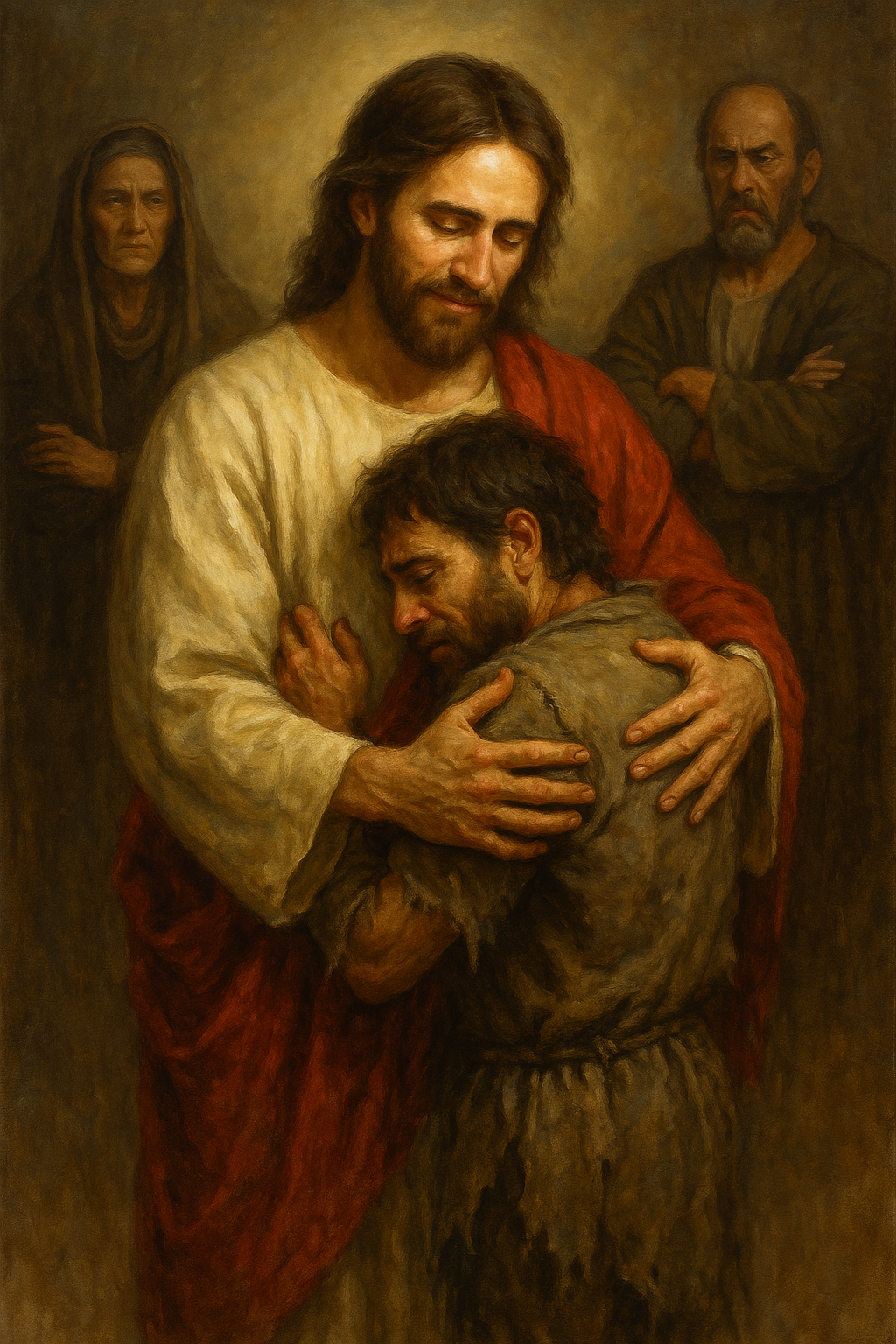
Romans 6:23, then, is the gospel in miniature. Every person is either receiving the wages they have earned, death, or accepting the gift they could never earn, eternal life through Christ. There is no neutral ground.
Broader Context
Romans 6 is Paul’s great chapter on sanctification, the outworking of salvation in the believer’s daily life. After establishing in Romans 5 that justification comes by faith alone, Paul anticipates an objection: if salvation is by grace, does that mean Christians are free to continue in sin? He answers with an emphatic “God forbid” (Romans 6:2). Believers, Paul says, have been united with Christ in His death and resurrection, and therefore they should no longer live as slaves to sin.
Through Romans 6:16–22, Paul contrasts two masters: sin and righteousness. Everyone serves one or the other. Sin enslaves and leads to shame and ultimately death, while righteousness, empowered by God, leads to holiness and eternal life. Verse 23 is the climactic conclusion: “23For the wages of sin is death; but the gift of God is eternal life through Jesus Christ our Lord.”
The imagery of “wages” emphasizes certainty: just as a soldier or laborer receives guaranteed payment, sin also pays, but its currency is death. Revelation 20:14–15 confirms the finality of that payment: “14And death and hell were cast into the lake of fire. This is the second death. 15And whosoever was not found written in the book of life was cast into the lake of fire.” This is the ultimate wage of sin apart from Christ.
By contrast, Paul uses the word “gift” (Greek charisma) to underscore that eternal life is not earned. Titus 3:5 reinforces this: “5Not by works of righteousness which we have done, but according to his mercy he saved us, by the washing of regeneration, and renewing of the Holy Ghost.” Eternal life flows entirely from God’s mercy, secured “through Jesus Christ our Lord.” He is both the source and mediator of life, as He Himself said in John 10:28: “28And I give unto them eternal life; and they shall never perish, neither shall any man pluck them out of my hand.”
Theologians have consistently highlighted this verse’s stark contrast. John MacArthur (1939–2025, Reformed Baptist) summarized it this way: “Every human being will receive one of two things: either the justly earned wages of sin, which is eternal death, or the graciously given gift of God, which is eternal life.” Voddie Baucham (1969– , Reformed Baptist) presses the exclusivity of the gospel: “There aren’t three roads, only two. You’re either earning death or receiving life, and the difference is Christ.”
Even historic voices saw this verse as the fulcrum of Paul’s teaching. Augustine (354–430) used Romans 6:23 to defend the doctrine of grace against those who claimed salvation could be earned: “If it is wages, it is owed; if it is a gift, it is freely given. Thus life eternal is not owed to works, but given by grace.” Spurgeon (1834–1892) called it “the sum of the whole gospel in a single verse.”
So in its broader context, Romans 6:23 is not a detached proverb but the capstone of Paul’s argument: everyone is a servant, either of sin or of God. Sin pays its wage, death. God gives His gift, eternal life. One is earned, the other freely bestowed. And no one will escape choosing one or the other.
Application
Appreciating God’s Greatness
Romans 6:23 magnifies the justice and mercy of God side by side. His justice is displayed in that sin always pays its wage, death. His mercy is displayed in that He gives what no man could ever earn, eternal life through Christ. Matthew Henry (1662–1714, Presbyterian) explains: “Sin is the work, and death is the wages; but eternal life is the gift of God. Death is the due of sin; life is the undeserved gift of grace.” This dual reality shows God’s greatness: He never compromises His holiness, yet He freely offers salvation.
For the Believer
For Christians, Romans 6:23 provides both a warning and a comfort. The warning: sin still brings death and destruction if indulged. John Gill (1697–1771, Reformed Baptist) wrote: “Though freed from the curse and condemnation of sin, the believer is not freed from its wages in the body; yet eternal death is no more his lot, for life is secured in Christ.” In other words, sin still brings consequences, but eternal condemnation is no longer ours.
The comfort: eternal life is secure in Christ, not in our performance. Wayne Grudem (1948– , Evangelical systematic theologian) highlights that eternal life is more than endless existence; it is a quality of life lived in fellowship with God, beginning now and perfected in eternity (Systematic Theology). This means believers already taste that gift, even as they await its fullness.
Call to Action: Examine your life honestly this week. Are there sins you’re treating casually? Remember, even forgiven sin still carries wages. Turn from them quickly, and rejoice that eternal death is no longer your end, for your life is hidden in Christ (Colossians 3:3).
For the Unbeliever
For those outside of Christ, Romans 6:23 is both a warning and an invitation. Sin will pay you what you have earned, death. But God freely offers what you cannot earn, life in Christ. N. T. Wright (1948– , Anglican) notes that Paul here makes it impossible to remain neutral: “All humanity stands at the crossroads: continue in Adam and reap death, or belong to Christ and receive life.” The choice is unavoidable.
Charles Spurgeon (1834–1892, Baptist) pressed this urgency in his preaching: “Oh, the freeness of the gift! Yet the narrowness of the way! The wages are many, the gift is to few. Cling to Christ, and the gift is yours.”
For the unbeliever, then, the message is plain: you cannot buy life, you cannot earn it, and you cannot deserve it. But you can receive it, if you will humble yourself and come to Christ.
Final Encouragement
Romans 6:23 leaves no middle ground. Sin pays what it owes, death. God gives what only He can, eternal life through Christ. Every person is headed toward one of these two ends. For the believer, this verse is a reminder of the grace that saved you and the security you have in Christ. For the unbeliever, it is a merciful warning and a gracious invitation. The wages of sin need not be your story, the gift of God can be yours today.
Our Prayer for You
Gracious Lord, we thank You that though the wages of sin is death, You have freely given eternal life through Jesus Christ our Lord. Strengthen believers to walk in righteousness and turn quickly from sin, remembering the price that was paid. For those who do not yet know You, may their eyes be opened to the seriousness of sin and the beauty of Your gift. Let none who read these words choose death when life in Christ is offered. In Jesus’ name, Amen.
Closing
If you’ve found these daily verses encouraging, enlightening, or fruitful, please consider helping us spread the truth and light of God’s Word by subscribing to the blog and YouTube channels and liking and following the Facebook page. Most of all, share Believers of Biblical Truth and our links with others who may need the sermons and daily teachings just as much as we do.
You are loved, so much in fact, that we want you to know and be Believers of Biblical Truth.
Shalom Shalom.

 Believers of Biblical Truth
You must be logged in to post a comment.