
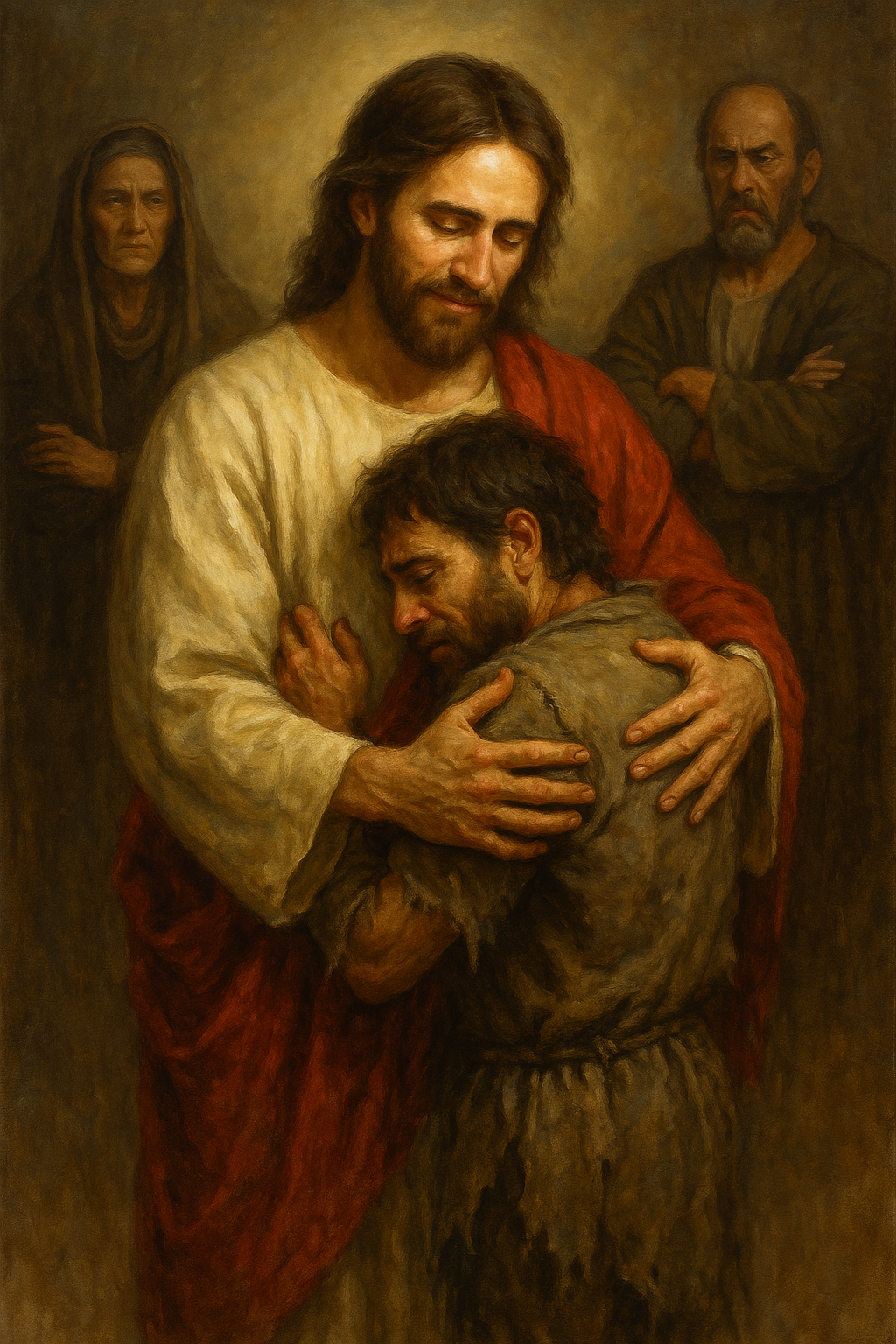
TODAY’S DAILY BIBLE VERSE: There is Hope

September 4, 2025

Verse
Romans 6:23 – “For the wages of sin is death; but the gift of God is eternal life through Jesus Christ our Lord.”

Verse Context

Romans 6:23 stands as one of the most concise summaries of the gospel in all of Scripture, setting two eternal destinies in sharp contrast. Paul has been teaching throughout the chapter that believers are no longer slaves to sin but have become servants of righteousness (Romans 6:16–22). He concludes with this summary: sin pays wages, but God gives a gift.

The first half of the verse declares: “For the wages of sin is death.” Just as a laborer receives payment for his work, so sin faithfully pays its servants, but its wage is always death. This includes physical death, spiritual separation from God, and ultimately eternal judgment. James confirms this pattern: 15Then when lust hath conceived, it bringeth forth sin: and sin, when it is finished, bringeth forth death” (James 1:15). Paul already made this point earlier in Romans: 12Wherefore, as by one man sin entered into the world, and death by sin; and so death passed upon all men, for that all have sinned” (Romans 5:12). Death is the unavoidable payment for sin.

The second half of the verse offers glorious contrast: “But the gift of God is eternal life through Jesus Christ our Lord.” Unlike wages, which are earned, eternal life is a free gift. Paul makes this same truth clear in Ephesians: 8For by grace are ye saved through faith; and that not of yourselves: it is the gift of God: 9Not of works, lest any man should boast” (Ephesians 2:8–9). This gift is secured only in Christ, who said: 6I am the way, the truth, and the life: no man cometh unto the Father, but by me” (John 14:6).

Commentators across the centuries emphasize this contrast. John MacArthur (1939–2025, Reformed Baptist) wrote: “Sin promises freedom but pays with death. God promises life, and gives it freely in Christ. These two masters, sin and God, offer only two destinies — death or eternal life.” Voddie Baucham (1969– , Reformed Baptist) echoes the same: “You cannot serve sin and receive life. The wages are death. But those who are in Christ receive not what they’ve earned, but what He has earned for them.”

Historic voices agree. Augustine (354–430, early church father) explained: “For death is owed by merit of sin, but life is given by grace of God.” Charles Spurgeon (1834–1892, Baptist) proclaimed: “It is a blessed thing to receive what you have not earned, and that is what salvation is. You deserve death, yet you are given life, and that life eternal, in Christ Jesus.”

Romans 6:23, then, is the gospel in miniature. Every person is either receiving the wages they have earned, death, or accepting the gift they could never earn, eternal life through Christ. There is no neutral ground.

Broader Context

Romans 6 is Paul’s great chapter on sanctification, the outworking of salvation in the believer’s daily life. After establishing in Romans 5 that justification comes by faith alone, Paul anticipates an objection: if salvation is by grace, does that mean Christians are free to continue in sin? He answers with an emphatic “God forbid” (Romans 6:2). Believers, Paul says, have been united with Christ in His death and resurrection, and therefore they should no longer live as slaves to sin.

Through Romans 6:16–22, Paul contrasts two masters: sin and righteousness. Everyone serves one or the other. Sin enslaves and leads to shame and ultimately death, while righteousness, empowered by God, leads to holiness and eternal life. Verse 23 is the climactic conclusion: 23For the wages of sin is death; but the gift of God is eternal life through Jesus Christ our Lord.”

The imagery of “wages” emphasizes certainty: just as a soldier or laborer receives guaranteed payment, sin also pays, but its currency is death. Revelation 20:14–15 confirms the finality of that payment: 14And death and hell were cast into the lake of fire. This is the second death. 15And whosoever was not found written in the book of life was cast into the lake of fire.” This is the ultimate wage of sin apart from Christ.

By contrast, Paul uses the word “gift” (Greek charisma) to underscore that eternal life is not earned. Titus 3:5 reinforces this: 5Not by works of righteousness which we have done, but according to his mercy he saved us, by the washing of regeneration, and renewing of the Holy Ghost.” Eternal life flows entirely from God’s mercy, secured “through Jesus Christ our Lord.” He is both the source and mediator of life, as He Himself said in John 10:28: 28And I give unto them eternal life; and they shall never perish, neither shall any man pluck them out of my hand.”

Theologians have consistently highlighted this verse’s stark contrast. John MacArthur (1939–2025, Reformed Baptist) summarized it this way: “Every human being will receive one of two things: either the justly earned wages of sin, which is eternal death, or the graciously given gift of God, which is eternal life.” Voddie Baucham (1969– , Reformed Baptist) presses the exclusivity of the gospel: “There aren’t three roads, only two. You’re either earning death or receiving life, and the difference is Christ.”

Even historic voices saw this verse as the fulcrum of Paul’s teaching. Augustine (354–430) used Romans 6:23 to defend the doctrine of grace against those who claimed salvation could be earned: “If it is wages, it is owed; if it is a gift, it is freely given. Thus life eternal is not owed to works, but given by grace.” Spurgeon (1834–1892) called it “the sum of the whole gospel in a single verse.”

So in its broader context, Romans 6:23 is not a detached proverb but the capstone of Paul’s argument: everyone is a servant, either of sin or of God. Sin pays its wage, death. God gives His gift, eternal life. One is earned, the other freely bestowed. And no one will escape choosing one or the other.

Application

Appreciating God’s Greatness
Romans 6:23 magnifies the justice and mercy of God side by side. His justice is displayed in that sin always pays its wage, death. His mercy is displayed in that He gives what no man could ever earn, eternal life through Christ. Matthew Henry (1662–1714, Presbyterian) explains: “Sin is the work, and death is the wages; but eternal life is the gift of God. Death is the due of sin; life is the undeserved gift of grace.” This dual reality shows God’s greatness: He never compromises His holiness, yet He freely offers salvation.

For the Believer
For Christians, Romans 6:23 provides both a warning and a comfort. The warning: sin still brings death and destruction if indulged. John Gill (1697–1771, Reformed Baptist) wrote: “Though freed from the curse and condemnation of sin, the believer is not freed from its wages in the body; yet eternal death is no more his lot, for life is secured in Christ.” In other words, sin still brings consequences, but eternal condemnation is no longer ours.

The comfort: eternal life is secure in Christ, not in our performance. Wayne Grudem (1948– , Evangelical systematic theologian) highlights that eternal life is more than endless existence; it is a quality of life lived in fellowship with God, beginning now and perfected in eternity (Systematic Theology). This means believers already taste that gift, even as they await its fullness.

Call to Action: Examine your life honestly this week. Are there sins you’re treating casually? Remember, even forgiven sin still carries wages. Turn from them quickly, and rejoice that eternal death is no longer your end, for your life is hidden in Christ (Colossians 3:3).

For the Unbeliever
For those outside of Christ, Romans 6:23 is both a warning and an invitation. Sin will pay you what you have earned, death. But God freely offers what you cannot earn, life in Christ. N. T. Wright (1948– , Anglican) notes that Paul here makes it impossible to remain neutral: “All humanity stands at the crossroads: continue in Adam and reap death, or belong to Christ and receive life.” The choice is unavoidable.

Charles Spurgeon (1834–1892, Baptist) pressed this urgency in his preaching: “Oh, the freeness of the gift! Yet the narrowness of the way! The wages are many, the gift is to few. Cling to Christ, and the gift is yours.”

For the unbeliever, then, the message is plain: you cannot buy life, you cannot earn it, and you cannot deserve it. But you can receive it, if you will humble yourself and come to Christ.

Final Encouragement

Romans 6:23 leaves no middle ground. Sin pays what it owes, death. God gives what only He can, eternal life through Christ. Every person is headed toward one of these two ends. For the believer, this verse is a reminder of the grace that saved you and the security you have in Christ. For the unbeliever, it is a merciful warning and a gracious invitation. The wages of sin need not be your story, the gift of God can be yours today.

Our Prayer for You

Gracious Lord, we thank You that though the wages of sin is death, You have freely given eternal life through Jesus Christ our Lord. Strengthen believers to walk in righteousness and turn quickly from sin, remembering the price that was paid. For those who do not yet know You, may their eyes be opened to the seriousness of sin and the beauty of Your gift. Let none who read these words choose death when life in Christ is offered. In Jesus’ name, Amen.

Closing

If you’ve found these daily verses encouraging, enlightening, or fruitful, please consider helping us spread the truth and light of God’s Word by subscribing to the blog and YouTube channels and liking and following the Facebook page. Most of all, share Believers of Biblical Truth and our links with others who may need the sermons and daily teachings just as much as we do.

You are loved, so much in fact, that we want you to know and be Believers of Biblical Truth.

Shalom Shalom.
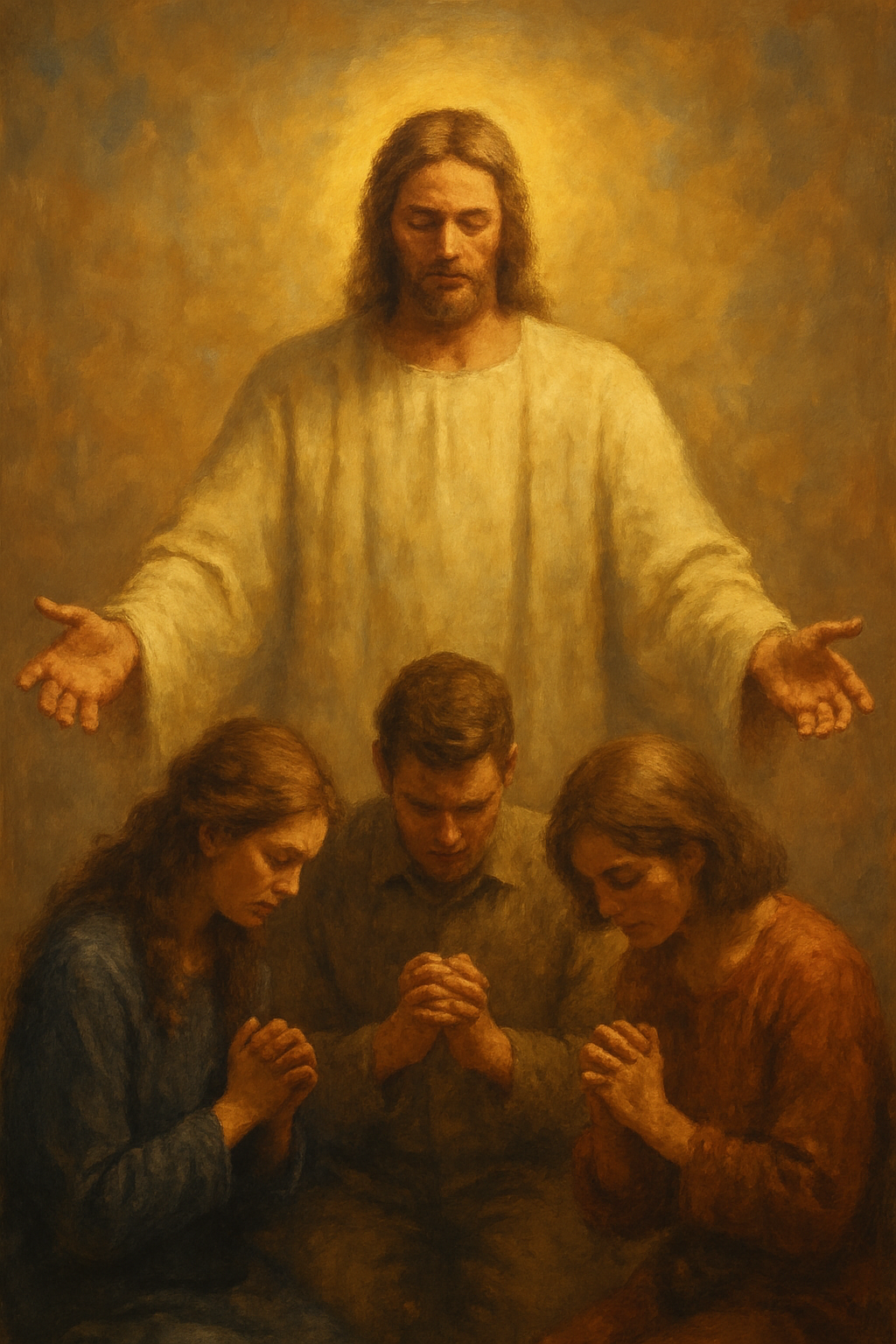
Today’s Daily Bible Verse: Wait Upon The LORD

April 24, 2025

Isaiah chapter 40 verse 31: 

“But they that wait upon the Lord shall renew their strength; they shall mount up with wings as eagles; they shall run, and not be weary; and they shall walk, and not faint.

Verse Context:

The Book of Isaiah was written by the prophet Isaiah, whose ministry spanned roughly from 740 to 686 BC during the reigns of several kings in Judah. This particular chapter—Isaiah chapter 40—is a turning point in the book. The first 39 chapters of Isaiah deal heavily with judgment, sin, and warnings to Israel and the surrounding nations. But chapter 40 opens a new section—a message of comfort and hope directed to the people of God in exile, reminding them that God has not forgotten them and that His promises still stand.

Isaiah chapter 40 verse 31 is the crescendo of this comforting reassurance. The verse begins with the phrase “they that wait upon the Lord,” which means more than just patience. The word wait here carries the meaning of expectantly looking to or relying on God. It’s not passive. It’s an active trust in His strength and timing. It implies dependency, surrender, and expectation all at once.

The phrase “shall renew their strength” speaks of a divine exchange: those who are weak and weary give up their own failing strength and in return receive God’s supernatural enabling. The word renew here means to exchange or replace, not just to recharge like a battery, but to actually receive something new and better—His power for our weakness.

“They shall mount up with wings as eagles” draws on the imagery of the eagle—one of the strongest and most majestic of birds. Eagles don’t flap endlessly like smaller birds; they rise above the turbulence by catching the thermal updrafts. This is a picture of effortless strength that comes from trusting in God’s provision, not our own striving. It’s also symbolic of rising above circumstances rather than being trapped beneath them.

The verse continues with “they shall run, and not be weary; and they shall walk, and not faint.” These aren’t random stages—they represent real seasons in the life of a believer. Sometimes God empowers us to soar above it all, sometimes He enables us to run through the intense pressures of life, and sometimes He simply keeps us walking, one faithful step at a time, when that’s all we can do. But in each case, His strength sustains us—not our own.

The 18th-century theologian Matthew Henry (1662–1714, Presbyterian) explains this verse as God’s promise that He will “fit His people for their trials, employ them in His service, and enable them to persevere in duty.”

John Oswalt (b. 1940, Wesleyan/Methodist), in his NICOT commentary on Isaiah, adds that this verse “offers a total transformation of the human condition, not by changing circumstances, but by changing the person within them.”

And practically, this passage speaks with special power to those in long trials—people waiting on healing, clarity, purpose, or relief. It tells us not only that God can renew us, but that He will—in His perfect time and way.

Broader Context:

Isaiah chapter 40 is the beginning of what many scholars call the “Book of Comfort” within the larger Book of Isaiah. While the first 39 chapters primarily warn of judgment and exile due to Israel’s rebellion, chapter 40 shifts dramatically in tone, opening with the words: “Comfort ye, comfort ye my people, saith your God.” This is not just a casual encouragement—it’s a divine command to console and restore hope to a broken and scattered people. It was written prophetically for those who would one day be in Babylonian exile, reminding them that God’s promises would outlast their punishment.

The structure of Isaiah from this point forward reflects a future hope rooted in the character and power of God Himself. Chapter 40 is foundational—it reintroduces God’s people to who He really is: not a distant deity, but a powerful, compassionate Creator who cares deeply for the weak and will redeem His people.

In the broader scope of chapter 40, Isaiah does three major things:

  1. He reminds the people that God is coming with power and tenderness (verses 1–11). Verses like “He shall feed his flock like a shepherd” show the soft, gentle care of the Lord alongside His might.
  2. He contrasts the greatness of God with the frailty of man (verses 12–26). Isaiah poses questions like “Who hath measured the waters in the hollow of his hand?” to highlight God’s sovereignty over creation. These questions are rhetorical and meant to humble the reader and awaken awe.
  3. He closes by declaring that this all-powerful God gives strength to the weary (verses 27–31). This is where our daily verse lives. It’s not only a conclusion but also a rebuke to those who say “My way is hid from the Lord.” Isaiah is saying: You may feel forgotten, but you’re not. The everlasting God never faints, never grows weary, and He will renew you.

This section serves both a theological and pastoral role. Theologically, it reminds the exiles—and us—that God does not change, and His purposes stand firm. Pastorally, it meets the reader in their exhaustion and says: God sees you, and He will carry you.

What’s beautiful is that this passage sets up the chapters that follow, where God will reveal the role of His servant—the Messiah—who will bring justice (chapter 42), bear the people’s sins (chapter 53), and eventually establish a kingdom of peace. All of that begins with this word of comfort in chapter 40.

Isaiah chapter 40 verse 31, then, is not a mere inspirational quote. It is the climax of a holy declaration: You are not forgotten, your strength is not lost, and your hope is not foolish. Wait on the Lord. He will lift you up.

Application

Appreciating God’s Greatness

Isaiah chapter 40 verse 31 draws our eyes upward—not just to the sky like the eagle—but to the eternal God who rules over the sky, the stars, the seasons, and every soul that calls on Him. This verse reveals a magnificent truth about God’s nature: He is never exhausted. Unlike us, He does not tire, weaken, or grow frustrated by time. He is never too late, too distracted, or too weary to act.

We serve a God who gives power to the faint (Isaiah chapter 40 verse 29), and that power is not recycled—it’s fresh and full. The picture of the eagle soaring isn’t about freedom alone—it’s about strength without striving, rest while rising, and height without fear. God’s greatness is not just seen in creation but in His care for the crushed and His renewal of the weary.

For the Believer

This verse is a daily anchor for the Christian walk. We all experience seasons where the path ahead seems long, the strength behind us feels drained, and our spirits are tempted to faint. But Isaiah’s words assure us that waiting on the Lord is not wasting time—it’s preparing for a supernatural exchange of strength. Believers who trust in God’s timing and lean on His promises will rise again—not always in a dramatic moment, but often in the quiet renewal of daily endurance. You might not feel like an eagle today. You may feel like you’re barely walking. That’s okay—God promises that even your walk will not end in fainting.

This is a call to hold fast. To wait—not with idle hands, but with a surrendered heart. It’s a reminder that the spiritual strength you need is not manufactured by sheer willpower, but received through surrender and faith. The more you lean on Him, the stronger you’ll become—not because you’ve trained harder, but because He has lifted you higher.

Call to Action: If you’re weary today—emotionally, physically, spiritually—don’t turn inward. Turn upward. Carve out intentional time to seek God in prayer and in His Word. Don’t rush your waiting; renewal comes in the waiting. Encourage someone else today who is struggling—send them this verse. Be the one who helps another soul take flight again.

For the Unbeliever

If you are reading this and you don’t know Jesus, this promise still reaches for you. You may be living in your own strength, trying to bear the weight of life’s burdens on your shoulders. That strength will eventually fail—it was never meant to carry eternal pressure. But there is One who never grows weary, who calls all who labor and are heavy laden to come to Him for rest (Matthew chapter 11 verse 28: “Come unto me, all ye that labour and are heavy laden, and I will give you rest.”). This is not a poetic escape—it is a real invitation from a real Savior.

Jesus Christ offers more than just comfort—He offers life, peace, and a future. You may feel grounded right now, burdened, or even broken—but He will lift you. Come to Him with your whole heart, surrender your self-reliance, and trust the One who can cause you to rise with wings as eagles.

Final Encouragement

Isaiah chapter 40 verse 31 is not simply a verse about energy or motivation—it is a divine promise. God sees the tired. He lifts the low. And He strengthens those who stop striving in their own might and begin waiting in His. Whether you are soaring, running, or barely walking, you are not forgotten. Your strength will be renewed—not by your own hands, but by His.

Let today be a turning point. Choose to wait—not with frustration, but with faith. Let your soul rest in the assurance that the God who never sleeps is working all things for your good. And when the time is right, He will lift you up—higher than you imagined, stronger than you believed, and more stable than you’ve ever stood before.

Prayer

Heavenly Father,
We thank You for being the God who never grows weary. In a world that constantly drains us, You are our unending source of strength. For every weary soul reading this today, I ask that You would fulfill Your promise—renew their strength. For those who are walking, help them not to faint. For those who are running, sustain their pace. And for those who are ready to rise, lift them like eagles. Teach us to wait on You—not in fear or frustration, but in faith and expectation. Let Your peace steady us, Your Spirit empower us, and Your Word anchor us. We rest in You today, Lord. In Jesus’ name, Amen.

Closing

If you’ve found these daily verses encouraging, enlightening, or fruitful, please consider helping us spread the truth and light of God’s Word by liking this and other posts, subscribing to the blog and YouTube channels, and liking and following the Facebook page. Most of all, share Believers of Biblical Truth and our links with others who may need the sermons and daily teachings just as much as we do.

You are loved—so much in fact, that we want you to know and be Believers of Biblical Truth.

Shalom Shalom.
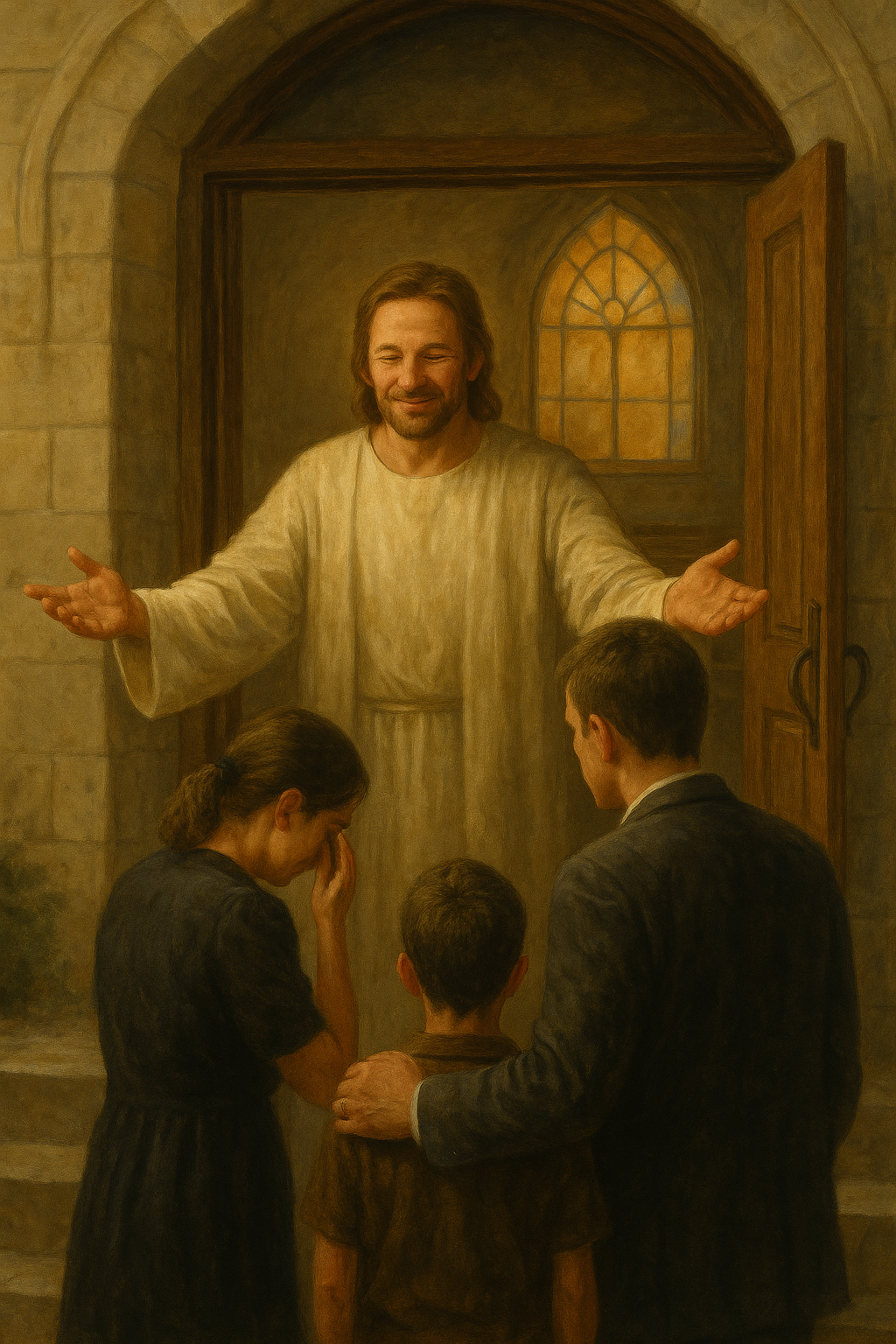
TODAY’S DAILY BIBLE VERSE- Come Unto Me

Matthew chapter 11 verses 28 through 30
"Come unto me, all ye that labour and are heavy laden, and I will give you rest. Take my yoke upon you, and learn of me; for I am meek and lowly in heart: and ye shall find rest unto your souls. For my yoke is easy, and my burden is light."

VERSE CONTEXT

Matthew chapter 11 verses 28 through 30 sits at the heart of a very personal moment in Jesus’ ministry. By the time we reach these verses, He has just finished publicly denouncing cities like Chorazin, Bethsaida, and Capernaum—places that had seen His miracles yet refused to repent. But rather than ending on a note of judgment, Jesus pivots to one of the most tender and hope-filled invitations in all of Scripture. He calls to those who are not merely rebellious, but weary—those crushed under the weight of life, whether by sin, sorrow, or the suffocating demands of religion.

Jesus begins by saying, “Come unto me, all ye that labour and are heavy laden, and I will give you rest.” This is not a soft offer or vague encouragement—it is a divine summons. The word “come” here is a present tense call, full of urgency and compassion. He is not calling the proud or the self-sufficient; He is calling those who “labour,” a word which means to be worn out from hard toil, and those who are “heavy laden,” describing the crushing weight placed on a person from the outside. In the immediate Jewish context, this would have reminded listeners of the unbearable burden placed upon them by the scribes and Pharisees who had bound them with hundreds of religious laws and expectations (see Matthew chapter 23 verse 4: “For they bind heavy burdens and grievous to be borne, and lay them on men’s shoulders…”). But the weight Jesus speaks of is more than legalism—it includes the soul-wearying weight of guilt, shame, grief, and hopelessness.

Then He says, “I will give you rest.” The word “rest” here is not just sleep or relief from physical labor—it is soul-level peace. It is the same deep relief promised in Jeremiah chapter 6 verse 16, where the old paths of the Lord were said to lead to “rest for your souls.” Jesus is revealing Himself here not only as the Teacher, but as the fulfillment of every promise ever made about peace, about restoration, and about rest in God. He doesn’t offer to lessen the burden; He offers to replace it.

But He doesn’t stop there. He adds, “Take my yoke upon you, and learn of me; for I am meek and lowly in heart.” In ancient times, a yoke was a wooden harness laid across the shoulders of oxen to keep them walking side by side and to guide their work. Spiritually speaking, to be yoked to someone was to be tied to their teaching and their way of life. The Pharisees offered the “yoke of the law,” which became a symbol of impossible religious effort. Jesus offers His own yoke—one that still calls for discipleship and obedience, but not one based on shame or fear. He is “meek and lowly in heart.” The word “meek” here does not mean weak—it means gentle, controlled, approachable. “Lowly in heart” means He is humble, not aloof or unapproachable. Christ is telling the weary soul that He will not break them further—He will bind them to Himself in love, not in law.

He concludes by saying, “Ye shall find rest unto your souls. For my yoke is easy, and my burden is light.” His “yoke” is easy—not because life becomes effortless, but because it fits. It is suited for us because He bears it with us. When Jesus says His burden is “light,” He doesn’t mean the path is painless. He means it is shared, and therefore, bearable. The burden is no longer ours to carry alone. It becomes the blessed burden of walking with the Son of God, whose strength becomes ours.

Historically, this passage has been a balm to countless believers. It became especially cherished in times of persecution, poverty, or despair—when no other source of comfort could be found. John Calvin (1509–1564, Reformed) noted that “nothing is more sweet than this voice of Christ, which invites us to Himself with fatherly kindness.” Matthew Henry (1662–1714, Presbyterian) called it “the greatest refreshment to a soul weary of sin.” But even without the commentaries, this passage speaks plainly. The voice of the Savior here is not thundering from Sinai—it is whispering in the wind to the weary soul, “Come.”

This verse is for the mother crying in silence for the loss of her child, for the mom and dad struggling to keep a family together while their teenager is experiencing heart failure and needs a heart transplant, for the mom and dad who pray for their son and his addictions that keep him going in and out of jail and prison, for the sister struggling in an abusive relationship, for the brother who feels forgotten, for the elder saint worn down by pain, for the young soul crushed by anxiety or shame, for the person struggling financially with debt or unemployment, and for all of who have lost loved ones that break our hearts. It reminds us that Christ does not offer escape—He offers Himself. And in Him is rest not just for today, but forever.

BROADER CONTEXT

The invitation in Matthew chapter 11 verses 28 through 30 cannot be fully grasped unless we understand the chapter as a whole—and, even more, the heart of the Gospel of Matthew. These verses come at the close of a deeply revealing chapter, one that contrasts the hardness of men’s hearts with the openness of Christ’s.

Matthew chapter 11 begins with a moment of doubt from a faithful man—John the Baptist, now imprisoned, sends messengers to Jesus asking, “Art thou he that should come, or do we look for another?” (Matthew chapter 11 verse 3). Some take this as a wavering of John’s faith, but it’s more likely an honest struggle to reconcile what he knew of Jesus with what he was suffering. Jesus doesn’t rebuke John. Instead, He sends back evidence—the blind see, the lame walk, the deaf hear, the dead are raised, and the poor have the gospel preached to them. In other words, “Yes, I am the One who was to come, and you have not hoped in vain.”

Then Jesus turns to the crowds and honors John, calling him more than a prophet. Yet in that same breath, He rebukes the people and cities who had seen His miracles and still refused to believe. In Matthew chapter 11 verses 20 through 24, He compares these towns unfavorably to Tyre, Sidon, and even Sodom—wicked cities of the Old Testament. The cities of Chorazin, Bethsaida, and Capernaum had witnessed the divine but clung to unbelief. Their downfall wasn’t ignorance—it was prideful resistance.

That is what sets the stage for verses 25 through 30. After lamenting the hardness of hearts, Jesus offers praise to the Father, saying, “I thank thee, O Father…because thou hast hid these things from the wise and prudent, and hast revealed them unto babes” (Matthew chapter 11 verse 25). This doesn’t mean intelligence is condemned; rather, it means that spiritual truth is withheld from the proud who rely on their own wisdom and instead revealed to the humble, the childlike, the needy. Jesus is rejoicing that the kingdom of heaven is not accessed through intellect or pedigree, but through dependence and surrender.

Then, in verses 27 through 30, Jesus shifts from speaking to the Father to speaking directly to the people. It’s as if the curtain is drawn back and the heart of Christ is laid bare. All things are given to Him by the Father, and no one truly knows the Father except through the Son. The next words—“Come unto me…”—are not abstract theology. They are the outpouring of divine compassion. This is Christ calling out to the humble remnant, the wounded believer, the outsider longing for peace.

Zooming out further, this chapter reveals one of Matthew’s most consistent themes: the clash between religious pride and divine mercy. Throughout his Gospel, Matthew—writing especially to a Jewish audience—emphasizes Jesus as the fulfillment of the Old Testament, the true King and Messiah, and the compassionate Shepherd. Where the Pharisees offered rules, Jesus offers relationship. Where the law showed the problem, Jesus presents Himself as the answer.

Matthew chapter 11 also connects thematically to the next chapter. In Matthew chapter 12, we see the conflict escalate. The Pharisees accuse Jesus’ disciples of breaking the Sabbath for plucking grain, and later they plot against Him for healing a man with a withered hand. But in the midst of all that, Matthew quotes Isaiah: “He shall not strive, nor cry…a bruised reed shall he not break, and smoking flax shall he not quench” (Matthew chapter 12 verses 19–20). That prophetic word echoes and amplifies what we see in today’s passage: Jesus is gentle. He is close. He does not discard the weary—He restores them.

So in the broader arc of the book, these three verses serve as a turning point. They are not just a comfort to the hurting—they are a rebuke to the proud and a declaration to the world that Christ’s kingdom is not built on power or performance, but on grace, humility, and faith. These verses remind us that Jesus is not merely offering to help bear burdens—He is offering Himself as rest.

APPLICATION

The invitation of Jesus in Matthew chapter 11 verses 28 through 30 is deeply personal, yet universal in scope. It is extended to all who labour and are heavy laden—and that includes many among us right now. For those surrounded by sorrow, burdened by sin, or simply worn thin from the weight of life, this call stands unchanged. It is not a suggestion. It is a call to rest in the arms of the Savior.

Appreciating God’s Greatness

These verses reveal something about Christ that no earthly king or religious leader has ever matched: He is powerful enough to carry our burdens and yet meek enough to stoop down and walk with us. “I am meek and lowly in heart,” He says. This is not weakness—it is greatness in its most divine form. It takes unimaginable strength to bear the griefs of the world, yet do so with gentleness, never breaking the bruised reed or snuffing out the faintly burning wick.

Christ is the Creator, and yet He offers Himself as rest. This is the heart of the Gospel—that the One who spoke the stars into being now opens His arms to the weary soul and says, “Come unto me.” He does not demand that we be strong before we come. He calls us as we are—tired, overwhelmed, grieving, and fragile. His greatness is not seen merely in His power to rule, but in His willingness to carry the weight we cannot.

For the Believer

If you are a believer struggling beneath a heavy load—perhaps heartache, illness, financial fear, betrayal, or just exhaustion—these verses are for you. You may have cried quietly where no one saw. You may have worn a strong face in public but collapsed in private. Hear the voice of Jesus: “Come unto me.”

This passage reminds the believer that the Christian life is not one of self-reliance. It is not spiritual independence. Christ did not die to make us strong on our own. He died and rose so we could walk in dependence on Him. The yoke we are called to take is His—not the world’s, not the law’s, not the expectations of others, but His. And His yoke is never cruel. His leadership is always laced with love.

Call to Action

So what should the believer do with this passage? You must come. Not to a church building. Not to a ritual. Not even to a feeling. But to Him. That means prayer, yes—but more than that, it means surrender. Stop trying to prove yourself. Stop pretending you’re okay. Take off the mask and hand Him the burden. Say, “Lord, I can’t carry this—but I believe You can.” And then take His yoke, trusting that obedience is no longer a heavy burden, but a shared walk with the Savior who loves you.

Christ doesn’t promise a life free of storms. But He does promise that you will never face them alone.

For the Unbeliever

If you are not a believer—if you’re not sure where you stand with Christ—this is more than an encouragement. It is a rescue rope. The burdens you carry may be your own sin, or maybe it’s just the crushing emptiness of a life without peace. Maybe you’ve been running from God, or maybe you’ve just never been sure He was real. But here, in this verse, He calls to you.

He sees your pain. He sees your brokenness. And He is not asking you to clean yourself up first. He says, “Come.” That’s it. Come to the one who bled for you. Come to the one who was acquainted with grief, who wept at death, who walked through sorrow so He could walk with you through yours.

If you will turn from your sin and come to Christ in faith—believing He died for you and rose again to offer life eternal—you will find what your soul has been searching for all along. You will find rest.

FINAL ENCOURAGEMENT

Jesus did not come for the self-sufficient. He came for the burdened, the weary, and the broken. He did not say, “Come to me once you’ve figured it out,” or “Come after you’ve fixed yourself.” He simply said, “Come unto me.” This passage is a refuge for every soul crushed by sorrow or sin, a shelter for those carrying silent grief, and a promise to those who feel unseen. The Savior of the world, the Man of Sorrows, who was Himself acquainted with grief, now opens His arms and says, “Come.”

For the believer, this is your reminder: you don’t walk alone. And for the unbeliever, this is your opportunity: you don’t have to stay where you are. Jesus offers Himself—not as a philosophy, not as a burden, but as rest. The door is open. The invitation is real. His burden is light. His grace is sufficient. And His heart is for you.

PRAYER

Heavenly Father,
We come before You weary from a world heavy with sorrow and uncertainty. We thank You that in the midst of our pain, Your Son Jesus stands with open arms, offering rest for our souls. Lord, for every person reading who is burdened—whether by grief, fear, sin, or exhaustion—remind them of the invitation You have given: that we can come to You just as we are.

Let Your Spirit draw the broken-hearted close today. Let the weary believer feel Your strength beneath their weakness. Let the doubting soul hear Your voice, and let the one weighed down by sin find freedom in Christ. We ask for peace that surpasses understanding, and for courage to take on the yoke of Jesus, trusting that He walks beside us, never ahead of us, never apart from us.

Thank You for being our rest, our refuge, and our Redeemer. In Jesus’ holy name we pray, Amen.

CLOSING

If you’ve found these daily verses encouraging, enlightening, or fruitful, please consider helping us spread the truth and light of God’s Word by subscribing to the blog and YouTube channels and liking and following the Facebook page. Most of all, share Believers of Biblical Truth and our links with others who may need the sermons and daily teachings just as much as we do.

You are loved—so much in fact, that we want you to know and be Believers of Biblical Truth. Shalom Shalom.

TODAY’S DAILY BIBLE VERSE

April 15, 2025

Lamentations chapter 3 verses 22–23:
“It is of the LORD’s mercies that we are not consumed, because his compassions fail not. They are new every morning: great is thy faithfulness.”

VERSE CONTEXT

The book of Lamentations is attributed to the prophet Jeremiah, who also authored the prophetic book bearing his name. This poetic lament was written in the aftermath of the destruction of Jerusalem by the Babylonians in 586 B.C. The once-glorious city had been reduced to rubble, the Temple desecrated, and the people carried into exile. The tone throughout much of the book is one of mourning, sorrow, and national humiliation, as God’s chosen people grapple with the consequences of long-standing disobedience.

Lamentations chapter 3 is unique within the book because it shifts from national sorrow to intensely personal grief. It opens with the words, “I am the man that hath seen affliction by the rod of his wrath” (verse 1), identifying the speaker as someone who feels crushed under divine judgment. Many believe Jeremiah is speaking personally here, lamenting what he himself has endured while still interceding on behalf of his people. For the first twenty verses, the tone is dark: filled with despair, hopelessness, and emotional devastation. But then—starting in verse 21—a stunning turn occurs.

This I recall to my mind, therefore have I hope.

The prophet deliberately chooses to remember something that reignites hope, and that brings us into verses 22–23, our focus today.

“It is of the LORD’s mercies that we are not consumed…”

The word “mercies” here comes from a word that carries the idea of covenant love or steadfast, loyal kindness. It is a plural word in Hebrew, expressing repeated acts of mercy, not just one. This loyal love is not a sentimental feeling but a binding covenantal compassion that God shows toward His people, even in the midst of judgment. The fact that Israel was not consumed, despite their rebellion and the severity of their punishment, speaks to God’s restraint and mercy. He could have wiped them out completely, but He didn’t. That is grace.

“…because his compassions fail not.”

The word “compassions” implies deep emotional concern, like that of a parent toward a suffering child. The idea is that God’s mercy isn’t mechanical or cold, but full of tender affection. The phrase “fail not” indicates permanence—His compassion never ceases. It is never exhausted, no matter how exhausted we are.

“They are new every morning…”

This line turns the emotional tide even more. Each day brings fresh mercy, no matter what happened the day before. The dawn becomes a metaphor for renewal—not only of the day but of God’s compassionate commitment to His people. This isn’t a poetic exaggeration; it is a spiritual reality. Just as the manna in the wilderness was provided fresh each day (Exodus chapter 16 verse 21: “they gathered it every morning”), so too is God’s mercy, not stored, but renewed for every morning’s needs.

“…great is thy faithfulness.”

Here, the verse turns into praise. The Hebrew word behind faithfulness refers to steadfastness, dependability, reliability. It’s the same word used when describing something that is firm and unshakeable. Even though everything else had crumbled—Jerusalem’s walls, the Temple, national dignity—God’s faithfulness stood unmoved. This final line echoes what the entire section is building toward: God’s unchanging nature. He is faithful even when we are not. He is steady when we are unstable. He keeps His covenant when we have broken ours.

BROADER CONTEXT
The book of Lamentations is structured as a series of five poems, each forming its own chapter, written in acrostic form in the original Hebrew. Chapters 1, 2, and 4 contain 22 verses (following the Hebrew alphabet), while chapter 3 expands to 66 verses—three lines per letter, creating a triple-acrostic. This structure is intentional and reflects a careful, meditative approach to sorrow: grief expressed with order and reverence. The entire book gives voice to sorrow without descending into chaos or despair. God’s sovereignty remains the backdrop, even when His people don’t understand His ways.

Lamentations chapter 3 serves as the heart of the book—not only in structure but in message. It is the only chapter where the lament becomes personal: “I am the man that hath seen affliction…” (verse 1). While chapters 1 and 2 focus on Zion’s downfall and destruction, chapter 3 narrows in on the inner life of a man wrestling with the silence of God, the weight of judgment, and the hunger for hope. This chapter walks us through the darkest emotional valleys (verses 1–20) only to lead us to the climactic expression of hope in verses 21–26.

Verse 21: “This I recall to my mind, therefore have I hope.”
Verses 22–23: “It is of the LORD’s mercies that we are not consumed…”

These verses aren’t spoken from a mountaintop—they are whispered from a pit. Jeremiah writes not from comfort but from collapse, and that’s why his hope is so striking. This section reminds the reader that God’s mercy is not dependent on circumstances. It is grounded in His character.

Even after this turning point, the poet continues to reflect on hardship, justice, and the cries of the afflicted. But from verse 21 onward, a theological anchor has been dropped: God is merciful, God is faithful, and He is worth waiting for.

Lamentations chapter 3 verse 26: “It is good that a man should both hope and quietly wait for the salvation of the LORD.”

These truths don’t erase suffering, but they make suffering bearable with hope.

Zooming out further, these verses also resonate with Jeremiah’s broader prophetic ministry. In the book of Jeremiah, we see the prophet warning Judah again and again to turn from idolatry and injustice, but his calls go unheeded. He witnesses firsthand the fulfillment of God’s warnings through the Babylonian conquest. Yet even in Jeremiah’s most severe rebukes, there was always the promise of restoration after judgment. This theme comes full circle in Lamentations: God did discipline His people, but He had not abandoned them.

Compare this with Jeremiah chapter 29 verse 11, which was written before the fall of Jerusalem:

“For I know the thoughts that I think toward you, saith the LORD, thoughts of peace, and not of evil, to give you an expected end.”

Even in exile, God’s intentions remained merciful. The message of Lamentations chapter 3 is that even when we are at rock bottom—because of our sins or life’s sorrows—God’s mercy is still at work. It is not exhausted. It is renewed daily. That is the hope that holds His people steady.

APPLICATION
Appreciating God’s Greatness
These verses lift our eyes to see the unchanging, deeply personal mercy of God, even when everything around us has fallen apart. They remind us that God’s compassion is not conditional on our performance—it flows from His covenant faithfulness. He is not like man, who grows weary or gives up. His mercies do not expire. They are not recycled leftovers from yesterday; they are new, fresh, purposeful each morning, designed to meet the needs of today.

What makes this truly breathtaking is that it is written in the aftermath of judgment. Jerusalem is in ruins. Families have been torn apart. Yet the prophet dares to declare that God is faithful. Why? Because God is always acting according to His holiness—even in wrath, He remembers mercy (Habakkuk chapter 3 verse 2: “in wrath remember mercy”).

This passage magnifies God’s greatness by showing that even when He disciplines, He does not abandon. Even when He is silent, He is not absent. And even when all seems lost, He is still giving daily gifts of mercy and compassion.

For the Believer
For the believer, this passage invites spiritual realignment. It reminds us not to judge God’s faithfulness by our feelings or circumstances, but by His unchanging character. Every morning you wake up is proof of God’s mercy. You are not consumed. You still have breath. You still have hope. If you’re walking through grief, trial, or discipline, these verses offer you something solid: not a quick escape, but enduring mercy. This is not a passage that makes light of pain—it’s a passage that tells you God walks with you in it. The same God who allowed the Babylonian captivity wept over it through the voice of His prophet. And the same God who allowed discipline was already at work planning redemption.

Call to Action:
Start each day by deliberately acknowledging His mercy. Before the to-do list begins, before the demands of work or stress or regret take hold, speak this truth aloud: “Great is Thy faithfulness.” Let that confession anchor your soul. If you’re burdened by guilt or shame, come to Him in repentance—because the mercy you need has already been made new today. Don’t waste it. Run to it. Let this verse also guide how you treat others. If God’s mercy renews daily for you, then extend fresh mercy to others, even those who may not “deserve” it. Forgive quickly. Show compassion intentionally. Reflect God’s nature in how you love.

For the Unbeliever
To the unbeliever, these verses offer a sobering but hope-filled truth. The reason you are alive today—the reason you woke up this morning—is because of God’s mercy. You may not realize it, but you are already a recipient of His compassion. The question is: what will you do with it? The mercy of God is not given so we can live however we want without consequence. It is given to draw us to Him. Romans chapter 2 verse 4 says:

Or despisest thou the riches of his goodness and forbearance and longsuffering; not knowing that the goodness of God leadeth thee to repentance?

God is patiently giving you another day—not because He ignores sin, but because He desires your repentance and salvation. His mercy is real, but so is His judgment. If you delay, the day may come when mercy is no longer offered. But today? Today it is still new, available, and personal.

FINAL ENCOURAGEMENT
Lamentations chapter 3 verses 22–23 is not just a poetic moment in the midst of sorrow—it is a theological anchor. It tells us that mercy is not just an occasional act of God, but a daily provision. Whether you feel victorious or defeated, hopeful or heavy, righteous or repentant—His mercy meets you at sunrise.

You are not consumed today. That means something. It means God is not finished with you. It means His hand is still on you. It means He still desires your trust, your worship, and your return to Him. Whatever yesterday held—failures, fears, or even faithfulness—today is a fresh canvas painted with God’s compassion.

Let these verses speak louder than your inner critic, louder than the enemy’s accusations, and louder than your fears. Say it to yourself, with confidence:
“His compassions fail not. They are new every morning. Great is Thy faithfulness.”

PRAYER
Heavenly Father,
Thank You for the mercy that greets us each day—not because we deserve it, but because You are faithful. Thank You that Your compassions do not fail, even when we fail. Lord, help us to receive Your grace humbly and to reflect Your mercy boldly. Teach us to rest in Your faithfulness, not in our performance. Let our lives today testify that You are good, patient, loving, and true. For those who are broken, restore. For those who are wandering, draw near. And for every heart, may Your renewed mercy be our hope.
In Jesus’ name we pray, Amen.

CLOSING
If you’ve found these daily verses encouraging, enlightening, or fruitful, please consider helping us spread the truth and light of God’s Word by subscribing to the blog and YouTube channels and liking and following the Facebook page. Most of all, share Believers of Biblical Truth and our links with others who may need the sermons and daily teachings just as much as we do.

You are loved—so much in fact, that we want you to know and be Believers of Biblical Truth.

Shalom Shalom.

TODAY’S DAILY BIBLE VERSE


First Peter chapter 1 verses 3 through 5:

Verse 3: Blessed be the God and Father of our Lord Jesus Christ, which according to his abundant mercy hath begotten us again unto a lively hope by the resurrection of Jesus Christ from the dead,
Verse 4: To an inheritance incorruptible, and undefiled, and that fadeth not away, reserved in heaven for you,
Verse 5: Who are kept by the power of God through faith unto salvation ready to be revealed in the last time.


Verse Context:
The apostle Peter wrote First Peter to encourage believers who were facing trials, persecution, and uncertainty. This letter, written around AD 64-65, was likely composed in Rome and sent to believers scattered across regions of Asia Minor (modern Turkey). These early Christians were suffering, many of them driven from their homes and communities because of their faith in Jesus Christ. Peter, who knew firsthand the pain of denying Jesus and the joy of being restored by Him, wrote with deep pastoral care. His purpose was clear: to anchor suffering believers in the unshakable hope found in Jesus Christ.

The word “begotten” in verse 3 is important. It means to be “born again” or “given new life.” This is not a hope we create for ourselves — it is the direct result of God’s mercy through Jesus’ resurrection. The word “lively hope” stands out. It isn’t a fragile wish or a passing thought. It’s a living, breathing, unbreakable confidence because it rests in the power of the risen Savior. Peter is teaching that our hope isn’t tied to circumstances; it’s anchored in a historical event — the resurrection of Jesus. That’s why it’s “lively,” meaning it’s alive and active, not dead or theoretical.

Peter also speaks of an “inheritance incorruptible.” This inheritance refers to eternal life in God’s presence. In Jewish culture, inheritance was often tied to land, family honor, and possessions passed down through generations. But Peter says this inheritance is different — it cannot be corrupted, polluted, or lost. This is important for scattered believers who may have lost earthly homes and wealth. Peter assures them that what they have in Christ can never be taken away.

Finally, verse 5 brings in another powerful phrase: “kept by the power of God.” The word “kept” is a military term, meaning to be guarded or shielded like a fortress under heavy protection. This is not believers keeping themselves saved — this is God Himself standing guard over their salvation until the day it is fully revealed.


Broader Context:
First Peter as a whole is a letter about hope, holiness, and perseverance in suffering. The entire book functions as a survival guide for believers living in hostile territory. Peter does not downplay the reality of suffering, but he continually points upward — to the inheritance awaiting believers, to the example of Jesus’ own suffering, and to the ultimate victory guaranteed by Christ’s resurrection.

The theme of hope runs like a golden thread through the whole letter. This hope is not wishful thinking, but certainty built on the finished work of Christ. The book also ties hope directly to holiness — because of this hope, believers are called to live differently, with reverence toward God and love toward one another. Historically, commentators such as Matthew Henry, Charles Spurgeon, and John Calvin have emphasized Peter’s tender pastoral heart in this letter, noting that his own personal journey of failure, restoration, and hope in Christ gives him a unique voice to write about living hope.


Application:
Appreciating God’s Greatness:
These verses shine a spotlight on the mercy and faithfulness of God. It is God who initiates new birth, God who guarantees the inheritance, and God who guards His people by His power. This reveals the heart of God — a Father who gives not only mercy but abundant mercy. His mercy does not just forgive sin, but completely remakes sinners into children of God, heirs of an eternal kingdom. This greatness of God, His power and mercy working together, is the foundation of every hope we have.

For the Believer:
These verses are written directly for you as a believer. When you feel discouraged, beaten down, or tempted to lose heart, Peter calls you back to the core of your faith — the resurrection of Jesus. Your hope is not tied to today’s circumstances. It is rooted in an empty tomb and a living Savior. That’s why it’s called “lively hope.” This hope shapes how you face today and tomorrow. No matter what happens, your inheritance is safe, your future is secure, and God’s power is actively guarding you.

Call to Action:
Today, remind yourself of this living hope. Speak it aloud if you need to — “My hope is alive because Jesus is alive.” When negative thoughts or discouragement creep in, confront them with the truth of First Peter chapter 1 verses 3 through 5. Also, look for someone around you who needs encouragement. Share this living hope with them. Sometimes the best way to rekindle hope in our own hearts is to offer it to someone else.

For the Unbeliever:
If you do not yet know Jesus personally, these verses extend an invitation to you. The hope Peter describes is available only through new birth — being born again into God’s family. This happens when you put your faith in Jesus Christ, trusting His death and resurrection to save you from sin and make you right with God. Without Jesus, life will always be uncertain, hope will always be fragile, and the future will always be unsure. But with Jesus, you can have a living hope — one that death itself cannot destroy. If you want this hope, it begins by calling on Jesus in prayer, asking Him to forgive you, save you, and make you new.


Final Encouragement:
First Peter chapter 1 verses 3 through 5 reminds us that hope in Jesus is not fragile, temporary, or dependent on our own strength. It is living, because Jesus lives. It is guaranteed, because God guards it. And it is glorious, because it leads to an eternal inheritance that nothing in this world can touch. Today, no matter how hard life feels, this hope is yours if you are in Christ. Let your heart settle into this truth — you are held by a hope that cannot fail.