

TODAY’S DAILY BIBLE VERSE: Made In His Image

Today is Monday, September 22, 2025

Genesis 9:6
“Whoso sheddeth man’s blood, by man shall his blood be shed: for in the image of God made he man.”

Verse Context

Moses, writing under the inspiration of the Holy Spirit, places this verse in the immediate aftermath of the Flood as part of God’s covenant with Noah and his descendants. Humanity had just been judged for its extreme wickedness in Genesis 6, and now the earth begins again with Noah’s family. God establishes foundational laws that will govern mankind in this new world. One of those laws is the principle of justice tied directly to the sanctity of life: “Whoso sheddeth man’s blood, by man shall his blood be shed: for in the image of God made he man.”

The verse comes within a covenantal framework. In Genesis 9:1, God blesses Noah and commands him to be fruitful and multiply. In verse 3, He grants permission to eat meat but in verse 4 prohibits eating blood, because blood is tied to life. Then, in verses 5–6, He speaks of reckoning for the shedding of human blood. This sequence is critical: animals may be used for food, but human life is uniquely sacred because mankind bears the image of God. Thus, Genesis 9:6 elevates human life above all other forms of creation and declares that taking life unjustly requires accountability.

The authorial intent here is to provide a moral and legal foundation for society after the Flood. God gives not just permission but a command: society must deal with murder by enforcing justice, because to kill a human is to deface the very image of the Creator. The purpose is order, restraint of evil, and preservation of life in a sinful world that still carries the corruption of man’s heart (Genesis 8:21).

Broader Context

Genesis 9:6 stands on the foundation first laid in creation. “And God said, Let us make man in our image, after our likeness: and let them have dominion over the fish of the sea, and over the fowl of the air, and over the cattle, and over all the earth, and over every creeping thing that creepeth upon the earth. So God created man in his own image, in the image of God created he him; male and female created he them.” (Genesis 1:26–27) In these opening lines God grants human life a unique dignity that does not depend on strength, status, or usefulness. The image of God marks every person as sacred, which is exactly why Genesis 9:6 ties accountability for bloodshed to that image.

Within the Noahic covenant God intensifies this accountability. “And surely your blood of your lives will I require; at the hand of every beast will I require it, and at the hand of man; at the hand of every man’s brother will I require the life of man.” (Genesis 9:5) God himself requires a reckoning for human blood, which means societies do not create the value of life by consensus. They recognize what God has already declared.

The sixth commandment preserves this order in Israel’s moral law. “Thou shalt not kill.” (Exodus 20:13) In the flow of Scripture, this commandment condemns murder, the intentional and unjust taking of human life. The law immediately clarifies categories so that justice can distinguish between murder, accidental killing, and justified restraint of evil.

God makes that distinction explicit in Israel’s case law. “He that smiteth a man, so that he die, shall be surely put to death. And if a man lie not in wait, but God deliver him into his hand; then I will appoint thee a place whither he shall flee. But if a man come presumptuously upon his neighbour, to slay him with guile; thou shalt take him from mine altar, that he may die.” (Exodus 21:12–14) Premeditated killing is condemned and punished. Accidental killing is not treated as murder, and God provides a place of refuge, showing that intent, malice, and circumstance matter to righteous judgment.

The law also speaks to the defense of life in the home. “If a thief be found breaking up, and be smitten that he die, there shall no blood be shed for him. If the sun be risen upon him, there shall be blood shed for him; for he should make full restitution; if he have nothing, then he shall be sold for his theft.” (Exodus 22:2–3) When a break-in occurs at night and danger is unclear, the householder is not held guilty if the intruder dies. In daylight, when lethal intent can be assessed more clearly, the law requires measured justice rather than lethal harm. The point is not permission to be violent but a sober protection of innocent life, coupled with restraint wherever possible.

Cities of refuge expand this careful line between murder and manslaughter. “And this is the case of the slayer, which shall flee thither, that he may live: Whoso killeth his neighbour ignorantly, whom he hated not in time past; As when a man goeth into the wood with his neighbour to hew wood, and his hand fetcheth a stroke with the axe to cut down the tree, and the head slippeth from the helve, and lighteth upon his neighbour, that he die; he shall flee unto one of those cities, and live: Lest the avenger of the blood pursue the slayer, while his heart is hot, and overtake him… seeing he was not worthy of death, inasmuch as he hated him not in time past.” (Deuteronomy 19:4–6) By contrast, the murderer is treated without leniency. “But if any man hate his neighbour, and lie in wait for him, and rise up against him, and smite him mortally that he die, and fleeth into one of these cities: Then the elders of his city shall send and fetch him thence, and deliver him into the hand of the avenger of blood, that he may die. Thine eye shall not pity him, but thou shalt put away the guilt of innocent blood from Israel, that it may go well with thee.” (Deuteronomy 19:11–13) The sanctity of life is upheld in both directions. The innocent slayer is protected from vengeance, and the murderer is held to account so that innocent blood does not pollute the land.

Scripture also sets before us the duty to intervene for those in danger. “If thou forbear to deliver them that are drawn unto death, and those that are ready to be slain; If thou sayest, Behold, we knew it not; doth not he that pondereth the heart consider it? and he that keepeth thy soul, doth not he know it? and shall not he render to every man according to his works?” (Proverbs 24:11–12) Likewise the charge to protect the vulnerable is plain. “Defend the poor and fatherless: do justice to the afflicted and needy. Deliver the poor and needy: rid them out of the hand of the wicked.” (Psalm 82:3–4) These commands do not license private vengeance; they establish that love of neighbor includes active protection of life.

The New Testament confirms that God delegates to civil authority the task of restraining evil. “For rulers are not a terror to good works, but to the evil… for he is the minister of God to thee for good. But if thou do that which is evil, be afraid; for he beareth not the sword in vain: for he is the minister of God, a revenger to execute wrath upon him that doeth evil.” (Romans 13:3–4) The sword is not given for cruelty but for the preservation of order and the protection of the innocent. This is the societal application of the accountability announced in Genesis 9:5–6.

At the same time Jesus penetrates to the heart, exposing the seed of murder in sinful anger. “Ye have heard that it was said by them of old time, Thou shalt not kill; and whosoever shall kill shall be in danger of the judgment: But I say unto you, That whosoever is angry with his brother without a cause shall be in danger of the judgment… and whosoever shall say, Thou fool, shall be in danger of hell fire.” (Matthew 5:21–22) John echoes this moral gravity. “Whosoever hateth his brother is a murderer: and ye know that no murderer hath eternal life abiding in him.” (1 John 3:15) By condemning hatred, Scripture guards life at its root, teaching that murder begins long before a weapon is drawn.

Jesus also instructs his disciples about prudent readiness without endorsing aggression. “Then said he unto them, But now, he that hath a purse, let him take it, and likewise his scrip: and he that hath no sword, let him sell his garment, and buy one.” (Luke 22:36) The sword here is a common sidearm for ordinary travel in a dangerous world. Yet when Peter uses a sword to block Jesus’ arrest, the Lord corrects him. “Then said Jesus unto him, Put up again thy sword into his place: for all they that take the sword shall perish with the sword.” (Matthew 26:52) The disciple is not to advance the kingdom by violence or defy God’s appointed path. Read together, these passages commend sober preparedness for real danger and reject retaliatory violence, keeping the protection of life, not the taking of it, as the governing principle.

Finally, Scripture frames even necessary defense within a larger ethic of courage and care. “Be not ye afraid of them: remember the Lord, which is great and terrible, and fight for your brethren, your sons, and your daughters, your wives, and your houses.” (Nehemiah 4:14) This call during threatened rebuilding is not a license for aggression, but a sober charge to guard the vulnerable while relying on God.

Taken together, these passages show why Genesis 9:6 anchors a biblical ethic that elevates human life and requires accountability for unjust bloodshed. Creation establishes the image of God. Covenant law protects life, distinguishes murder from accidental killing, and permits constrained defense when innocent life is in immediate danger. Wisdom and worship call us to deliver those being led to death and to care for the weak. Christ and his apostles press the ethic inward to the heart, condemn hatred as the seed of murder, and assign the sword of retribution to public authority rather than private vengeance. In every era the thesis stands: human life is God’s gift, murder is a direct affront to his image, and any resort to force must be measured by the aim to preserve life rather than destroy it.

Application

Appreciating God’s Greatness
The greatness of God is displayed in the way He has stamped His image upon every human life. Genesis 9:6 declares that human blood is not to be shed without accountability because man is made in God’s image. This image is not dependent on whether a person is saved or unsaved, righteous or wicked. It rests upon all because God Himself gives life and breath. Job recognized this when he said, “The Spirit of God hath made me, and the breath of the Almighty hath given me life” (Job 33:4). Paul echoes this in Acts 17:25 when he proclaims that God “giveth to all life, and breath, and all things.” To take life unjustly, then, is to strike against God’s creative work and despise His greatness. This is why the recent murders of Representative Melissa Hortman and her husband, Mark Hortman, shot dead in their Minnesota home; the assassination of conservative activist Charlie Kirk; and the stabbing death of Ukrainian refugee Iryna Zarutska. These are not merely headlines or political talking points. Each of them was a human being fashioned by God, given breath by the Almighty, and marked with His image. To take such life unjustly is to strike at the Creator Himself. Our recognition of God’s greatness therefore demands that we treat every life with reverence, regardless of politics, nationality, or status, and that we refuse the temptation to reduce people to caricatures or slogans.

For the Believer
When Christians confront the deaths of Melissa and Mark Hortman, Charlie Kirk, and Iryna Zarutska, our first response must be sorrow and compassion. Jesus Himself wept (John 11:35), and Christians are called to mourn with those who mourn (Romans 12:15). We must weep for the victims, stand with the bereaved, and enter the raw pain of the survivors without offering trite answers. Yet mourning must not harden into hatred. Scripture warns us that vengeance belongs to God (Romans 12:19), and while perpetrators must face earthly justice, our posture must remain one of sober righteousness and prayerful longing for repentance. Believers should actively care for the grieving families, advocate for just legal processes, and resist any impulse to celebrate another’s ruin. In worship and witness we declare God’s holiness and compassion, pointing to the One who came to redeem sinners and to give life even in the shadow of death.

Call to Action: From these truths flows a clear call: pray for the families of Melissa and Mark Hortman, for Charlie Kirk’s loved ones, and for Iryna Zarutska’s family and community; ask God for comfort, truth, and justice. Provide practical help, meals, financial support, presence, counseling referrals, so that survivors do not grieve alone. Speak publicly and privately for the sanctity of life, refusing to let partisan rhetoric dehumanize people. Support reforms and community measures that address the root causes of violence, mental health care, community safety, and social supports, while upholding the biblical conviction that life belongs to God. Above all, model Christlike compassion: do not answer hate with hate, but with the mercy and truth of Jesus.

For the Unbeliever
To those outside the faith who mock, profit from, or trivialize these deaths: understand that such contempt dishonors what God has made and invites His scrutiny. Scripture warns that God is not mocked (Galatians 6:7), and cruelty toward the image-bearer is a serious matter. For those who are searching because these tragedies have unsettled them, there is an answer in Christ. He is the one who gives life and who offers forgiveness and hope beyond grief (John 11:25; John 10:10). If you are asking where meaning or justice can be found, come to Jesus; He receives the weary and the broken, offers purpose beyond politics, and promises true, lasting life.

Final Encouragement

Though the news weighs heavy and the losses of Melissa and Mark Hortman, Charlie Kirk, and Iryna Zarutska pierce us deeply, let us not forget that God has not abandoned His creation. He remains on the throne, ruling with justice and mercy. Even in tragedy, the Holy Spirit abides with His people, strengthening, guiding, and comforting all who belong to Christ. Communities are rising together in compassion, neighbors are drawing close, and believers are standing firm in faith. These moments remind us that the darkness cannot overcome the light of Christ. The fight is not finished, and as believers we know the end of the story: Jesus wins, sin and death are defeated, and Satan’s schemes are brought to nothing. Do not lose heart; let these trials strengthen your resolve. Stand for life, stand for truth, and stand with the assurance that your God reigns.

Our Prayer for You

Father, we come before You with heavy hearts, yet with unshaken hope. We thank You that in the face of violence and sorrow, You remain sovereign and steadfast. We ask that Your Spirit rest upon every grieving family, bringing peace beyond understanding. Encourage Your people to rise with compassion, to speak with boldness, and to live with holy conviction. Stir within us courage to defend life, to love our neighbors, and to reflect the image of Christ in every word and deed. Strengthen weary hands, lift downcast heads, and remind us that we do not fight alone. Let the comfort of Your Spirit and the promise of Christ’s victory move us to righteous action, so that in every place where death has left a shadow, Your light may shine all the brighter. In Jesus’ name we pray, Amen.

Closing

If you’ve found these daily verses encouraging, enlightening, or fruitful, please consider helping us spread the truth and light of God’s Word by subscribing to the blog and YouTube channels and liking and following the Facebook page. Most of all, share Believers of Biblical Truth and our links with others who may need the sermons and daily teachings just as much as we do.

You are loved, so much in fact, that we want you to know and be Believers of Biblical Truth.

Shalom Shalom.

TODAY’S DAILY BIBLE VERSE: Total Surrender

September 17, 2025

VerseRomans 12:1–2 – 1I beseech you therefore, brethren, by the mercies of God, that ye present your bodies a living sacrifice, holy, acceptable unto God, which is your reasonable service. 2And be not conformed to this world: but be ye transformed by the renewing of your mind, that ye may prove what is that good, and acceptable, and perfect, will of God.

Verse Context

In Romans 12:1–2, Paul shifts from doctrine to duty, from what God has done (chapters 1–11) to how believers must respond (chapters 12–16). Whenever the Bible uses the word “therefore” it is saying, “Because of what I just told you…” Sometimes that could be a sentence, a passage, a chapter or even several chapters. In this case, Paul I referring to everything back to Chapter 1. After eleven chapters of explaining justification, sanctification, and God’s sovereign plan of salvation, Paul now “beseeches”, pleads earnestly, with believers to live in light of God’s mercies.

Verse 1 calls Christians to present their bodies as a “living sacrifice, holy, acceptable unto God.” Under the Old Covenant, sacrifices were dead animals offered on an altar. But Paul now calls for a greater and continual sacrifice, the believer’s whole self, alive and set apart for God’s use. This is “reasonable service” (Greek logikē latreia), meaning it is logical, spiritual worship in response to God’s mercy. Matthew Henry (1662–1714, Presbyterian) explains: “The sacrificing of the beasts was reasonable service, but the sacrificing of ourselves, body and soul, to God, is much more so.”

Verse 2 warns believers not to be “conformed to this world.” The world system (its values, priorities, and corruptions) presses constantly against believers to shape them. Instead, Paul calls for transformation (metamorphoō, the same root used for Christ’s transfiguration in Matthew 17:2), through the renewing of the mind. John Gill (1697–1771, Reformed Baptist) notes: “It is not a mere outward reformation, but an inward transformation by the Spirit of God, a change of the very soul into the image of Christ.”

The purpose of this transformation is so believers may “prove what is that good, and acceptable, and perfect, will of God.” Wayne Grudem (1948– , Evangelical) explains that God’s will here is not hidden, but something lived and discerned as believers grow in holiness: “The more our minds are renewed, the more we will approve, delight in, and choose what is pleasing to God.”

Paul’s call echoes Jesus’ own words: “^24If any man will come after me, let him deny himself, and take up his cross, and follow me” (Matthew 16:24). Just as Christ gave Himself fully, believers are called to give themselves wholly in response; not half, not only on Sundays, not only on Easter and Christmas, but completely and utterly every hour we are awake.

I have met many who call themselves Christians. They read their Bible for five minutes in the morning and attend church on Sundays, provided it does not interfere with other plans. They give begrudgingly to the church, yet they have no hesitation in spending hundreds or thousands of dollars on conventions. They eagerly dress up in elaborate costumes they have made, but they despise the idea of presenting themselves respectfully when meeting with their Savior.

I have watched people argue for over an hour about video games, so passionate that their voices carried for everyone around to hear. Yet when it comes to Jesus, there is barely a murmur; there is certainly not an hour-long conversation filled with zeal. If you truly live by Jesus’ words, then put down the game controller, pick up your Bible, and live a clean life for Christ. There is nothing heavenly about video games that promote murder.

Broader Context

Romans 12:1–2 marks a turning point in Paul’s letter. For eleven chapters, he has laid out God’s mercies, man’s sin (Romans 1–3), justification by faith (Romans 3–5), sanctification by the Spirit (Romans 6–8), and God’s sovereign plan for Jew and Gentile alike (Romans 9–11). Now, Paul takes all of that breathtaking theology and turns to the believer with a burning appeal: “I beseech you therefore, brethren, by the mercies of God…”

The word “therefore” is key, it connects every truth Paul has already proclaimed to the believer’s responsibility. In other words, because God has shown you mercy in Christ, your life must now be offered back to Him. This is not cold duty, but joyful devotion. Charles Spurgeon (1834–1892, Baptist) once said: “When I thought God was hard, I found it easy to sin; but when I found God so kind, so good, so overflowing with compassion, I smote upon my breast to think I could ever have rebelled against One who loved me so and sought my good.” Paul’s appeal is rooted not in fear but in God’s mercy.

The “living sacrifice” language ties back to Israel’s temple worship. Sacrifices under the Law were dead and temporary, but in Christ, the believer becomes a living, continual sacrifice. This is echoed in 1 Peter 2:5: “5Ye also, as lively stones, are built up a spiritual house, an holy priesthood, to offer up spiritual sacrifices, acceptable to God by Jesus Christ.” God is not looking for dead offerings but holy, living lives surrendered to Him.

Then Paul contrasts conformity and transformation. “Be not conformed to this world: but be ye transformed by the renewing of your mind…” The word “conformed” (Greek syschēmatizō) implies being pressed into a mold. The world is always pressing; through culture, politics, entertainment, and temptation, seeking to shape us into its likeness. But Paul calls instead for transformation (metamorphoō), the same word used in Matthew 17:2 when Christ’s glory shone on the Mount of Transfiguration. Believers are to be reshaped from the inside out, by the Spirit, as minds are renewed in God’s Word. John Gill (1697–1771, Reformed Baptist) emphasized this: “It is not a putting on of a new form from without, but a thorough change within, wrought by the grace of God upon the soul.”

The outcome of this transformation is discerning and delighting in the will of God: “that ye may prove what is that good, and acceptable, and perfect, will of God.” Wayne Grudem (1948– , Evangelical) reminds us that God’s will here is not a mysterious code to be cracked, but a path of holiness to be walked: “The more our minds are renewed in Christ, the more we will approve, desire, and choose what God desires.”

N. T. Wright (1948– , Anglican) adds that this is the natural outworking of the gospel Paul has been preaching: “The gospel is designed to transform people, not merely to inform them. The renewed mind produces a new way of living, which is itself a sign of God’s kingdom breaking into the present age.”

In short, Romans 12:1–2 is Paul’s cry for total surrender. After beholding God’s mercy, there is only one logical response: present yourself wholly to Him. Not halfway, not someday, but now, fully, joyfully, and sacrificially.

Application

Appreciating God’s Greatness
Romans 12:1–2 displays the greatness of God not only in what He has done, but in what He calls forth from His people. He does not demand empty rituals, but living sacrifices. This is the beauty of His mercy: He saves us not to sit idle but to shine as His transformed people. Matthew Henry (1662–1714, Presbyterian) observed: “The apostle beseeches; he does not command. He would rather persuade by the mercies of God than drive by the terrors of His wrath.” God’s greatness is revealed in this kindness. He wins us by mercy, not coercion, and He equips us to walk in holiness.

For the Believer
For Christians, Paul’s words are both a challenge and an inspiration. To present your body as a living sacrifice is not to give God one part of life, but all of it. This means surrendering daily habits, choices, ambitions, even sufferings, to Him. As Paul himself said elsewhere: “I am crucified with Christ: nevertheless I live; yet not I, but Christ liveth in me: and the life which I now live in the flesh I live by the faith of the Son of God, who loved me, and gave himself for me” (Galatians 2:20).

John Gill (1697–1771, Reformed Baptist) reminds us that this is not an outward change but inward renewal: “The believer is to be wholly devoted to God, his body and soul, not conformed to corrupt customs of the world, but changed by divine grace into the likeness of Christ.” This is a lifelong transformation, not a one-time decision.

C. S. Lewis (1898–1963, Anglican lay theologian) once compared it to handing God the keys to every room of your heart: “Christ says, ‘Give me all. I don’t want so much of your time and so much of your money and so much of your work: I want You. I have not come to torment your natural self, but to kill it. No half-measures are any good.’” That is the true heart of Romans 12:1–2.
Call to Action: This week, examine where the world’s mold is pressing on your life. Are there places you’ve conformed — in speech, in entertainment, in priorities? Lay them before God. Present yourself fully to Him, not in theory but in practice, and let Him transform you by renewing your mind in His Word.

For the Unbeliever
Romans 12:1–2 is also a call to those outside of Christ. Paul says “be not conformed to this world” — but apart from Christ, conformity to the world is all you have. You may clean the outside, reform a habit, or adopt new ideals, but without the Spirit’s renewal, you remain unchanged at the core. Jesus said: “Except a man be born again, he cannot see the kingdom of God” (John 3:3).

Matthew Henry reminds us that God seeks the heart, not outward ritual. John Calvin (1509–1564, Reformed) echoed this truth: “We are not our own: let us therefore forget ourselves and all that is ours. We are God’s: let us therefore live and die to Him.” For the unbeliever, the call is clear: turn from sin, lay down your life, and be made new in Christ.

BBT is not content to whisper this truth; we call with urgency to all mankind: if you are saved but harboring undealt sin, repent and surrender fully. If you have not believed, do not wait until tomorrow. The world will press you into its mold and pay you with death. But Christ calls you today, offering life, renewal, and the joy of walking in His perfect will.

Final Encouragement

Romans 12:1–2 reminds us that God is not after half-measures. He has poured out His mercies in Christ, and the only logical response is full surrender, presenting our lives as living sacrifices, transformed by the renewing of our minds. This is not a burden but a joy, for in God’s will we find what is good, acceptable, and perfect. To live as a living sacrifice is not to lose life, but to gain true life in Christ.

Recap

This week in Romans has been a single, beautiful thread woven through five passages that speak to the heart of the gospel and the life it produces. We began with Paul’s fearless confession that the good news of Jesus is not a fragile idea we must protect, but the very power of God to save all who believe. From there we faced the sober truth that every one of us has fallen short of God’s glory, yet we were invited to rest in a righteousness we could never earn, but that was freely given by grace through the redeeming work of Christ. Then we lingered at the cross to behold love at its highest: God proved His love not after we improved, but while we were still sinners, as Christ died in our place. Having seen our need and His love, we stood at the fork in the road where sin pays its wage and God offers His gift, learning that death is what we have earned, but eternal life is what He delights to give in Jesus our Lord. And today we heard the only fitting response to such mercy: not a half-hearted nod, but our whole selves laid upon the altar as living sacrifices, minds renewed, lives transformed, joyfully seeking and doing the will of God. If this is the journey the Spirit has traced for us (power, need, love, choice, and response) then may our hearts answer with humble faith, holy resolve, and a deep desire to belong to Jesus without reservation.

Our Prayer for You

Lord, we thank You for the truth You have shown us in Romans this week, the power of the gospel, the reality of sin, the greatness of Your love, the seriousness of sin’s wages, and the call to live as transformed people. For every believer reading this, may today be the day of renewed surrender, presenting themselves as living sacrifices in Your service. For those who have not yet believed, may today be the day of repentance and faith, that they would no longer be conformed to the world but transformed by Christ.

And so Believers of Biblical Truth calls out to all mankind: if you are saved but living with undealt sin, repent and return to the Lord with your whole heart. If you are unsaved, do not harden your heart, Christ died for you, and eternal life is His free gift. The world offers death, but Jesus offers life. Choose Him today. In Jesus’ name, Amen.

Closing

If you’ve found these daily verses encouraging, enlightening, or fruitful, please consider helping us spread the truth and light of God’s Word by subscribing to the blog and YouTube channels and liking and following the Facebook page. Most of all, share Believers of Biblical Truth and our links with others who may need the sermons and daily teachings just as much as we do.

You are loved, so much in fact, that we want you to know and be Believers of Biblical Truth.

Shalom Shalom.
TODAY’S DAILY BIBLE VERSE: There is Hope

September 4, 2025

Verse
Romans 6:23 – “For the wages of sin is death; but the gift of God is eternal life through Jesus Christ our Lord.”

Verse Context

Romans 6:23 stands as one of the most concise summaries of the gospel in all of Scripture, setting two eternal destinies in sharp contrast. Paul has been teaching throughout the chapter that believers are no longer slaves to sin but have become servants of righteousness (Romans 6:16–22). He concludes with this summary: sin pays wages, but God gives a gift.

The first half of the verse declares: “For the wages of sin is death.” Just as a laborer receives payment for his work, so sin faithfully pays its servants, but its wage is always death. This includes physical death, spiritual separation from God, and ultimately eternal judgment. James confirms this pattern: “15Then when lust hath conceived, it bringeth forth sin: and sin, when it is finished, bringeth forth death” (James 1:15). Paul already made this point earlier in Romans: “12Wherefore, as by one man sin entered into the world, and death by sin; and so death passed upon all men, for that all have sinned” (Romans 5:12). Death is the unavoidable payment for sin.

The second half of the verse offers glorious contrast: “But the gift of God is eternal life through Jesus Christ our Lord.” Unlike wages, which are earned, eternal life is a free gift. Paul makes this same truth clear in Ephesians: “8For by grace are ye saved through faith; and that not of yourselves: it is the gift of God: 9Not of works, lest any man should boast” (Ephesians 2:8–9). This gift is secured only in Christ, who said: “6I am the way, the truth, and the life: no man cometh unto the Father, but by me” (John 14:6).

Commentators across the centuries emphasize this contrast. John MacArthur (1939–2025, Reformed Baptist) wrote: “Sin promises freedom but pays with death. God promises life, and gives it freely in Christ. These two masters, sin and God, offer only two destinies — death or eternal life.” Voddie Baucham (1969– , Reformed Baptist) echoes the same: “You cannot serve sin and receive life. The wages are death. But those who are in Christ receive not what they’ve earned, but what He has earned for them.”

Historic voices agree. Augustine (354–430, early church father) explained: “For death is owed by merit of sin, but life is given by grace of God.” Charles Spurgeon (1834–1892, Baptist) proclaimed: “It is a blessed thing to receive what you have not earned, and that is what salvation is. You deserve death, yet you are given life, and that life eternal, in Christ Jesus.”

Romans 6:23, then, is the gospel in miniature. Every person is either receiving the wages they have earned, death, or accepting the gift they could never earn, eternal life through Christ. There is no neutral ground.

Broader Context

Romans 6 is Paul’s great chapter on sanctification, the outworking of salvation in the believer’s daily life. After establishing in Romans 5 that justification comes by faith alone, Paul anticipates an objection: if salvation is by grace, does that mean Christians are free to continue in sin? He answers with an emphatic “God forbid” (Romans 6:2). Believers, Paul says, have been united with Christ in His death and resurrection, and therefore they should no longer live as slaves to sin.

Through Romans 6:16–22, Paul contrasts two masters: sin and righteousness. Everyone serves one or the other. Sin enslaves and leads to shame and ultimately death, while righteousness, empowered by God, leads to holiness and eternal life. Verse 23 is the climactic conclusion: “23For the wages of sin is death; but the gift of God is eternal life through Jesus Christ our Lord.”

The imagery of “wages” emphasizes certainty: just as a soldier or laborer receives guaranteed payment, sin also pays, but its currency is death. Revelation 20:14–15 confirms the finality of that payment: “14And death and hell were cast into the lake of fire. This is the second death. 15And whosoever was not found written in the book of life was cast into the lake of fire.” This is the ultimate wage of sin apart from Christ.

By contrast, Paul uses the word “gift” (Greek charisma) to underscore that eternal life is not earned. Titus 3:5 reinforces this: “5Not by works of righteousness which we have done, but according to his mercy he saved us, by the washing of regeneration, and renewing of the Holy Ghost.” Eternal life flows entirely from God’s mercy, secured “through Jesus Christ our Lord.” He is both the source and mediator of life, as He Himself said in John 10:28: “28And I give unto them eternal life; and they shall never perish, neither shall any man pluck them out of my hand.”

Theologians have consistently highlighted this verse’s stark contrast. John MacArthur (1939–2025, Reformed Baptist) summarized it this way: “Every human being will receive one of two things: either the justly earned wages of sin, which is eternal death, or the graciously given gift of God, which is eternal life.” Voddie Baucham (1969– , Reformed Baptist) presses the exclusivity of the gospel: “There aren’t three roads, only two. You’re either earning death or receiving life, and the difference is Christ.”

Even historic voices saw this verse as the fulcrum of Paul’s teaching. Augustine (354–430) used Romans 6:23 to defend the doctrine of grace against those who claimed salvation could be earned: “If it is wages, it is owed; if it is a gift, it is freely given. Thus life eternal is not owed to works, but given by grace.” Spurgeon (1834–1892) called it “the sum of the whole gospel in a single verse.”

So in its broader context, Romans 6:23 is not a detached proverb but the capstone of Paul’s argument: everyone is a servant, either of sin or of God. Sin pays its wage, death. God gives His gift, eternal life. One is earned, the other freely bestowed. And no one will escape choosing one or the other.

Application

Appreciating God’s Greatness
Romans 6:23 magnifies the justice and mercy of God side by side. His justice is displayed in that sin always pays its wage, death. His mercy is displayed in that He gives what no man could ever earn, eternal life through Christ. Matthew Henry (1662–1714, Presbyterian) explains: “Sin is the work, and death is the wages; but eternal life is the gift of God. Death is the due of sin; life is the undeserved gift of grace.” This dual reality shows God’s greatness: He never compromises His holiness, yet He freely offers salvation.

For the Believer
For Christians, Romans 6:23 provides both a warning and a comfort. The warning: sin still brings death and destruction if indulged. John Gill (1697–1771, Reformed Baptist) wrote: “Though freed from the curse and condemnation of sin, the believer is not freed from its wages in the body; yet eternal death is no more his lot, for life is secured in Christ.” In other words, sin still brings consequences, but eternal condemnation is no longer ours.

The comfort: eternal life is secure in Christ, not in our performance. Wayne Grudem (1948– , Evangelical systematic theologian) highlights that eternal life is more than endless existence; it is a quality of life lived in fellowship with God, beginning now and perfected in eternity (Systematic Theology). This means believers already taste that gift, even as they await its fullness.

Call to Action: Examine your life honestly this week. Are there sins you’re treating casually? Remember, even forgiven sin still carries wages. Turn from them quickly, and rejoice that eternal death is no longer your end, for your life is hidden in Christ (Colossians 3:3).

For the Unbeliever
For those outside of Christ, Romans 6:23 is both a warning and an invitation. Sin will pay you what you have earned, death. But God freely offers what you cannot earn, life in Christ. N. T. Wright (1948– , Anglican) notes that Paul here makes it impossible to remain neutral: “All humanity stands at the crossroads: continue in Adam and reap death, or belong to Christ and receive life.” The choice is unavoidable.

Charles Spurgeon (1834–1892, Baptist) pressed this urgency in his preaching: “Oh, the freeness of the gift! Yet the narrowness of the way! The wages are many, the gift is to few. Cling to Christ, and the gift is yours.”

For the unbeliever, then, the message is plain: you cannot buy life, you cannot earn it, and you cannot deserve it. But you can receive it, if you will humble yourself and come to Christ.

Final Encouragement

Romans 6:23 leaves no middle ground. Sin pays what it owes, death. God gives what only He can, eternal life through Christ. Every person is headed toward one of these two ends. For the believer, this verse is a reminder of the grace that saved you and the security you have in Christ. For the unbeliever, it is a merciful warning and a gracious invitation. The wages of sin need not be your story, the gift of God can be yours today.

Our Prayer for You

Gracious Lord, we thank You that though the wages of sin is death, You have freely given eternal life through Jesus Christ our Lord. Strengthen believers to walk in righteousness and turn quickly from sin, remembering the price that was paid. For those who do not yet know You, may their eyes be opened to the seriousness of sin and the beauty of Your gift. Let none who read these words choose death when life in Christ is offered. In Jesus’ name, Amen.

Closing

If you’ve found these daily verses encouraging, enlightening, or fruitful, please consider helping us spread the truth and light of God’s Word by subscribing to the blog and YouTube channels and liking and following the Facebook page. Most of all, share Believers of Biblical Truth and our links with others who may need the sermons and daily teachings just as much as we do.

You are loved, so much in fact, that we want you to know and be Believers of Biblical Truth.

Shalom Shalom.

TODAY’S DAILY BIBLE VERSE

September 3, 2025

Verse
Romans 5:8 – “But God commendeth his love toward us, in that, while we were yet sinners, Christ died for us.”

Verse Context
In this single, powerful sentence, Paul captures the heart of the gospel. The word “commendeth” means to demonstrate, to prove, or to show clearly. God’s love is not an abstract concept or a hidden feeling; it is made visible and undeniable through action. The greatest proof of that love is that “while we were yet sinners, Christ died for us.”


The timing here is vital. Christ did not die for us once we became worthy, or once we cleaned ourselves up, or once we promised to do better. He died for us while we were still in our sin. If we truly had the ability to clean ourselves up, Jesus would not have needed to come at all. His death on the cross would have been unnecessary, because we could have chosen to live without sin. But Scripture shows us the opposite — that no one is righteous, no, not one (Romans 3:10). We needed a Savior, and only Christ could accomplish what we never could.


Please think about how easy it is for us as humans to withhold love from one another. Political divides between Republicans and Democrats, racial and ethnic tensions, differences in geography, color, age, gender, socioeconomic status, or even criminal behavior, all of these so often give birth to hatred in our hearts. And as the end times draw nearer, humanity seems more hateful than ever. Yes, we may rightly uphold justice and the punishment of crimes, but we must be careful: too often our sense of justice exposes the venom and wickedness in our own hearts. Do we pray only for people with certain sicknesses, or show compassion only to those caught in certain kinds of sin? Do we believe only certain people are worthy of being saved?


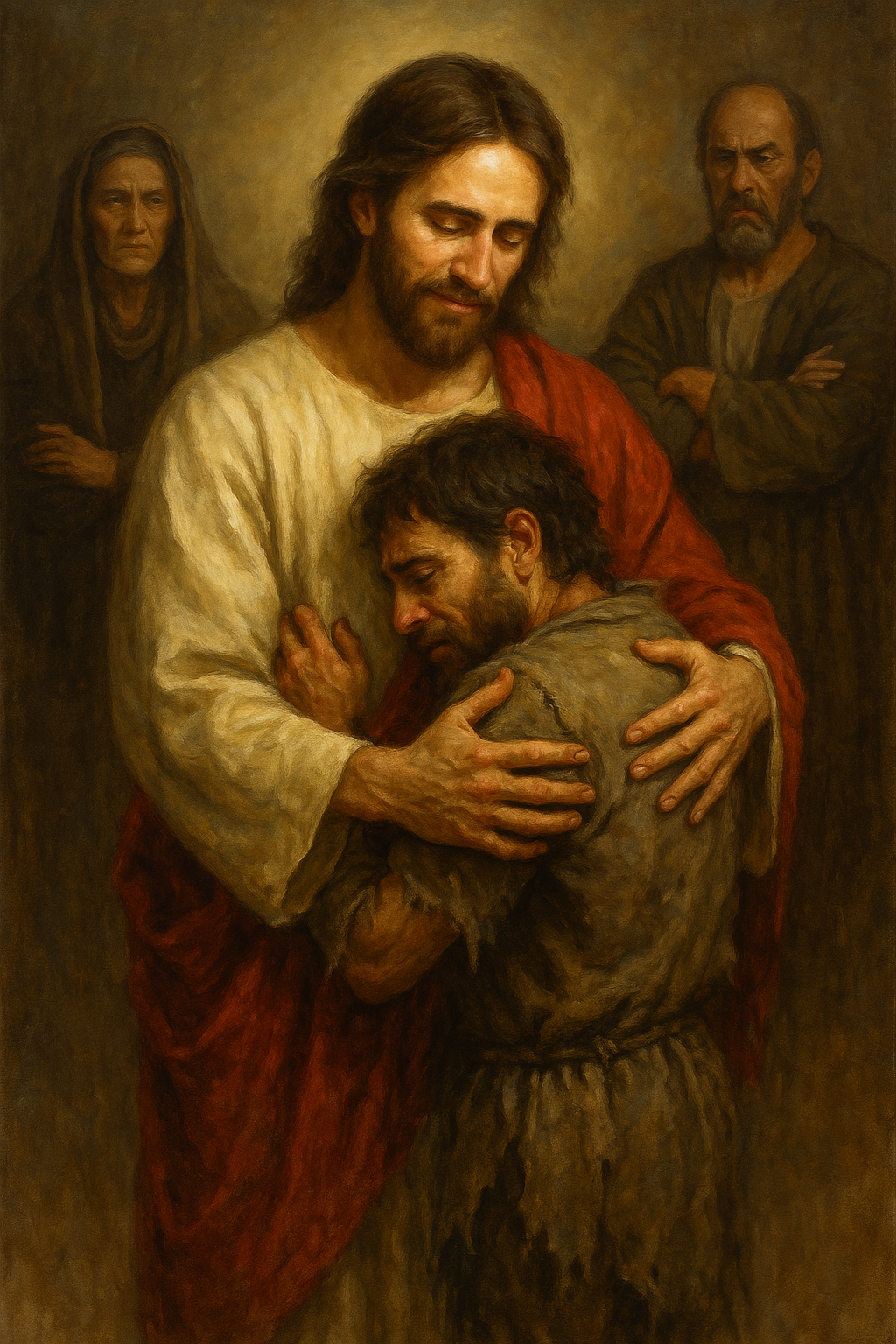
Scripture is clear: Jesus died for all sinners, of which you and I are one. There are no exceptions. I for one am thankful for that. I am certain there is at least one person out in this world who would think me unworthy, what about you. I praise God that He is the one incharge of morality and grace and mercy. There is no sin so filthy that His blood cannot cleanse it, and no sinner so far gone that Christ’s sacrifice cannot reach them. God choses who to turnover to a rebrobate mind, and when enough is enough. Not us. So why does man declare that any sin is beyond the reach of Jesus’ cross? Why does one man want love and forgiveness when it comes to his sin, but condemns others for theirs. Please note that I am not talking about talking about sin. Many think that talking about sin is condemning one another. We are supposed to do that. What we are not to do is decide that someone is not worth talking to because of that sin. Paul’s words remind us that God’s love is wider, deeper, and stronger than human prejudice or hatred. Where man sets limits, God offers redemption. Where man says, “not you,” Christ says, “I died for you.”

Broader Context
Romans chapter 5 builds upon Paul’s argument that justification comes by faith alone, apart from works. Earlier in the chapter, Paul writes: “Therefore being justified by faith, we have peace with God through our Lord Jesus Christ” (Romans 5:1). This peace is not mere tranquility but reconciliation with a holy God, who once stood against us in judgment. Into this framework, Romans 5:8 bursts forth as the greatest demonstration of God’s love: He gave His Son to die for us while we were yet sinners.

This truth overturns every human instinct about love. Human love is often conditional, extended only to those we find worthy or likable. But God’s love is sovereign, unconditional, and proactive. The apostle John affirms this: “Herein is love, not that we loved God, but that he loved us, and sent his Son to be the propitiation for our sins” (1 John 4:10). Paul reinforces it again in Ephesians: “But God, who is rich in mercy, for his great love wherewith he loved us, even when we were dead in sins, hath quickened us together with Christ, (by grace ye are saved)” (Ephesians 2:4–5). These passages echo Romans 5:8, God acted for our salvation when we were helpless, undeserving, and spiritually dead.

Theologians across centuries have emphasized this point. John MacArthur (1939-2025, Reformed Baptist) explains that Paul’s argument in Romans 5 highlights the sheer undeserved nature of divine love: “God’s love is not a response to human merit, but an expression of His own character. Christ died for sinners, not for those who had anything to offer” (MacArthur New Testament Commentary: Romans 1–8). Voddie Baucham (b. 1969, Reformed Baptist) likewise underscores that this verse destroys pride and self-righteousness: “You didn’t clean yourself up and then bring yourself to Christ. You were dead, lost, and hostile. He came for you when you had nothing to give Him” (sermon, The Centrality of the Cross).

Historic voices echo the same. Charles Spurgeon (1834–1892, Baptist) marveled at the timing of God’s love: “Christ did not die for us when we were friends, but enemies; not when we were repentant, but while we were sinners.” Augustine (354–430, early church father) reflected that this verse demonstrates God’s grace over human ability: “For if we could have justified ourselves, Christ died in vain.”

Thus, Romans 5:8 is not an isolated thought, it is the linchpin in Paul’s argument that justification, reconciliation, and salvation are all of grace. It prepares the reader for the assurance Paul declares later in the chapter: “For if, when we were enemies, we were reconciled to God by the death of his Son, much more, being reconciled, we shall be saved by his life” (Romans 5:10). God’s love is proven at the cross and secured in the ongoing life of Christ.

Final Encouragement
Romans 5:8 assures us that God’s love is not conditional, shallow, or temporary. It was proven at the cross, when Christ died for us at our worst. If He loved us then, we can be certain He loves us now. This truth has been faithfully proclaimed by many through the centuries, from Augustine to Spurgeon, and in our own time by men like John MacArthur (1939–2025, Reformed Baptist) and Voddie Baucham (1969– , Reformed Baptist). MacArthur, who went home to be with the Lord in July 2025, reminded us often that the gospel’s power is rooted in God’s sovereign love, not in our worthiness. This enduring truth should strengthen our faith: the same love that reached us in our sin will carry us through to glory.

Our Prayer for You
Father, we thank You for demonstrating Your love at the cross of Christ. Thank You that Jesus died for us while we were still sinners, when we had nothing to offer You. Strengthen believers with this assurance, that nothing can separate us from Your love in Christ Jesus. For those who do not yet believe, open their eyes to see that they do not need to earn Your love, but simply receive it through faith. May the truth of Romans 5:8 comfort, convict, and transform hearts today. In Jesus’ name, Amen.

Closing
If you’ve found these daily verses encouraging, enlightening, or fruitful, please consider helping us spread the truth and light of God’s Word by subscribing to the blog and YouTube channels and liking and following the Facebook page. Most of all, share Believers of Biblical Truth and our links with others who may need the sermons and daily teachings just as much as we do.

You are loved, so much in fact, that we want you to know and be Believers of Biblical Truth.


Shalom Shalom.

TODAY’S DAILY BIBLE VERSE

August 19, 2025

Romans 3:23–24 – 23For all have sinned, and come short of the glory of God; 24Being justified freely by his grace through the redemption that is in Christ Jesus.

Verse Context

Paul here confronts the great equalizer of humanity: sin. In verse 23, he declares that “all have sinned and come short of the glory of God.” Every single person, Jew or Gentile, religious or irreligious, is under the same verdict. Sin is more than breaking laws; it is falling short of God’s glory, His holiness, and His perfect design for us. We were created to reflect God’s image, yet sin has distorted that reflection.

Verse 24 offers the answer to this universal problem: “Being justified freely by his grace through the redemption that is in Christ Jesus.” To be justified is to be declared righteous before God, not on the basis of works or law, but as a gift of grace. The word freely highlights that justification cannot be bought, earned, or achieved by human effort. It comes only through redemption, a word that pictures a ransom being paid to set a slave free. The ransom was paid by Jesus on the cross, His blood purchasing freedom for sinners.

Together these verses hold both the bad news and the good news in a single breath: all people have sinned and fallen short, but God has made salvation available freely through Christ’s redeeming sacrifice.

Broader Context

Romans chapter 3 is Paul’s sweeping conclusion to his argument that both Jews and Gentiles are guilty before God. In the first two chapters, Paul demonstrates that Gentiles, though without the Law, are guilty because they suppress the truth of God in unrighteousness (Romans 1). Then he turns to the Jews, who possessed the Law but failed to keep it (Romans 2). By the time he reaches chapter 3, Paul has leveled the playing field: “There is none righteous, no, not one” (Romans 3:10). All humanity stands condemned under sin.

Within this setting, verses 23–24 shine as a turning point. Verse 23 summarizes the problem: universal sin and falling short of God’s glory. Verse 24 immediately provides the solution: justification offered freely by grace through Christ’s redemption. This shift prepares the way for Paul’s detailed teaching on justification by faith in Romans 4 and 5.

It is also important to see how these verses confront the mindset of Paul’s audience in Rome. Jews were tempted to boast in their covenant status and the Law, while Gentiles might look to philosophy, morality, or culture. But Paul insists that none of these can save, all fall short. Only God’s gracious act in Christ offers true righteousness.

Romans 3:23–24 therefore lies at the very heart of the gospel message. They remind us of the hopelessness of man’s condition apart from God, and the glorious hope that salvation is God’s work from beginning to end, rooted in His grace and secured in Christ’s redeeming sacrifice.

Application

Appreciating God’s Greatness

These verses magnify God’s greatness by showing both His holiness and His mercy. His holiness is seen in the reality that all have sinned and fallen short of His glory (23). God’s standard has never shifted, He demands perfection because He is perfect. Yet His mercy is revealed in verse 24, where He provides justification freely by His grace. What man could never accomplish, God has accomplished through Christ. His greatness shines in holding together both perfect justice (sin must be punished) and perfect grace (sinners are redeemed through Christ).

For the Believer

For Christians, these verses remind us that we stand on equal ground with every other believer. None of us earned our place in God’s family. We were justified freely by His grace. This truth keeps us humble and thankful. It also guards us from pride, because no amount of personal righteousness could have saved us. At the same time, it fills us with assurance: our justification does not rest on how well we perform today, but on what Christ has already done for us at the cross.

Call to Action: Let gratitude shape your prayers this week. Each day, thank God specifically for His grace in saving you apart from works. Then look for one opportunity to show that same grace to someone else.

For the Unbeliever

For those who have not yet trusted Christ, Romans 3:23–24 makes your condition and God’s invitation clear. All have sinned, that includes you. No effort, good deed, or religious work can erase your guilt. But God offers justification freely through Jesus Christ. Redemption is not something you must purchase; it is something Christ has already purchased with His blood. The only question is whether you will receive it by faith.

Final Encouragement

Romans 3:23–24 shows us the whole gospel in miniature: the problem of sin and the solution of grace. Every person stands guilty before God, yet every person is offered the same free gift of justification in Christ. There is no sin too great, no past too heavy, that God’s grace cannot cover. The gospel is not about what we do for God, but what God has done for us in Jesus.

Our Prayer for You

Lord, we thank You that though all have sinned and fallen short of Your glory, You did not leave us in our guilt. Thank You for the free gift of justification through Jesus Christ. Strengthen believers to live with gratitude and humility, and draw unbelievers to see that salvation is not earned but given by Your grace. May the truth of redemption in Christ Jesus bring hope and transformation today. In Jesus’ name, Amen.

Closing

If you’ve found these daily verses encouraging, enlightening, or fruitful, please consider helping us spread the truth and light of God’s Word by subscribing to the blog and YouTube channels and liking and following the Facebook page. Most of all, share Believers of Biblical Truth and our links with others who may need the sermons and daily teachings just as much as we do.

You are loved, so much in fact, that we want you to know and be Believers of Biblical Truth.

Shalom Shalom.